ADVERTISEMENT

Nearly 250 million children missed school last year because of extreme weather - UNICEF

Published Jan 24, 2025 02:17 am

CHILDREN PHOTO.webp

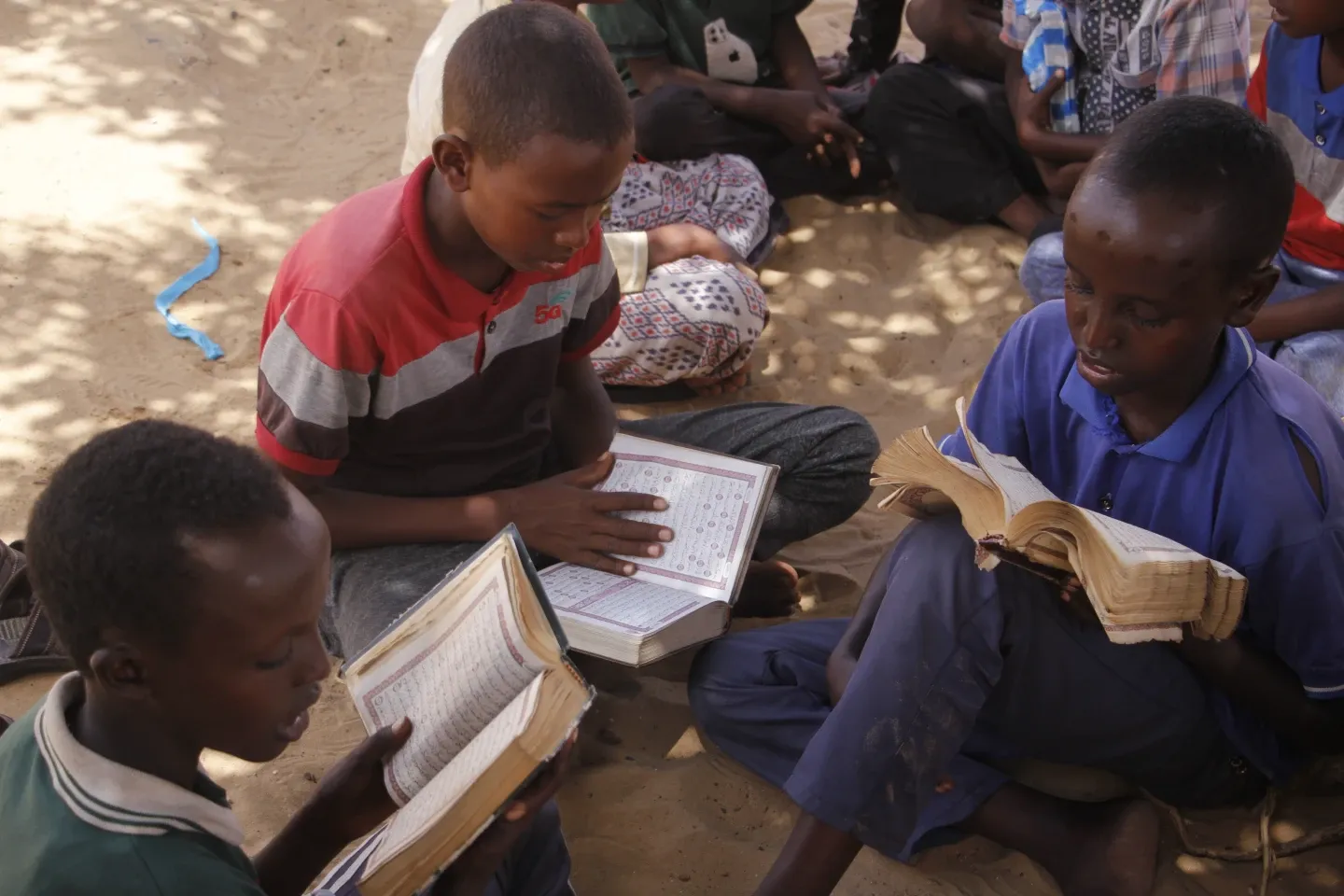
Children, who fled amid drought, read the Quran at a makeshift camp for the displaced people on the outskirts of Mogadishu, Somalia on Thursday, Sept. 26, 2023. (AP Photo/Farah Abdi Warsameh)


CAPE TOWN, South Africa (AP) — At least 242 million children in 85 countries had their schooling interrupted last year because of heatwaves, cyclones, flooding and other extreme weather, the United Nations Children's Fund said in a new report Friday.

UNICEF said it amounted to one in seven school-going children across the world being kept out of class at some point in 2024 because of climate hazards.

The report also outlined how some countries saw hundreds of their schools destroyed by weather, with low-income nations in Asia and sub-Saharan Africa hit especially hard.

But other regions weren't spared the extreme weather, as torrential rains and floods in Italy near the end of the year disrupted school for more than 900,000 children. Thousands had their classes halted after catastrophic flooding in Spain.

While southern Europe dealt with deadly floods and Asia and Africa had flooding and cyclones, heatwaves were "the predominant climate hazard shuttering schools last year," UNICEF said, as the earth recorded its hottest year ever.

More than 118 million children had their schooling interrupted in April alone, UNICEF said, as large parts of the Middle East and Asia, from Gaza in the west to the Philippines in the southeast, experienced a sizzling weekslong heatwave with temperatures soaring above 40 degrees Celsius (104 Fahrenheit).

"Children are more vulnerable to the impacts of weather-related crises, including stronger and more frequent heatwaves, storms, droughts and flooding," UNICEF executive director Catherine Russell said in a statement. "Children's bodies are uniquely vulnerable. They heat up faster, they sweat less efficiently, and cool down more slowly than adults. Children cannot concentrate in classrooms that offer no respite from sweltering heat, and they cannot get to school if the path is flooded, or if schools are washed away."

Around 74% of the children affected in 2024 were in middle- and low-income countries, showing how climatic extremes continue to have a devastating impact in the poorest countries. Flooding ruined more than 400 schools in Pakistan in April. Afghanistan had heatwaves followed by severe flooding that destroyed over 110 schools in May, UNICEF said.

Months of drought in southern Africa exacerbated by the El Niño weather phenomenon threatened the schooling and futures of millions of children.

And the crises showed little sign of abating. The poor French territory of Mayotte in the Indian Ocean off Africa was left in ruins by Cyclone Chido in December and hit again by Tropical Storm Dikeledi this month, leaving children across the islands out of school for six weeks.

Cyclone Chido also destroyed more than 330 schools and three regional education departments in Mozambique on the African mainland, where access to education is already a deep problem.

UNICEF said the world's schools and education systems "are largely ill-equipped" to deal with the effects of extreme weather.


Related Tags

UNICEF WORLDNEWS
ADVERTISEMENT
.most-popular .layout-ratio{ padding-bottom: 79.13%; } @media (min-width: 768px) and (max-width: 1024px) { .widget-title { font-size: 15px !important; } }

{{ articles_filter_1561_widget.title }}

.most-popular .layout-ratio{ padding-bottom: 79.13%; } @media (min-width: 768px) and (max-width: 1024px) { .widget-title { font-size: 15px !important; } }

{{ articles_filter_1562_widget.title }}

.most-popular .layout-ratio{ padding-bottom: 79.13%; } @media (min-width: 768px) and (max-width: 1024px) { .widget-title { font-size: 15px !important; } }

{{ articles_filter_1563_widget.title }}

{{ articles_filter_1564_widget.title }}

.mb-article-details { position: relative; } .mb-article-details .article-body-preview, .mb-article-details .article-body-summary{ font-size: 17px; line-height: 30px; font-family: "Libre Caslon Text", serif; color: #000; } .mb-article-details .article-body-preview iframe , .mb-article-details .article-body-summary iframe{ width: 100%; margin: auto; } .read-more-background { background: linear-gradient(180deg, color(display-p3 1.000 1.000 1.000 / 0) 13.75%, color(display-p3 1.000 1.000 1.000 / 0.8) 30.79%, color(display-p3 1.000 1.000 1.000) 72.5%); position: absolute; height: 200px; width: 100%; bottom: 0; display: flex; justify-content: center; align-items: center; padding: 0; } .read-more-background a{ color: #000; } .read-more-btn { padding: 17px 45px; font-family: Inter; font-weight: 700; font-size: 18px; line-height: 16px; text-align: center; vertical-align: middle; border: 1px solid black; background-color: white; } .hidden { display: none; }
function initializeAllSwipers() { // Get all hidden inputs with cms_article_id document.querySelectorAll('[id^="cms_article_id_"]').forEach(function (input) { const cmsArticleId = input.value; const articleSelector = '#article-' + cmsArticleId + ' .body_images'; const swiperElement = document.querySelector(articleSelector); if (swiperElement && !swiperElement.classList.contains('swiper-initialized')) { new Swiper(articleSelector, { loop: true, pagination: false, navigation: { nextEl: '#article-' + cmsArticleId + ' .swiper-button-next', prevEl: '#article-' + cmsArticleId + ' .swiper-button-prev', }, }); } }); } setTimeout(initializeAllSwipers, 3000); const intersectionObserver = new IntersectionObserver( (entries) => { entries.forEach((entry) => { if (entry.isIntersecting) { const newUrl = entry.target.getAttribute("data-url"); if (newUrl) { history.pushState(null, null, newUrl); let article = entry.target; // Extract metadata const author = article.querySelector('.author-section').textContent.replace('By', '').trim(); const section = article.querySelector('.section-info ').textContent.replace(' ', ' '); const title = article.querySelector('.article-title h1').textContent; // Parse URL for Chartbeat path format const parsedUrl = new URL(newUrl, window.location.origin); const cleanUrl = parsedUrl.host + parsedUrl.pathname; // Update Chartbeat configuration if (typeof window._sf_async_config !== 'undefined') { window._sf_async_config.path = cleanUrl; window._sf_async_config.sections = section; window._sf_async_config.authors = author; } // Track virtual page view with Chartbeat if (typeof pSUPERFLY !== 'undefined' && typeof pSUPERFLY.virtualPage === 'function') { try { pSUPERFLY.virtualPage({ path: cleanUrl, title: title, sections: section, authors: author }); } catch (error) { console.error('ping error', error); } } // Optional: Update document title if (title && title !== document.title) { document.title = title; } } } }); }, { threshold: 0.1 } ); function showArticleBody(button) { const article = button.closest("article"); const summary = article.querySelector(".article-body-summary"); const body = article.querySelector(".article-body-preview"); const readMoreSection = article.querySelector(".read-more-background"); // Hide summary and read-more section summary.style.display = "none"; readMoreSection.style.display = "none"; // Show the full article body body.classList.remove("hidden"); } document.addEventListener("DOMContentLoaded", () => { let loadCount = 0; // Track how many times articles are loaded const offset = [1, 2, 3, 4, 5, 6, 7, 8, 9, 10]; // Offset values const currentUrl = window.location.pathname.substring(1); let isLoading = false; // Prevent multiple calls if (!currentUrl) { console.log("Current URL is invalid."); return; } const sentinel = document.getElementById("load-more-sentinel"); if (!sentinel) { console.log("Sentinel element not found."); return; } function isSentinelVisible() { const rect = sentinel.getBoundingClientRect(); return ( rect.top < window.innerHeight && rect.bottom >= 0 ); } function onScroll() { if (isLoading) return; if (isSentinelVisible()) { if (loadCount >= offset.length) { console.log("Maximum load attempts reached."); window.removeEventListener("scroll", onScroll); return; } isLoading = true; const currentOffset = offset[loadCount]; window.loadMoreItems().then(() => { let article = document.querySelector('#widget_1690 > div:nth-last-of-type(2) article'); intersectionObserver.observe(article) loadCount++; }).catch(error => { console.error("Error loading more items:", error); }).finally(() => { isLoading = false; }); } } window.addEventListener("scroll", onScroll); });

Sign up by email to receive news.