ADVERTISEMENT

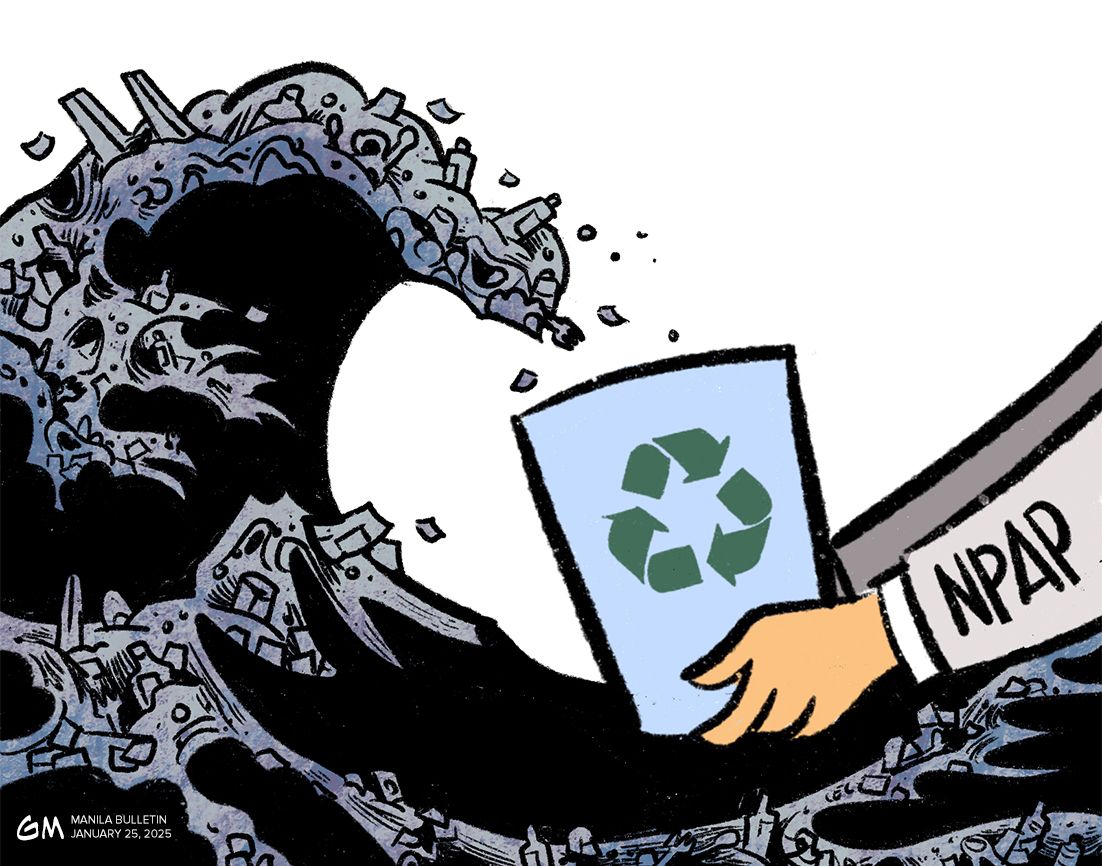
National Plastic Action Partnership: Tackling a problem that's getting bigger

Published Jan 24, 2025 04:05 pm

E CARTOON JAN 25.jpg

It’s a long known fact that the country has a mounting plastic waste problem. 


According to the Department of Environment and Natural Resources (DENR), the Philippines generates an estimated 2.7 million metric tons of plastic waste annually, ranking as one of the top contributors to marine plastic pollution globally. Of this waste, only nine percent is recycled, with 35 percent leaking into the environment, and 33 percent ending up in landfills or dumpsites. The daily waste generation stands at 61,000 metric tons, of which 12 to 24 percent is plastic.


The mismanagement of plastic waste contributes to clogged waterways, frequent flooding, and environmental degradation. Vulnerable coastal communities bear the brunt of these impacts, underscoring the socio-economic and public health dimensions of the crisis.


Many programs have been conducted to mitigate the problem.  There are laws and policies to manage the disposal of solid waste, including a resolution to ban single-use plastics.  There have been many educational campaigns to boost awareness and encourage public action, especially a change of behavior that supports recycling and reusing.  And yet, the plastic waste problem has not been solved, it has only worsened.


On Jan. 23, the DENR launched the National Plastic Action Partnership (NPAP) Philippines, taking a significant step in addressing the country’s mounting plastic waste crisis. This initiative, supported by the World Economic Forum’s Global Plastic Action Partnership, the UK and Canadian governments, and the Coca-Cola Foundation, represents a multi-sectoral effort to curb plastic pollution and foster a circular economy.


NPAP aims to unite leaders from government, businesses, development organizations, and civil society to develop sustainable solutions for plastic waste. The focus of this initiative is the transition to a circular economy, which emphasizes reusing, recycling, and minimizing waste. By shifting from the traditional linear model of production and disposal, the NPAP seeks to transform waste into valuable resources.


The partnership will start with the National Plastics Action Roadmap, set for completion by August. This roadmap will provide a baseline assessment of the plastic waste situation, identify investment requirements, and outline financing strategies. It will serve as a comprehensive guide for stakeholders to align their actions with the NPAP’s objectives.


A key goal of the partnership is the enforcement of Republic Act No. 11898, or the Extended Producer Responsibility (EPR) Act of 2022. This law holds large corporations accountable for the lifecycle of their plastic products, mandating recovery and diversion targets of at least 20 percent of their plastic footprint by 2023, increasing to 40 percent  by 2024. As of May 2024, 917 companies had registered under the EPR program, and the DENR has committed to issuing notices of violation to non-compliant entities.
Through the NPAP, the DENR aims to address gaps in EPR implementation, strengthen compliance mechanisms, and develop policies to incentivize companies. This alignment ensures that the NPAP not only complements the EPR Act but also amplifies its impact by fostering collaboration across industries and government agencies.


The focus on promoting a circular economy and enforcing the EPR Act will pave the way for a more sustainable and resilient future. However, the road ahead requires collective action and urgency.


As DENR Secretary Maria Antonia Yulo-Loyzaga emphasized during the NPAP launch: “Together, we have the capacity to mitigate the devastating impacts of plastic pollution and foster a legacy of sustainability for future generations.”


With a clear roadmap, robust policies, and the cooperation of all sectors of society, we can address one of the world’s most pressing environmental challenges.

Related Tags

EDITORIAL
ADVERTISEMENT
.most-popular .layout-ratio{ padding-bottom: 79.13%; } @media (min-width: 768px) and (max-width: 1024px) { .widget-title { font-size: 15px !important; } }

{{ articles_filter_1561_widget.title }}

.most-popular .layout-ratio{ padding-bottom: 79.13%; } @media (min-width: 768px) and (max-width: 1024px) { .widget-title { font-size: 15px !important; } }

{{ articles_filter_1562_widget.title }}

.most-popular .layout-ratio{ padding-bottom: 79.13%; } @media (min-width: 768px) and (max-width: 1024px) { .widget-title { font-size: 15px !important; } }

{{ articles_filter_1563_widget.title }}

{{ articles_filter_1564_widget.title }}

.mb-article-details { position: relative; } .mb-article-details .article-body-preview, .mb-article-details .article-body-summary{ font-size: 17px; line-height: 30px; font-family: "Libre Caslon Text", serif; color: #000; } .mb-article-details .article-body-preview iframe , .mb-article-details .article-body-summary iframe{ width: 100%; margin: auto; } .read-more-background { background: linear-gradient(180deg, color(display-p3 1.000 1.000 1.000 / 0) 13.75%, color(display-p3 1.000 1.000 1.000 / 0.8) 30.79%, color(display-p3 1.000 1.000 1.000) 72.5%); position: absolute; height: 200px; width: 100%; bottom: 0; display: flex; justify-content: center; align-items: center; padding: 0; } .read-more-background a{ color: #000; } .read-more-btn { padding: 17px 45px; font-family: Inter; font-weight: 700; font-size: 18px; line-height: 16px; text-align: center; vertical-align: middle; border: 1px solid black; background-color: white; } .hidden { display: none; }
function initializeAllSwipers() { // Get all hidden inputs with cms_article_id document.querySelectorAll('[id^="cms_article_id_"]').forEach(function (input) { const cmsArticleId = input.value; const articleSelector = '#article-' + cmsArticleId + ' .body_images'; const swiperElement = document.querySelector(articleSelector); if (swiperElement && !swiperElement.classList.contains('swiper-initialized')) { new Swiper(articleSelector, { loop: true, pagination: false, navigation: { nextEl: '#article-' + cmsArticleId + ' .swiper-button-next', prevEl: '#article-' + cmsArticleId + ' .swiper-button-prev', }, }); } }); } setTimeout(initializeAllSwipers, 3000); const intersectionObserver = new IntersectionObserver( (entries) => { entries.forEach((entry) => { if (entry.isIntersecting) { const newUrl = entry.target.getAttribute("data-url"); if (newUrl) { history.pushState(null, null, newUrl); let article = entry.target; // Extract metadata const author = article.querySelector('.author-section').textContent.replace('By', '').trim(); const section = article.querySelector('.section-info ').textContent.replace(' ', ' '); const title = article.querySelector('.article-title h1').textContent; // Parse URL for Chartbeat path format const parsedUrl = new URL(newUrl, window.location.origin); const cleanUrl = parsedUrl.host + parsedUrl.pathname; // Update Chartbeat configuration if (typeof window._sf_async_config !== 'undefined') { window._sf_async_config.path = cleanUrl; window._sf_async_config.sections = section; window._sf_async_config.authors = author; } // Track virtual page view with Chartbeat if (typeof pSUPERFLY !== 'undefined' && typeof pSUPERFLY.virtualPage === 'function') { try { pSUPERFLY.virtualPage({ path: cleanUrl, title: title, sections: section, authors: author }); } catch (error) { console.error('ping error', error); } } // Optional: Update document title if (title && title !== document.title) { document.title = title; } } } }); }, { threshold: 0.1 } ); function showArticleBody(button) { const article = button.closest("article"); const summary = article.querySelector(".article-body-summary"); const body = article.querySelector(".article-body-preview"); const readMoreSection = article.querySelector(".read-more-background"); // Hide summary and read-more section summary.style.display = "none"; readMoreSection.style.display = "none"; // Show the full article body body.classList.remove("hidden"); } document.addEventListener("DOMContentLoaded", () => { let loadCount = 0; // Track how many times articles are loaded const offset = [1, 2, 3, 4, 5, 6, 7, 8, 9, 10]; // Offset values const currentUrl = window.location.pathname.substring(1); let isLoading = false; // Prevent multiple calls if (!currentUrl) { console.log("Current URL is invalid."); return; } const sentinel = document.getElementById("load-more-sentinel"); if (!sentinel) { console.log("Sentinel element not found."); return; } function isSentinelVisible() { const rect = sentinel.getBoundingClientRect(); return ( rect.top < window.innerHeight && rect.bottom >= 0 ); } function onScroll() { if (isLoading) return; if (isSentinelVisible()) { if (loadCount >= offset.length) { console.log("Maximum load attempts reached."); window.removeEventListener("scroll", onScroll); return; } isLoading = true; const currentOffset = offset[loadCount]; window.loadMoreItems().then(() => { let article = document.querySelector('#widget_1690 > div:nth-last-of-type(2) article'); intersectionObserver.observe(article) loadCount++; }).catch(error => { console.error("Error loading more items:", error); }).finally(() => { isLoading = false; }); } } window.addEventListener("scroll", onScroll); });

Sign up by email to receive news.