ADVERTISEMENT

New Zealand, UNDP, and NCIP launch I-LEAD project for indigenous women and girls

Published Jan 20, 2025 03:43 am
New Zealand.jpg
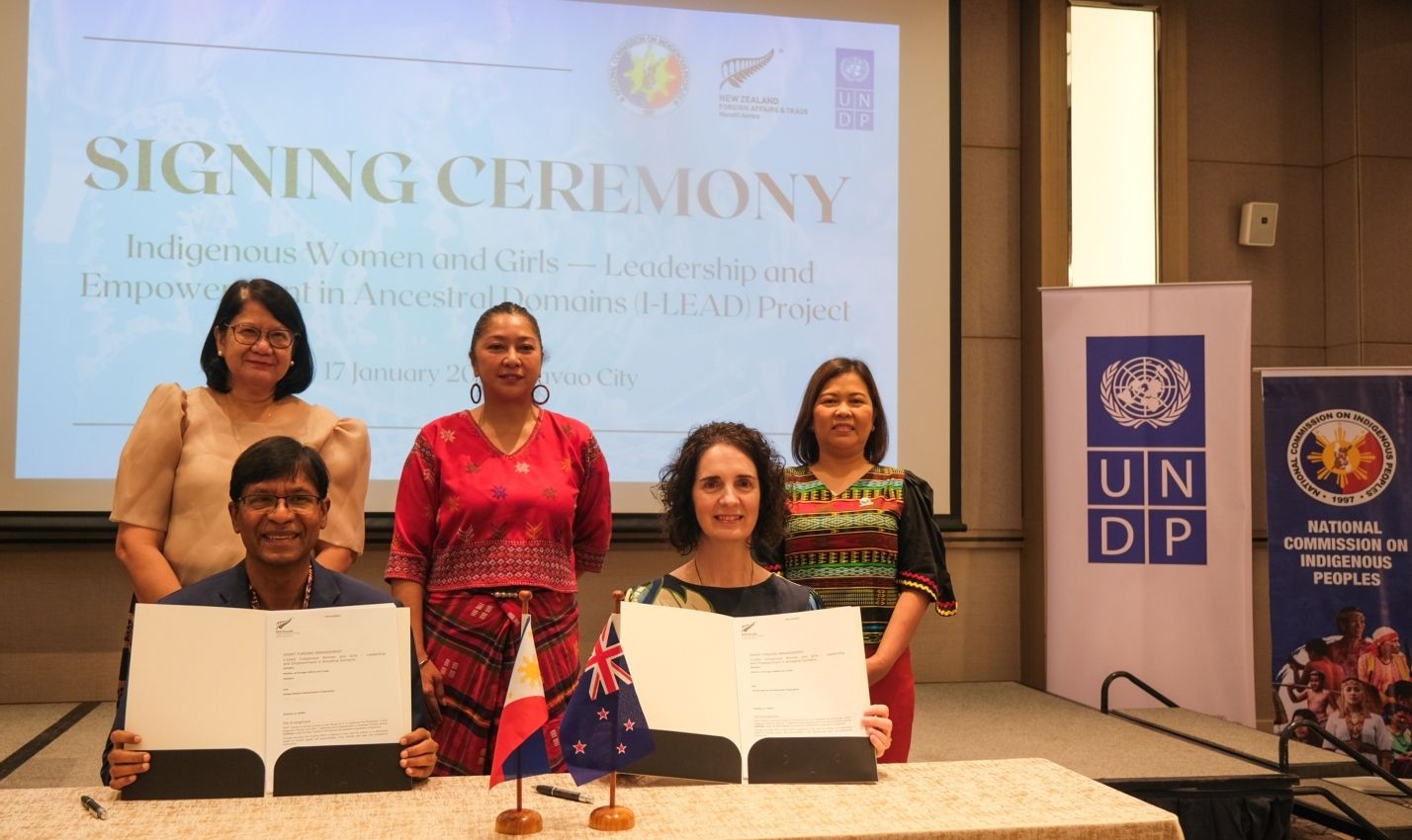
UNDP PH Resident Representative Dr. Selva Ramachandran, and New Zealand Ambassador Dr. Catherine McIntosh with Climate Action Programme Team Leader Floradema C. Eleazar, NCIP Chairperson Bo-i Jennifer Pia Sibug-Las, and MinDA Undersecretary Janet Lopoz

In a significant move to advance the leadership and economic empowerment of Indigenous women and girls, the United Nations Development Programme (UNDP) in the Philippines, in partnership with the government of New Zealand and the National Commission on Indigenous Peoples (NCIP), officially launched the Indigenous Women and Girls – Leadership and Empowerment in Ancestral Domains (I-LEAD) Project in a signing ceremony in Davao City.

The I-LEAD Project, built on the longstanding collaboration between UNDP Philippines and the New Zealand Government, aims to foster inclusive development, resilience-building, gender equality, and women's empowerment by promoting leadership roles and economic opportunities for Indigenous women and girls across ancestral domains, particularly in Regions 11 and 12 in Mindanao. The project will strengthen Indigenous Peoples' rights protection and promote sustainable practices in response to climate change and biodiversity challenges. It also aims to address underlying gender norms and discriminatory practices to enable their meaningful participation and leadership.

New Zealand Ambassador to the Philippines, Dr. Catherine McIntosh said, “As a small donor country committed to development that works, we are carefully targeting our efforts to where we will make a real difference. And I'm optimistic that together we can make a real difference in the lives of indigenous communities in Regions 11 and 12 and beyond.”

UNDP Philippines Resident Representative Dr. Selva Ramachandran highlighted the significance of partnerships in delivering impact. "This initiative is a testament to what we can achieve together when we unite around a shared vision of empowerment, equity, and sustainable development. Together, we can create programs that are responsive, inclusive, and impactful,” he expressed.

NCIP Chairperson Bo-i Jennifer Pia Sibug-Las emphasized the importance of involving Indigenous women in the community’s political structures. “There are still a lot of aspirations by women. They should still be given the chance to have representation in governance and to raise their voices in a lot of areas, especially when it comes to sharing their cultures, traditions, and identities,” she conveyed.

Mindanao Development Authority (MinDA) Secretary Leo Tereso Magno, in a message delivered by Undersecretary Janet Lopoz, reaffirmed their commitment to supporting the project’s success. “The I-LEAD project is very much aligned with our priorities under the Mindanao Development agenda. MinDA will ensure that all our programs and projects will always include the marginalized sectors of society so we that ensure we create a collective impact in Mindanao.”

The I-LEAD Project will be implemented over four years by NCIP with UNDP Philippines through a P247 million (US$ 4.5 million) funding support from the New Zealand Government. The project will actively involve indigenous communities and government agencies in key roles to ensure its success. UNDP Philippines and the New Zealand Government reaffirm their continued commitment to support Indigenous Peoples through initiatives that promote inclusive governance, sustainable development, and the protection of ancestral domains.

Related Tags

UNDP PHILIPPINES NCIP New Zealand
ADVERTISEMENT
.most-popular .layout-ratio{ padding-bottom: 79.13%; } @media (min-width: 768px) and (max-width: 1024px) { .widget-title { font-size: 15px !important; } }

{{ articles_filter_1561_widget.title }}

.most-popular .layout-ratio{ padding-bottom: 79.13%; } @media (min-width: 768px) and (max-width: 1024px) { .widget-title { font-size: 15px !important; } }

{{ articles_filter_1562_widget.title }}

.most-popular .layout-ratio{ padding-bottom: 79.13%; } @media (min-width: 768px) and (max-width: 1024px) { .widget-title { font-size: 15px !important; } }

{{ articles_filter_1563_widget.title }}

{{ articles_filter_1564_widget.title }}

.mb-article-details { position: relative; } .mb-article-details .article-body-preview, .mb-article-details .article-body-summary{ font-size: 17px; line-height: 30px; font-family: "Libre Caslon Text", serif; color: #000; } .mb-article-details .article-body-preview iframe , .mb-article-details .article-body-summary iframe{ width: 100%; margin: auto; } .read-more-background { background: linear-gradient(180deg, color(display-p3 1.000 1.000 1.000 / 0) 13.75%, color(display-p3 1.000 1.000 1.000 / 0.8) 30.79%, color(display-p3 1.000 1.000 1.000) 72.5%); position: absolute; height: 200px; width: 100%; bottom: 0; display: flex; justify-content: center; align-items: center; padding: 0; } .read-more-background a{ color: #000; } .read-more-btn { padding: 17px 45px; font-family: Inter; font-weight: 700; font-size: 18px; line-height: 16px; text-align: center; vertical-align: middle; border: 1px solid black; background-color: white; } .hidden { display: none; }
function initializeAllSwipers() { // Get all hidden inputs with cms_article_id document.querySelectorAll('[id^="cms_article_id_"]').forEach(function (input) { const cmsArticleId = input.value; const articleSelector = '#article-' + cmsArticleId + ' .body_images'; const swiperElement = document.querySelector(articleSelector); if (swiperElement && !swiperElement.classList.contains('swiper-initialized')) { new Swiper(articleSelector, { loop: true, pagination: false, navigation: { nextEl: '#article-' + cmsArticleId + ' .swiper-button-next', prevEl: '#article-' + cmsArticleId + ' .swiper-button-prev', }, }); } }); } setTimeout(initializeAllSwipers, 3000); const intersectionObserver = new IntersectionObserver( (entries) => { entries.forEach((entry) => { if (entry.isIntersecting) { const newUrl = entry.target.getAttribute("data-url"); if (newUrl) { history.pushState(null, null, newUrl); let article = entry.target; // Extract metadata const author = article.querySelector('.author-section').textContent.replace('By', '').trim(); const section = article.querySelector('.section-info ').textContent.replace(' ', ' '); const title = article.querySelector('.article-title h1').textContent; // Parse URL for Chartbeat path format const parsedUrl = new URL(newUrl, window.location.origin); const cleanUrl = parsedUrl.host + parsedUrl.pathname; // Update Chartbeat configuration if (typeof window._sf_async_config !== 'undefined') { window._sf_async_config.path = cleanUrl; window._sf_async_config.sections = section; window._sf_async_config.authors = author; } // Track virtual page view with Chartbeat if (typeof pSUPERFLY !== 'undefined' && typeof pSUPERFLY.virtualPage === 'function') { try { pSUPERFLY.virtualPage({ path: cleanUrl, title: title, sections: section, authors: author }); } catch (error) { console.error('ping error', error); } } // Optional: Update document title if (title && title !== document.title) { document.title = title; } } } }); }, { threshold: 0.1 } ); function showArticleBody(button) { const article = button.closest("article"); const summary = article.querySelector(".article-body-summary"); const body = article.querySelector(".article-body-preview"); const readMoreSection = article.querySelector(".read-more-background"); // Hide summary and read-more section summary.style.display = "none"; readMoreSection.style.display = "none"; // Show the full article body body.classList.remove("hidden"); } document.addEventListener("DOMContentLoaded", () => { let loadCount = 0; // Track how many times articles are loaded const offset = [1, 2, 3, 4, 5, 6, 7, 8, 9, 10]; // Offset values const currentUrl = window.location.pathname.substring(1); let isLoading = false; // Prevent multiple calls if (!currentUrl) { console.log("Current URL is invalid."); return; } const sentinel = document.getElementById("load-more-sentinel"); if (!sentinel) { console.log("Sentinel element not found."); return; } function isSentinelVisible() { const rect = sentinel.getBoundingClientRect(); return ( rect.top < window.innerHeight && rect.bottom >= 0 ); } function onScroll() { if (isLoading) return; if (isSentinelVisible()) { if (loadCount >= offset.length) { console.log("Maximum load attempts reached."); window.removeEventListener("scroll", onScroll); return; } isLoading = true; const currentOffset = offset[loadCount]; window.loadMoreItems().then(() => { let article = document.querySelector('#widget_1690 > div:nth-last-of-type(2) article'); intersectionObserver.observe(article) loadCount++; }).catch(error => { console.error("Error loading more items:", error); }).finally(() => { isLoading = false; }); } } window.addEventListener("scroll", onScroll); });

Sign up by email to receive news.