ADVERTISEMENT

Comelec checkpoints: A key to safe election period

Published Jan 17, 2025 04:02 pm

18CART.jpg

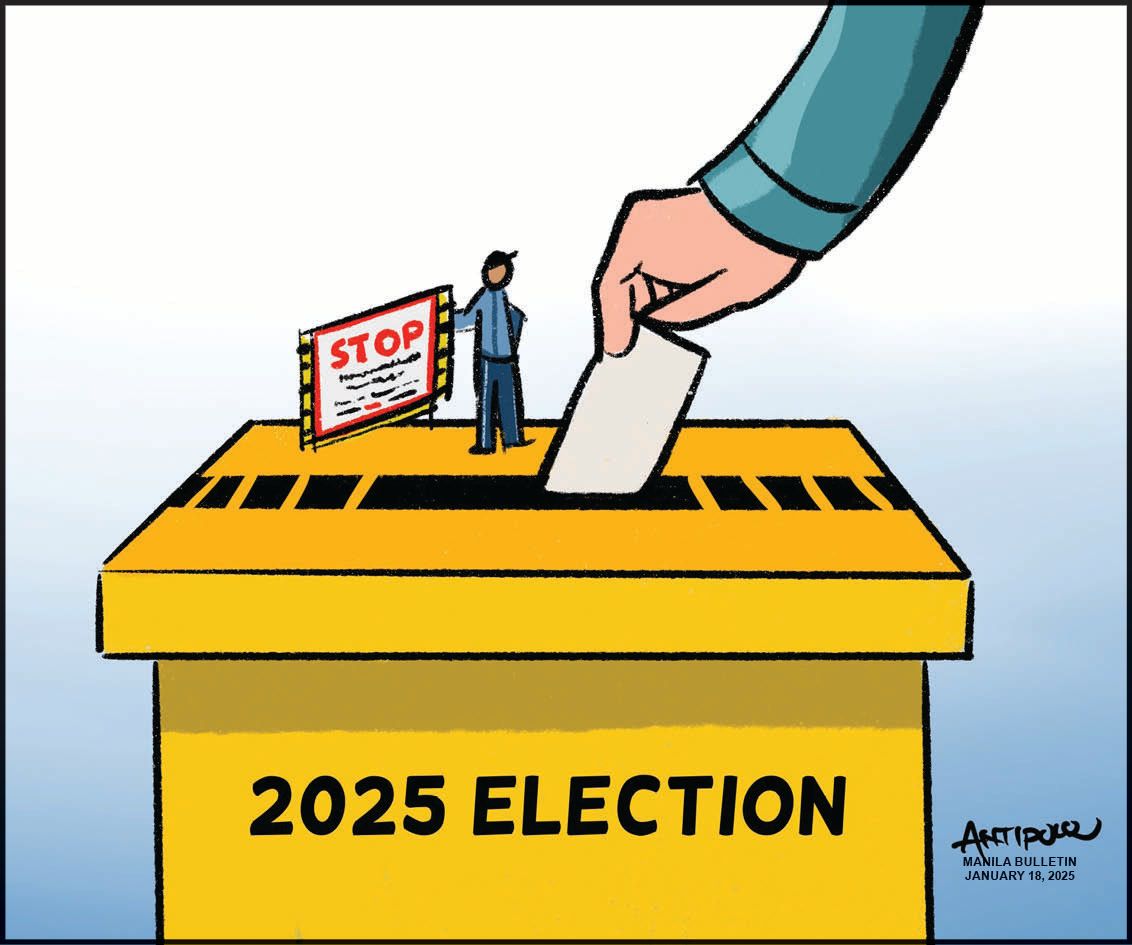
As the nation prepares for the May 12, 2025, National and Local Elections (NLE) and the Bangsamoro Autonomous Region in Muslim Mindanao (BARMM) Parliamentary Elections, the Commission on Elections (Comelec) has established checkpoints nationwide.


These checkpoints, active from Jan. 12 to June 11, play a vital role in ensuring peaceful and orderly elections. While some may view these measures as an inconvenience, public cooperation with the police and Comelec officials at checkpoints is crucial in maintaining peace and security.


The primary purpose of Comelec checkpoints is to enforce the election gun ban, which prohibits unauthorized individuals from carrying firearms, explosives, and other deadly weapons. By doing so, the government aims to prevent election-related violence, particularly in areas with a history of political tension or recent unrest. Comelec checkpoints also allow authorities to monitor and assess the peace and order situation in specific regions, addressing potential threats before they escalate.


Motorists and pedestrians passing through Comelec checkpoints should be aware of proper protocol. Upon approaching a checkpoint, drivers should: Reduce speed and prepare to stop. Dim headlights and turn on cabin lights to enhance visibility. Answer routine questions politely if asked by police officers. Refrain from exiting the vehicle or opening compartments unless requested under specific circumstances.


According to Comelec Resolution 11067, these checkpoints operate under the “plain view doctrine.” This means authorities will only conduct visual inspections unless there is reasonable suspicion of a law violation, such as visible firearms or erratic behavior. Physical searches are not permitted unless warranted by law.


Comelec has emphasized the need for professionalism and courtesy among police officers manning the checkpoints. Officers are instructed to: Conduct inspections within the limits of the law. Avoid unnecessary physical searches unless justified by probable cause. Report violations and incidents promptly to their election officer.


By adhering to these guidelines, the authorities ensure the public’s rights and dignity are respected while maintaining order.
Comelec checkpoints have been established in every city and municipality across the Philippines, including ports of entry. Additional checkpoints may be set up in critical areas, such as regions with ongoing political disputes or recent violent incidents. Nationwide, the Philippine National Police (PNP) and military personnel are deployed to assist in managing these checkpoints, particularly in high-risk zones.


Comelec Chairperson George Erwin Garcia has assured the public that the checkpoints are not solely for identifying weapons but also for ensuring overall safety during the election period. He urges citizens not to be alarmed by their presence but instead view them as essential measures to safeguard democracy.


The election period is a time for vigilance and cooperation. By following the rules at checkpoints and extending courtesy to law enforcement, the public contributes to a secure environment where every vote counts.


Comelec checkpoints may require a small adjustment in daily routines, but their benefits far outweigh the inconvenience. Let us all play our part in upholding peace and order as we prepare for a crucial democratic exercise. Together, we can ensure that the 2025 elections reflect the will of the people, free from violence and fear.

Related Tags

Editorial
ADVERTISEMENT
.most-popular .layout-ratio{ padding-bottom: 79.13%; } @media (min-width: 768px) and (max-width: 1024px) { .widget-title { font-size: 15px !important; } }

{{ articles_filter_1561_widget.title }}

.most-popular .layout-ratio{ padding-bottom: 79.13%; } @media (min-width: 768px) and (max-width: 1024px) { .widget-title { font-size: 15px !important; } }

{{ articles_filter_1562_widget.title }}

.most-popular .layout-ratio{ padding-bottom: 79.13%; } @media (min-width: 768px) and (max-width: 1024px) { .widget-title { font-size: 15px !important; } }

{{ articles_filter_1563_widget.title }}

{{ articles_filter_1564_widget.title }}

.mb-article-details { position: relative; } .mb-article-details .article-body-preview, .mb-article-details .article-body-summary{ font-size: 17px; line-height: 30px; font-family: "Libre Caslon Text", serif; color: #000; } .mb-article-details .article-body-preview iframe , .mb-article-details .article-body-summary iframe{ width: 100%; margin: auto; } .read-more-background { background: linear-gradient(180deg, color(display-p3 1.000 1.000 1.000 / 0) 13.75%, color(display-p3 1.000 1.000 1.000 / 0.8) 30.79%, color(display-p3 1.000 1.000 1.000) 72.5%); position: absolute; height: 200px; width: 100%; bottom: 0; display: flex; justify-content: center; align-items: center; padding: 0; } .read-more-background a{ color: #000; } .read-more-btn { padding: 17px 45px; font-family: Inter; font-weight: 700; font-size: 18px; line-height: 16px; text-align: center; vertical-align: middle; border: 1px solid black; background-color: white; } .hidden { display: none; }
function initializeAllSwipers() { // Get all hidden inputs with cms_article_id document.querySelectorAll('[id^="cms_article_id_"]').forEach(function (input) { const cmsArticleId = input.value; const articleSelector = '#article-' + cmsArticleId + ' .body_images'; const swiperElement = document.querySelector(articleSelector); if (swiperElement && !swiperElement.classList.contains('swiper-initialized')) { new Swiper(articleSelector, { loop: true, pagination: false, navigation: { nextEl: '#article-' + cmsArticleId + ' .swiper-button-next', prevEl: '#article-' + cmsArticleId + ' .swiper-button-prev', }, }); } }); } setTimeout(initializeAllSwipers, 3000); const intersectionObserver = new IntersectionObserver( (entries) => { entries.forEach((entry) => { if (entry.isIntersecting) { const newUrl = entry.target.getAttribute("data-url"); if (newUrl) { history.pushState(null, null, newUrl); let article = entry.target; // Extract metadata const author = article.querySelector('.author-section').textContent.replace('By', '').trim(); const section = article.querySelector('.section-info ').textContent.replace(' ', ' '); const title = article.querySelector('.article-title h1').textContent; // Parse URL for Chartbeat path format const parsedUrl = new URL(newUrl, window.location.origin); const cleanUrl = parsedUrl.host + parsedUrl.pathname; // Update Chartbeat configuration if (typeof window._sf_async_config !== 'undefined') { window._sf_async_config.path = cleanUrl; window._sf_async_config.sections = section; window._sf_async_config.authors = author; } // Track virtual page view with Chartbeat if (typeof pSUPERFLY !== 'undefined' && typeof pSUPERFLY.virtualPage === 'function') { try { pSUPERFLY.virtualPage({ path: cleanUrl, title: title, sections: section, authors: author }); } catch (error) { console.error('ping error', error); } } // Optional: Update document title if (title && title !== document.title) { document.title = title; } } } }); }, { threshold: 0.1 } ); function showArticleBody(button) { const article = button.closest("article"); const summary = article.querySelector(".article-body-summary"); const body = article.querySelector(".article-body-preview"); const readMoreSection = article.querySelector(".read-more-background"); // Hide summary and read-more section summary.style.display = "none"; readMoreSection.style.display = "none"; // Show the full article body body.classList.remove("hidden"); } document.addEventListener("DOMContentLoaded", () => { let loadCount = 0; // Track how many times articles are loaded const offset = [1, 2, 3, 4, 5, 6, 7, 8, 9, 10]; // Offset values const currentUrl = window.location.pathname.substring(1); let isLoading = false; // Prevent multiple calls if (!currentUrl) { console.log("Current URL is invalid."); return; } const sentinel = document.getElementById("load-more-sentinel"); if (!sentinel) { console.log("Sentinel element not found."); return; } function isSentinelVisible() { const rect = sentinel.getBoundingClientRect(); return ( rect.top < window.innerHeight && rect.bottom >= 0 ); } function onScroll() { if (isLoading) return; if (isSentinelVisible()) { if (loadCount >= offset.length) { console.log("Maximum load attempts reached."); window.removeEventListener("scroll", onScroll); return; } isLoading = true; const currentOffset = offset[loadCount]; window.loadMoreItems().then(() => { let article = document.querySelector('#widget_1690 > div:nth-last-of-type(2) article'); intersectionObserver.observe(article) loadCount++; }).catch(error => { console.error("Error loading more items:", error); }).finally(() => { isLoading = false; }); } } window.addEventListener("scroll", onScroll); });

Sign up by email to receive news.