ADVERTISEMENT

UN says it's ready to ramp up delivery of desperately needed aid to Gaza

Published Jan 16, 2025 04:45 am

UN PHOTO.jpg

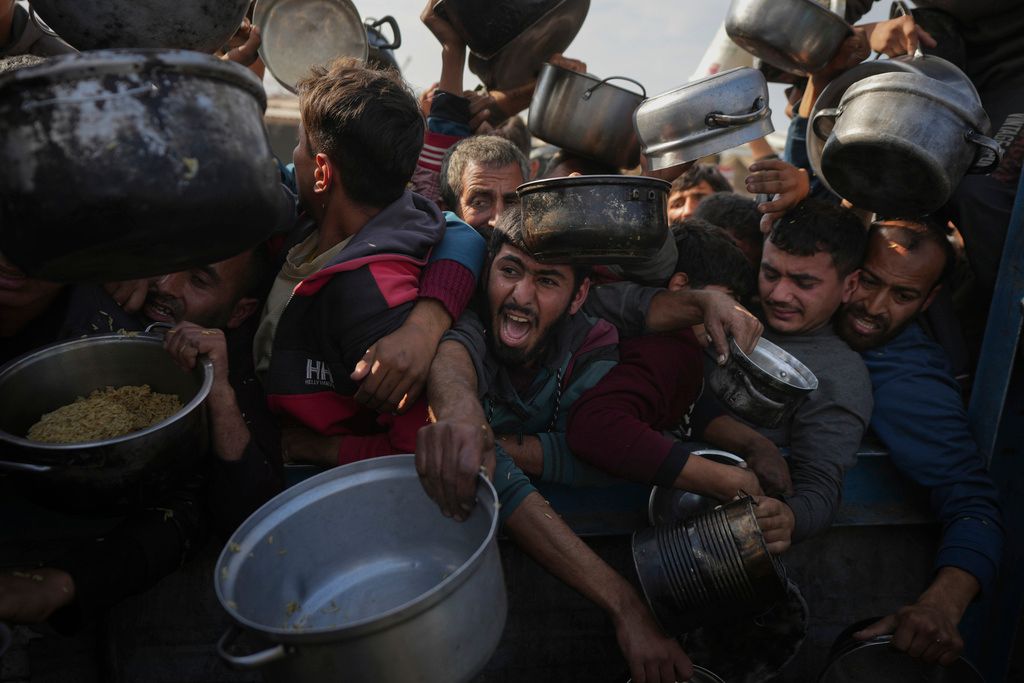
Palestinians struggle for food at a distribution center in Khan Younis, Gaza Strip, Jan. 9, 2025. (AP Photo/Abdel Kareem Hana, File)

UNITED NATIONS (AP) — The United Nations said Wednesday that it’s ready to ramp up the delivery of desperately needed humanitarian aid to Gaza following a ceasefire agreement and urged the removal of major security and political obstacles so supplies can reach all Palestinians in need.

U.N. Secretary-General Antonio Guterres called the announcement of a deal to pause the fighting “a critical first step” and told reporters that the U.N.’s top priority must be to ease the tremendous suffering caused by the conflict triggered by Hamas’ Oct. 7, 2023, attacks in southern Israel.

“The humanitarian situation is at catastrophic levels,” he said. “From our side, we will do whatever is humanly possible, aware of the serious challenges and serious constraints that we will be facing.”

U.N. humanitarian chief Tom Fletcher said aid agencies have been mobilizing supplies in preparation for a ceasefire to scale up deliveries of food, medical supplies and other key items.

Less than half of Gaza’s 36 hospitals are functional, water production is at a quarter of capacity, 95% of school buildings have been damaged or destroyed and nearly all of Gaza’s 2.1 million people are facing high levels of food insecurity, said Catherine Russell, executive director of the U.N. children’s agency UNICEF.

The top U.N. humanitarian official for Gaza, Sigrid Kaag, met with senior Israeli and Palestinian officials in recent days to discuss how to increase aid after a ceasefire agreement, U.N. spokesman Stephane Dujarric said Tuesday.

Kaag’s meetings focused on trying to overcome challenges to deliveries that could remain even after the deal, including gunmen stripping convoys of aid, Israeli restrictions on access to Gaza, road damage, unexplored ordnance, fuel shortages and a lack of telecommunications equipment, he said.

The U.N. humanitarian office reported Tuesday that “Israeli authorities continue to deny U.N.-led efforts to reach people with vital assistance,” Dujarric said. In northern Gaza, where Israel launched its latest offensive, the U.N. has been denied access to deliver food supplies since Dec. 20, he said.

In addition to the lawlessness, the United Nations faces a major political obstacle. Its humanitarian operation in Gaza depends on the U.N. agency for Palestinian refugees, known as UNRWA, which Israel’s parliament voted to ban from operating in the Palestinian territories. That legislation takes effect on Jan. 28.

Guterres has said there is no U.N. agency that can replace UNRWA, and if it is banned from operating, Israel as the occupying power in the Palestinian territories must take responsibility for providing aid.

U.N. officials said it’s imperative that the ceasefire deal is fully implemented and aid is allowed to flow freely.

“With the collapse of essential services across Gaza, we must act urgently to save lives and help children recover,” Russell of UNICEF said in a statement.

Guterres said the United Nations expects its efforts to be matched by other humanitarian organizations, the private sector and government initiatives.

David Miliband, head of the International Rescue Committee, said aid groups must be given full access and adequate funding to rush aid to Gaza’s people after 15 months with limited food, clean water and medical care. He said his organization would quickly ramp up efforts: “The needs are immense and need urgent attention.”

Jan Egeland, a former U.N. humanitarian chief who heads the Norwegian Refugee Council, said, “Israel must immediately lift all restrictions on aid and humanitarian agencies to avert famine-like conditions and ensure access to shelter, food, and medical care for all in need.”

He called on the United States, Germany, the United Kingdom and other nations “to make sure Israel does keep all crossings open, enabling a sustained flow of aid that can alleviate further suffering.”

U.S. President Joe Biden, speaking in Washington, said, “The surge of humanitarian assistance into Gaza will begin. And the innocent people can have a greater access to these vital supplies.

Related Tags

humanitarian aid UN SECRETARY-GENERAL ANTÓNIO GUTERRES WORLDNEWS
ADVERTISEMENT
.most-popular .layout-ratio{ padding-bottom: 79.13%; } @media (min-width: 768px) and (max-width: 1024px) { .widget-title { font-size: 15px !important; } }

{{ articles_filter_1561_widget.title }}

.most-popular .layout-ratio{ padding-bottom: 79.13%; } @media (min-width: 768px) and (max-width: 1024px) { .widget-title { font-size: 15px !important; } }

{{ articles_filter_1562_widget.title }}

.most-popular .layout-ratio{ padding-bottom: 79.13%; } @media (min-width: 768px) and (max-width: 1024px) { .widget-title { font-size: 15px !important; } }

{{ articles_filter_1563_widget.title }}

{{ articles_filter_1564_widget.title }}

.mb-article-details { position: relative; } .mb-article-details .article-body-preview, .mb-article-details .article-body-summary{ font-size: 17px; line-height: 30px; font-family: "Libre Caslon Text", serif; color: #000; } .mb-article-details .article-body-preview iframe , .mb-article-details .article-body-summary iframe{ width: 100%; margin: auto; } .read-more-background { background: linear-gradient(180deg, color(display-p3 1.000 1.000 1.000 / 0) 13.75%, color(display-p3 1.000 1.000 1.000 / 0.8) 30.79%, color(display-p3 1.000 1.000 1.000) 72.5%); position: absolute; height: 200px; width: 100%; bottom: 0; display: flex; justify-content: center; align-items: center; padding: 0; } .read-more-background a{ color: #000; } .read-more-btn { padding: 17px 45px; font-family: Inter; font-weight: 700; font-size: 18px; line-height: 16px; text-align: center; vertical-align: middle; border: 1px solid black; background-color: white; } .hidden { display: none; }
function initializeAllSwipers() { // Get all hidden inputs with cms_article_id document.querySelectorAll('[id^="cms_article_id_"]').forEach(function (input) { const cmsArticleId = input.value; const articleSelector = '#article-' + cmsArticleId + ' .body_images'; const swiperElement = document.querySelector(articleSelector); if (swiperElement && !swiperElement.classList.contains('swiper-initialized')) { new Swiper(articleSelector, { loop: true, pagination: false, navigation: { nextEl: '#article-' + cmsArticleId + ' .swiper-button-next', prevEl: '#article-' + cmsArticleId + ' .swiper-button-prev', }, }); } }); } setTimeout(initializeAllSwipers, 3000); const intersectionObserver = new IntersectionObserver( (entries) => { entries.forEach((entry) => { if (entry.isIntersecting) { const newUrl = entry.target.getAttribute("data-url"); if (newUrl) { history.pushState(null, null, newUrl); let article = entry.target; // Extract metadata const author = article.querySelector('.author-section').textContent.replace('By', '').trim(); const section = article.querySelector('.section-info ').textContent.replace(' ', ' '); const title = article.querySelector('.article-title h1').textContent; // Parse URL for Chartbeat path format const parsedUrl = new URL(newUrl, window.location.origin); const cleanUrl = parsedUrl.host + parsedUrl.pathname; // Update Chartbeat configuration if (typeof window._sf_async_config !== 'undefined') { window._sf_async_config.path = cleanUrl; window._sf_async_config.sections = section; window._sf_async_config.authors = author; } // Track virtual page view with Chartbeat if (typeof pSUPERFLY !== 'undefined' && typeof pSUPERFLY.virtualPage === 'function') { try { pSUPERFLY.virtualPage({ path: cleanUrl, title: title, sections: section, authors: author }); } catch (error) { console.error('ping error', error); } } // Optional: Update document title if (title && title !== document.title) { document.title = title; } } } }); }, { threshold: 0.1 } ); function showArticleBody(button) { const article = button.closest("article"); const summary = article.querySelector(".article-body-summary"); const body = article.querySelector(".article-body-preview"); const readMoreSection = article.querySelector(".read-more-background"); // Hide summary and read-more section summary.style.display = "none"; readMoreSection.style.display = "none"; // Show the full article body body.classList.remove("hidden"); } document.addEventListener("DOMContentLoaded", () => { let loadCount = 0; // Track how many times articles are loaded const offset = [1, 2, 3, 4, 5, 6, 7, 8, 9, 10]; // Offset values const currentUrl = window.location.pathname.substring(1); let isLoading = false; // Prevent multiple calls if (!currentUrl) { console.log("Current URL is invalid."); return; } const sentinel = document.getElementById("load-more-sentinel"); if (!sentinel) { console.log("Sentinel element not found."); return; } function isSentinelVisible() { const rect = sentinel.getBoundingClientRect(); return ( rect.top < window.innerHeight && rect.bottom >= 0 ); } function onScroll() { if (isLoading) return; if (isSentinelVisible()) { if (loadCount >= offset.length) { console.log("Maximum load attempts reached."); window.removeEventListener("scroll", onScroll); return; } isLoading = true; const currentOffset = offset[loadCount]; window.loadMoreItems().then(() => { let article = document.querySelector('#widget_1690 > div:nth-last-of-type(2) article'); intersectionObserver.observe(article) loadCount++; }).catch(error => { console.error("Error loading more items:", error); }).finally(() => { isLoading = false; }); } } window.addEventListener("scroll", onScroll); });

Sign up by email to receive news.