

ADVERTISEMENT

FDA bans red dye No. 3 from foods

Published Jan 15, 2025 03:19 pm

U.S. regulators on Wednesday banned the dye called Red 3 from the nation’s food supply, nearly 35 years after it was barred from cosmetics because of potential cancer risk.
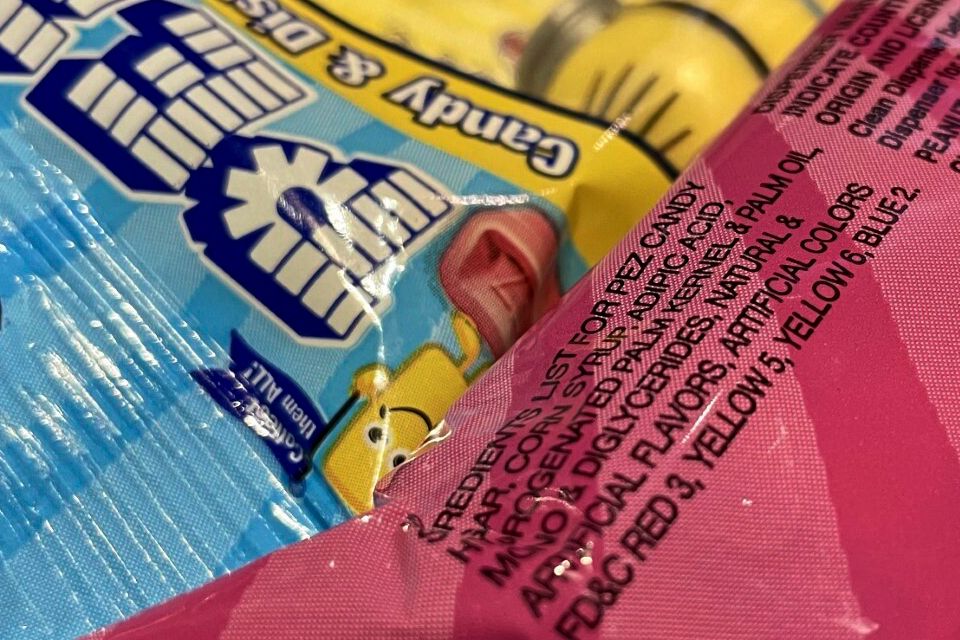
AP25007831458743.jpg

FILE - Pez candy, which contains red dye no. 3, is on display at a store in Lafayette, Calif., March 24, 2023. (AP Photo/Haven Daley, File)


Food and Drug Administration officials granted a 2022 petition filed by two dozen food safety and health advocates, who urged the agency to revoke authorization for the substance that gives some candies, snack cakes and maraschino cherries a bright red hue.

The agency said it was taking the action as a “matter of law” because some studies have found that the dye caused cancer in lab rats. Officials cited a statute known as the Delaney Clause, which requires FDA to ban any additive found to cause cancer in people or animals.

The dye is known as erythrosine, FD&C Red No. 3 or Red 3. The ban removes it from the list of approved color additives in foods, dietary supplements and oral medicines, such as cough syrups. More than three decades ago, the FDA declined to authorize use of Red 3 in cosmetics and externally applied drugs because a study showed it caused cancer when eaten by rats.

“The FDA is taking action that will remove the authorization for the use of FD&C Red No. 3 in food and ingested drugs," said Jim Jones, the FDA's deputy commissioner for human foods. “Evidence shows cancer in laboratory male rats exposed to high levels of FD&C Red No.3. Importantly, the way that FD&C Red No. 3 causes cancer in male rats does not occur in humans.”

Food manufacturers will have until January 2027 to remove the dye from their products, while makers of ingested drugs have until January 2028 to do the same. Other countries still allow for certain uses of the dye, but imported foods must meet the new U.S. requirement.

Consumer advocates praised the decision.

“This is a welcome, but long overdue, action from the FDA: removing the unsustainable double standard in which Red 3 was banned from lipstick but permitted in candy,” said Dr. Peter Lurie, director of the group Center for Science in the Public Interest, which led the petition effort.

It's not clear whether the ban will face legal challenges from food manufacturers because evidence hasn’t determined that the dye causes cancer when consumed by humans. At a hearing in December, FDA Commissioner Dr. Robert Califf suggested that's a risk.

“When we do ban something, it will go to court,” he told members of Congress on Dec. 5. “And if we don't have the scientific evidence, we will lose in court.”

When the FDA declined to allow Red 3 in cosmetics and topical drugs in 1990, the color additive was already permitted in foods and ingested drugs. Because research showed then that the way the dye causes cancer in rats does not apply to humans, "the FDA did not take action to revoke the authorization of Red No. 3 in food,” the agency has said on its website.

Health advocates for years have asked the FDA to reconsider that decision, including the 2022 petition led by CSPI. In November, nearly two dozen members of Congress sent a letter demanding that FDA officials ban Red 3.

Lawmakers cited the Delaney Clause and said the action was especially important to protect children, who consume more of the dye on a bodyweight basis than adults, the lawmakers said.

“The FDA should act quickly to protect the nation's youth from this harmful dye, used simply to give food and drinks a bright red color,” the letter said. “No aesthetic reason could justify the use of a carcinogen in our food supply.”

Red 3 is banned for food use in Europe, Australia and New Zealand except in certain kinds of cherries. The dye will be banned in California starting in January 2027.

The International Association of Color Manufacturers defends the dye, saying that it is safe in levels typically consumed by humans. The group points to research by scientific committees operated by the United Nations and the World Health Organization, including a 2018 review that reaffirmed the safety of Red 3 in food.

Some food manufacturers have already reformulated products to remove Red 3. In its place they use beet juice; carmine, a dye made from insects; and pigments from foods such as purple sweet potato, radish and red cabbage, according to Sensient Food Colors, a St. Louis-based supplier of food colors and flavorings.

Related Tags

WORLDNEWS
ADVERTISEMENT
.most-popular .layout-ratio{ padding-bottom: 79.13%; } @media (min-width: 768px) and (max-width: 1024px) { .widget-title { font-size: 15px !important; } }

{{ articles_filter_1561_widget.title }}

.most-popular .layout-ratio{ padding-bottom: 79.13%; } @media (min-width: 768px) and (max-width: 1024px) { .widget-title { font-size: 15px !important; } }

{{ articles_filter_1562_widget.title }}

.most-popular .layout-ratio{ padding-bottom: 79.13%; } @media (min-width: 768px) and (max-width: 1024px) { .widget-title { font-size: 15px !important; } }

{{ articles_filter_1563_widget.title }}

{{ articles_filter_1564_widget.title }}

.mb-article-details { position: relative; } .mb-article-details .article-body-preview, .mb-article-details .article-body-summary{ font-size: 17px; line-height: 30px; font-family: "Libre Caslon Text", serif; color: #000; } .mb-article-details .article-body-preview iframe , .mb-article-details .article-body-summary iframe{ width: 100%; margin: auto; } .read-more-background { background: linear-gradient(180deg, color(display-p3 1.000 1.000 1.000 / 0) 13.75%, color(display-p3 1.000 1.000 1.000 / 0.8) 30.79%, color(display-p3 1.000 1.000 1.000) 72.5%); position: absolute; height: 200px; width: 100%; bottom: 0; display: flex; justify-content: center; align-items: center; padding: 0; } .read-more-background a{ color: #000; } .read-more-btn { padding: 17px 45px; font-family: Inter; font-weight: 700; font-size: 18px; line-height: 16px; text-align: center; vertical-align: middle; border: 1px solid black; background-color: white; } .hidden { display: none; }
function initializeAllSwipers() { // Get all hidden inputs with cms_article_id document.querySelectorAll('[id^="cms_article_id_"]').forEach(function (input) { const cmsArticleId = input.value; const articleSelector = '#article-' + cmsArticleId + ' .body_images'; const swiperElement = document.querySelector(articleSelector); if (swiperElement && !swiperElement.classList.contains('swiper-initialized')) { new Swiper(articleSelector, { loop: true, pagination: false, navigation: { nextEl: '#article-' + cmsArticleId + ' .swiper-button-next', prevEl: '#article-' + cmsArticleId + ' .swiper-button-prev', }, }); } }); } setTimeout(initializeAllSwipers, 3000); const intersectionObserver = new IntersectionObserver( (entries) => { entries.forEach((entry) => { if (entry.isIntersecting) { const newUrl = entry.target.getAttribute("data-url"); if (newUrl) { history.pushState(null, null, newUrl); let article = entry.target; // Extract metadata const author = article.querySelector('.author-section').textContent.replace('By', '').trim(); const section = article.querySelector('.section-info ').textContent.replace(' ', ' '); const title = article.querySelector('.article-title h1').textContent; // Parse URL for Chartbeat path format const parsedUrl = new URL(newUrl, window.location.origin); const cleanUrl = parsedUrl.host + parsedUrl.pathname; // Update Chartbeat configuration if (typeof window._sf_async_config !== 'undefined') { window._sf_async_config.path = cleanUrl; window._sf_async_config.sections = section; window._sf_async_config.authors = author; } // Track virtual page view with Chartbeat if (typeof pSUPERFLY !== 'undefined' && typeof pSUPERFLY.virtualPage === 'function') { try { pSUPERFLY.virtualPage({ path: cleanUrl, title: title, sections: section, authors: author }); } catch (error) { console.error('ping error', error); } } // Optional: Update document title if (title && title !== document.title) { document.title = title; } } } }); }, { threshold: 0.1 } ); function showArticleBody(button) { const article = button.closest("article"); const summary = article.querySelector(".article-body-summary"); const body = article.querySelector(".article-body-preview"); const readMoreSection = article.querySelector(".read-more-background"); // Hide summary and read-more section summary.style.display = "none"; readMoreSection.style.display = "none"; // Show the full article body body.classList.remove("hidden"); } document.addEventListener("DOMContentLoaded", () => { let loadCount = 0; // Track how many times articles are loaded const offset = [1, 2, 3, 4, 5, 6, 7, 8, 9, 10]; // Offset values const currentUrl = window.location.pathname.substring(1); let isLoading = false; // Prevent multiple calls if (!currentUrl) { console.log("Current URL is invalid."); return; } const sentinel = document.getElementById("load-more-sentinel"); if (!sentinel) { console.log("Sentinel element not found."); return; } function isSentinelVisible() { const rect = sentinel.getBoundingClientRect(); return ( rect.top < window.innerHeight && rect.bottom >= 0 ); } function onScroll() { if (isLoading) return; if (isSentinelVisible()) { if (loadCount >= offset.length) { console.log("Maximum load attempts reached."); window.removeEventListener("scroll", onScroll); return; } isLoading = true; const currentOffset = offset[loadCount]; window.loadMoreItems().then(() => { let article = document.querySelector('#widget_1690 > div:nth-last-of-type(2) article'); intersectionObserver.observe(article) loadCount++; }).catch(error => { console.error("Error loading more items:", error); }).finally(() => { isLoading = false; }); } } window.addEventListener("scroll", onScroll); });

Sign up by email to receive news.