ADVERTISEMENT

Queen Elizabeth II wasn't told about Soviet spy in her palace, declassified MI5 files show

Published Jan 14, 2025 01:56 pm
AP25013437837610.jpg
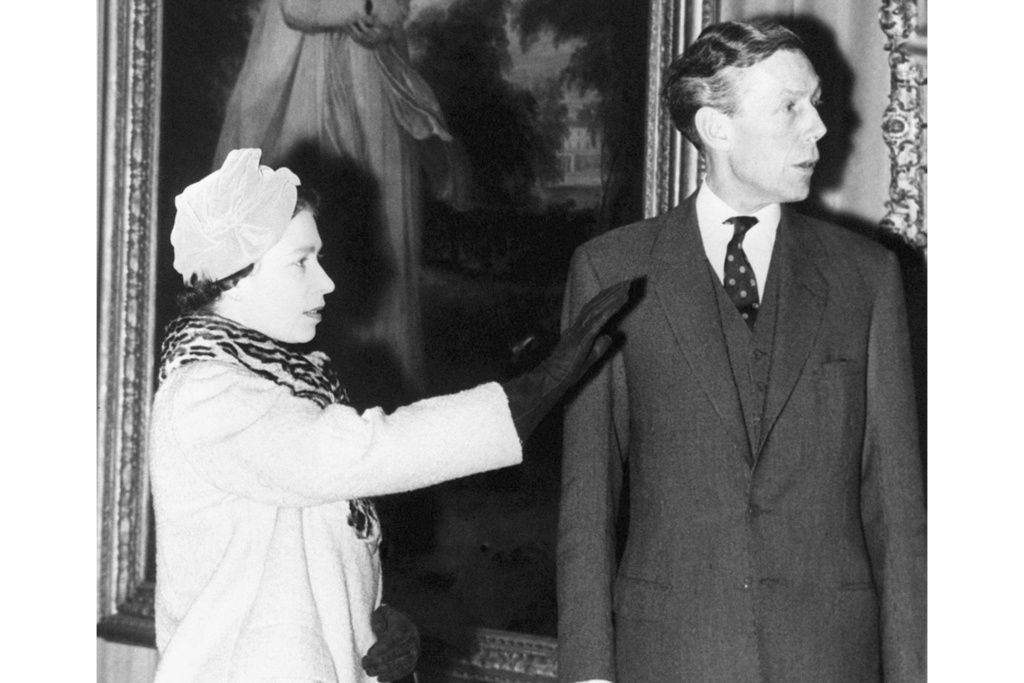
FILE - Professor Anthony Blunt, former surveyor of the Queen's pictures, photographed at the Courtauld Institute with Queen Elizabeth II on Nov. 15, 1979. (PA via AP, File)

LONDON (AP) — Queen Elizabeth II wasn’t told details of her long-time art adviser's double life as a Soviet spy because palace officials didn’t want to add to her worries, newly declassified documents reveal.

The files about royal art historian Anthony Blunt are among a trove from the intelligence agency MI5 released Tuesday by Britain's National Archives. They shed new light on a spy ring linked to Cambridge University in the 1930s, whose members spilled secrets to the Soviet Union from the heart of the U.K. intelligence establishment.

Blunt, who worked at Buckingham Palace as Surveyor of the Queen’s Pictures, was under suspicion for years before he finally confessed in 1964 that, as a senior MI5 officer during World War II, he had passed secret information to Soviet agents.

In one of the newly released files, an MI5 officer notes that Blunt said he felt “profound relief” at unburdening himself. In return for information he provided, Blunt was allowed to keep his job, his knighthood and his social standing – and the queen was apparently kept in the dark.

In 1972, her private secretary, Martin Charteris, told MI5 chief Michael Hanley that “the queen did not know and he saw no advantage in telling her about it now; it would only add to her worries and there was nothing that could done about him.”

The government decided to tell the monarch in 1973, when Blunt was ill, fearing a media uproar once Blunt died and journalists were able to publish stories without fear of libel suits.

Charteris reported that “she took it all very calmly and without surprise,” and “remembered that he had been under suspicion way back” in the early 1950s. Historian Christopher Andrew says in the official history of MI5 that the queen had previously been told about Blunt in “general terms.”

Blunt was publicly unmasked as a spy by Prime Minister Margaret Thatcher in the House of Commons in November 1979. He was finally stripped of his knighthood, but never prosecuted, and died in 1983 at the age of 75.

Files held by Britain’s secretive intelligence services usually remain classified for several decades, but the agencies are inching toward more openness. Some of the newly released documents will feature in an exhibition, entitled “MI5: Official Secrets,” opening at the National Archives in London later this year.

Two of the Cambridge spies, Donald Maclean and Guy Burgess, fled to Russia in 1951. A third, Kim Philby, continued to work for foreign intelligence agency MI6 despite falling under suspicion. As evidence of his duplicity mounted, he was confronted in Beirut in January 1963 by his friend and fellow MI6 officer Nicholas Elliott.

The declassified files include Philby’s typed confession and a transcript of his discussion with Elliott.

In it, Philby admitted he had betrayed Konstantin Volkov, a KGB officer who tried to defect to the West in 1945, bringing with him details of moles inside British intelligence – including Philby himself. As a result of Philby’s intervention, Volkov was abducted in Istanbul, taken back to Moscow and executed.

Elliott reported that Philby said that if he had his life to lead again, he would probably have behaved in the same way.

“I really did feel a tremendous loyalty to MI6. I was treated very, very well in it and I made some really marvelous friends there," Philby said, according to the transcript. "But the overruling inspiration was the other side.”

Philby told Elliott that the choice faced now that he was exposed was “between suicide and prosecution.” Instead, he fled to Moscow, where he died in 1988.

The Cambridge spies have inspired myriad books, plays movies and TV shows, including the 2023 series “ A Spy Among Friends,” starring Guy Pearce as Philby and Damian Lewis as Elliott. Blunt featured in a 2019 episode of “ The Crown,” played by Samuel West.

Related Tags

WORLDNEWS
ADVERTISEMENT
.most-popular .layout-ratio{ padding-bottom: 79.13%; } @media (min-width: 768px) and (max-width: 1024px) { .widget-title { font-size: 15px !important; } }

{{ articles_filter_1561_widget.title }}

.most-popular .layout-ratio{ padding-bottom: 79.13%; } @media (min-width: 768px) and (max-width: 1024px) { .widget-title { font-size: 15px !important; } }

{{ articles_filter_1562_widget.title }}

.most-popular .layout-ratio{ padding-bottom: 79.13%; } @media (min-width: 768px) and (max-width: 1024px) { .widget-title { font-size: 15px !important; } }

{{ articles_filter_1563_widget.title }}

{{ articles_filter_1564_widget.title }}

.mb-article-details { position: relative; } .mb-article-details .article-body-preview, .mb-article-details .article-body-summary{ font-size: 17px; line-height: 30px; font-family: "Libre Caslon Text", serif; color: #000; } .mb-article-details .article-body-preview iframe , .mb-article-details .article-body-summary iframe{ width: 100%; margin: auto; } .read-more-background { background: linear-gradient(180deg, color(display-p3 1.000 1.000 1.000 / 0) 13.75%, color(display-p3 1.000 1.000 1.000 / 0.8) 30.79%, color(display-p3 1.000 1.000 1.000) 72.5%); position: absolute; height: 200px; width: 100%; bottom: 0; display: flex; justify-content: center; align-items: center; padding: 0; } .read-more-background a{ color: #000; } .read-more-btn { padding: 17px 45px; font-family: Inter; font-weight: 700; font-size: 18px; line-height: 16px; text-align: center; vertical-align: middle; border: 1px solid black; background-color: white; } .hidden { display: none; }
function initializeAllSwipers() { // Get all hidden inputs with cms_article_id document.querySelectorAll('[id^="cms_article_id_"]').forEach(function (input) { const cmsArticleId = input.value; const articleSelector = '#article-' + cmsArticleId + ' .body_images'; const swiperElement = document.querySelector(articleSelector); if (swiperElement && !swiperElement.classList.contains('swiper-initialized')) { new Swiper(articleSelector, { loop: true, pagination: false, navigation: { nextEl: '#article-' + cmsArticleId + ' .swiper-button-next', prevEl: '#article-' + cmsArticleId + ' .swiper-button-prev', }, }); } }); } setTimeout(initializeAllSwipers, 3000); const intersectionObserver = new IntersectionObserver( (entries) => { entries.forEach((entry) => { if (entry.isIntersecting) { const newUrl = entry.target.getAttribute("data-url"); if (newUrl) { history.pushState(null, null, newUrl); let article = entry.target; // Extract metadata const author = article.querySelector('.author-section').textContent.replace('By', '').trim(); const section = article.querySelector('.section-info ').textContent.replace(' ', ' '); const title = article.querySelector('.article-title h1').textContent; // Parse URL for Chartbeat path format const parsedUrl = new URL(newUrl, window.location.origin); const cleanUrl = parsedUrl.host + parsedUrl.pathname; // Update Chartbeat configuration if (typeof window._sf_async_config !== 'undefined') { window._sf_async_config.path = cleanUrl; window._sf_async_config.sections = section; window._sf_async_config.authors = author; } // Track virtual page view with Chartbeat if (typeof pSUPERFLY !== 'undefined' && typeof pSUPERFLY.virtualPage === 'function') { try { pSUPERFLY.virtualPage({ path: cleanUrl, title: title, sections: section, authors: author }); } catch (error) { console.error('ping error', error); } } // Optional: Update document title if (title && title !== document.title) { document.title = title; } } } }); }, { threshold: 0.1 } ); function showArticleBody(button) { const article = button.closest("article"); const summary = article.querySelector(".article-body-summary"); const body = article.querySelector(".article-body-preview"); const readMoreSection = article.querySelector(".read-more-background"); // Hide summary and read-more section summary.style.display = "none"; readMoreSection.style.display = "none"; // Show the full article body body.classList.remove("hidden"); } document.addEventListener("DOMContentLoaded", () => { let loadCount = 0; // Track how many times articles are loaded const offset = [1, 2, 3, 4, 5, 6, 7, 8, 9, 10]; // Offset values const currentUrl = window.location.pathname.substring(1); let isLoading = false; // Prevent multiple calls if (!currentUrl) { console.log("Current URL is invalid."); return; } const sentinel = document.getElementById("load-more-sentinel"); if (!sentinel) { console.log("Sentinel element not found."); return; } function isSentinelVisible() { const rect = sentinel.getBoundingClientRect(); return ( rect.top < window.innerHeight && rect.bottom >= 0 ); } function onScroll() { if (isLoading) return; if (isSentinelVisible()) { if (loadCount >= offset.length) { console.log("Maximum load attempts reached."); window.removeEventListener("scroll", onScroll); return; } isLoading = true; const currentOffset = offset[loadCount]; window.loadMoreItems().then(() => { let article = document.querySelector('#widget_1690 > div:nth-last-of-type(2) article'); intersectionObserver.observe(article) loadCount++; }).catch(error => { console.error("Error loading more items:", error); }).finally(() => { isLoading = false; }); } } window.addEventListener("scroll", onScroll); });

Sign up by email to receive news.