ADVERTISEMENT

Scientists drill nearly 2 miles down to pull 1.2 million-year-old ice core from Antarctic

Published Jan 10, 2025 02:50 pm
IMG_5455.jpeg
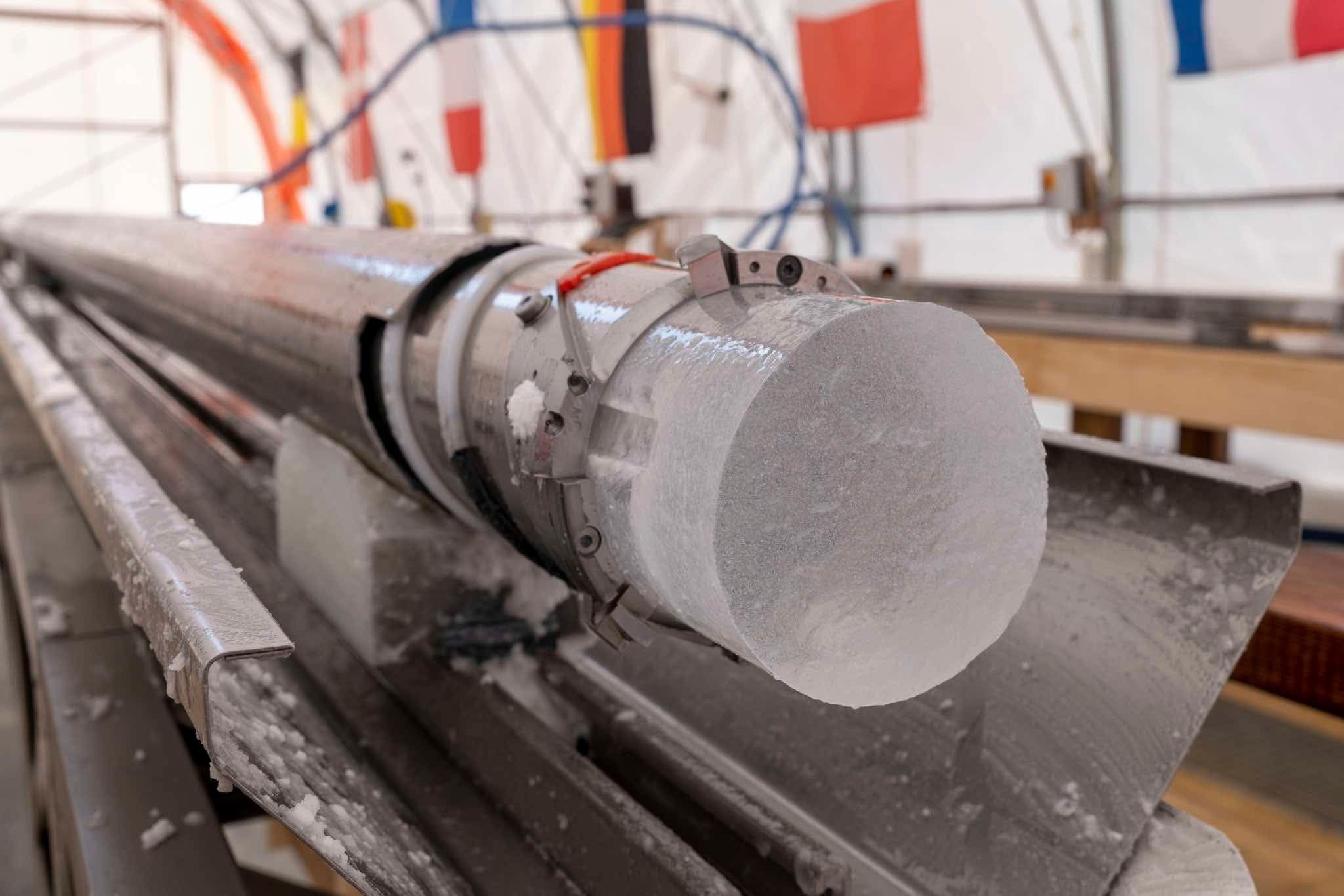
An ice core drilled by a research team is displayed at Little Dome C field base in eastern Antarctica, during the cutting phase on Tuesday, Jan. 7, 2025. (PNRA/IPEV Beyond Epica via AP)

An international team of scientists announced Thursday they've successfully drilled one of the oldest ice cores yet, penetrating nearly 2 miles (2.8 kilometers) to Antarctic bedrock to reach ice they say is at least 1.2 million years old.

Analysis of the ancient ice is expected to show how Earth's atmosphere and climate have evolved. That should provide insight into how Ice Age cycles have changed, and may help in understanding how atmospheric carbon changed climate, they said.

"Thanks to the ice core we will understand what has changed in terms of greenhouse gases, chemicals and dusts in the atmosphere," said Carlo Barbante, an Italian glaciologist and coordinator of Beyond EPICA, the project to obtain the core. Barbante also directs the Polar Science Institute at Italy's National Research Council.

The same team previously drilled a core about 800,000 years old. The latest drilling went 2.8 kilometers (about 1.7 miles) deep, with a team of 16 scientists and support personnel drilling each summer over four years in average temperatures of about minus-35 Celsius (minus-25.6 Fahrenheit).
IMG_5456.jpeg
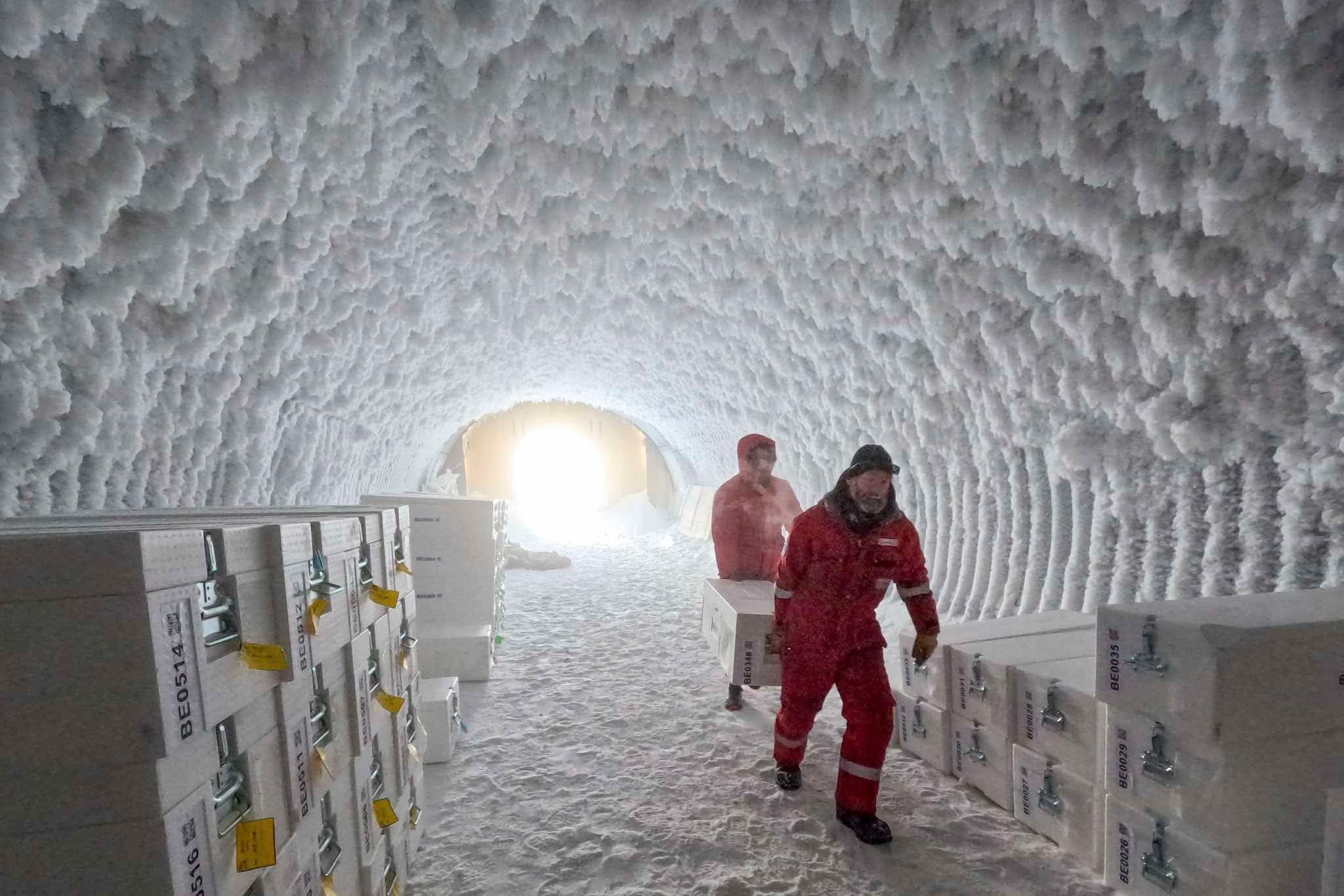
People walk through an ice core storage cave at Little Dome C field base on Tuesday, Jan. 7, 2025, in in eastern Antarctica. (PNRA/IPEV Beyond Epica via AP)

Italian researcher Federico Scoto was among the glaciologists and technicians who completed the drilling at the beginning of January at a location called Little Dome C, near Concordia Research Station.

"It was a great a moment for us when we reached the bedrock," Scoto said. Isotope analysis gave the ice's age as at least 1.2 million years old, he said.

Both Barbante and Scoto said that thanks to the analysis of the ice core of the previous Epica campaign they have assessed that concentrations of greenhouse gases, such as carbon dioxide and methane, even during the warmest periods of the last 800,000 years, have never exceeded the levels seen since the Industrial Revolution began.

"Today we are seeing carbon dioxide levels that are 50 percent above the highest levels we've had over the last 800,000 years," Barbante said.

The European Union funded Beyond EPICA (European Project for Ice Coring in Antarctica) with support from nations across the continent. Italy is coordinating the project.

The announcement was exciting to Richard Alley, a climate scientist at Penn State who was not involved with the project and who was recently awarded the National Medal of Science for his career studying ice sheets.

Alley said advancements in studying ice cores are important because they help scientists better understand the climate conditions of the past and inform their understanding of humans' contributions to climate change in the present. He added that reaching the bedrock holds added promise because scientists may learn more about Earth's history not directly related to the ice record itself.

"This is truly, truly, amazingly fantastic," Alley said. "They will learn wonderful things."

Related Tags

Little Dome C Climate Change European Project for Ice Coring in Antarctica Carlo Barbante Antartic
ADVERTISEMENT
.most-popular .layout-ratio{ padding-bottom: 79.13%; } @media (min-width: 768px) and (max-width: 1024px) { .widget-title { font-size: 15px !important; } }

{{ articles_filter_1561_widget.title }}

.most-popular .layout-ratio{ padding-bottom: 79.13%; } @media (min-width: 768px) and (max-width: 1024px) { .widget-title { font-size: 15px !important; } }

{{ articles_filter_1562_widget.title }}

.most-popular .layout-ratio{ padding-bottom: 79.13%; } @media (min-width: 768px) and (max-width: 1024px) { .widget-title { font-size: 15px !important; } }

{{ articles_filter_1563_widget.title }}

{{ articles_filter_1564_widget.title }}

.mb-article-details { position: relative; } .mb-article-details .article-body-preview, .mb-article-details .article-body-summary{ font-size: 17px; line-height: 30px; font-family: "Libre Caslon Text", serif; color: #000; } .mb-article-details .article-body-preview iframe , .mb-article-details .article-body-summary iframe{ width: 100%; margin: auto; } .read-more-background { background: linear-gradient(180deg, color(display-p3 1.000 1.000 1.000 / 0) 13.75%, color(display-p3 1.000 1.000 1.000 / 0.8) 30.79%, color(display-p3 1.000 1.000 1.000) 72.5%); position: absolute; height: 200px; width: 100%; bottom: 0; display: flex; justify-content: center; align-items: center; padding: 0; } .read-more-background a{ color: #000; } .read-more-btn { padding: 17px 45px; font-family: Inter; font-weight: 700; font-size: 18px; line-height: 16px; text-align: center; vertical-align: middle; border: 1px solid black; background-color: white; } .hidden { display: none; }
function initializeAllSwipers() { // Get all hidden inputs with cms_article_id document.querySelectorAll('[id^="cms_article_id_"]').forEach(function (input) { const cmsArticleId = input.value; const articleSelector = '#article-' + cmsArticleId + ' .body_images'; const swiperElement = document.querySelector(articleSelector); if (swiperElement && !swiperElement.classList.contains('swiper-initialized')) { new Swiper(articleSelector, { loop: true, pagination: false, navigation: { nextEl: '#article-' + cmsArticleId + ' .swiper-button-next', prevEl: '#article-' + cmsArticleId + ' .swiper-button-prev', }, }); } }); } setTimeout(initializeAllSwipers, 3000); const intersectionObserver = new IntersectionObserver( (entries) => { entries.forEach((entry) => { if (entry.isIntersecting) { const newUrl = entry.target.getAttribute("data-url"); if (newUrl) { history.pushState(null, null, newUrl); let article = entry.target; // Extract metadata const author = article.querySelector('.author-section').textContent.replace('By', '').trim(); const section = article.querySelector('.section-info ').textContent.replace(' ', ' '); const title = article.querySelector('.article-title h1').textContent; // Parse URL for Chartbeat path format const parsedUrl = new URL(newUrl, window.location.origin); const cleanUrl = parsedUrl.host + parsedUrl.pathname; // Update Chartbeat configuration if (typeof window._sf_async_config !== 'undefined') { window._sf_async_config.path = cleanUrl; window._sf_async_config.sections = section; window._sf_async_config.authors = author; } // Track virtual page view with Chartbeat if (typeof pSUPERFLY !== 'undefined' && typeof pSUPERFLY.virtualPage === 'function') { try { pSUPERFLY.virtualPage({ path: cleanUrl, title: title, sections: section, authors: author }); } catch (error) { console.error('ping error', error); } } // Optional: Update document title if (title && title !== document.title) { document.title = title; } } } }); }, { threshold: 0.1 } ); function showArticleBody(button) { const article = button.closest("article"); const summary = article.querySelector(".article-body-summary"); const body = article.querySelector(".article-body-preview"); const readMoreSection = article.querySelector(".read-more-background"); // Hide summary and read-more section summary.style.display = "none"; readMoreSection.style.display = "none"; // Show the full article body body.classList.remove("hidden"); } document.addEventListener("DOMContentLoaded", () => { let loadCount = 0; // Track how many times articles are loaded const offset = [1, 2, 3, 4, 5, 6, 7, 8, 9, 10]; // Offset values const currentUrl = window.location.pathname.substring(1); let isLoading = false; // Prevent multiple calls if (!currentUrl) { console.log("Current URL is invalid."); return; } const sentinel = document.getElementById("load-more-sentinel"); if (!sentinel) { console.log("Sentinel element not found."); return; } function isSentinelVisible() { const rect = sentinel.getBoundingClientRect(); return ( rect.top < window.innerHeight && rect.bottom >= 0 ); } function onScroll() { if (isLoading) return; if (isSentinelVisible()) { if (loadCount >= offset.length) { console.log("Maximum load attempts reached."); window.removeEventListener("scroll", onScroll); return; } isLoading = true; const currentOffset = offset[loadCount]; window.loadMoreItems().then(() => { let article = document.querySelector('#widget_1690 > div:nth-last-of-type(2) article'); intersectionObserver.observe(article) loadCount++; }).catch(error => { console.error("Error loading more items:", error); }).finally(() => { isLoading = false; }); } } window.addEventListener("scroll", onScroll); });

Sign up by email to receive news.