ADVERTISEMENT

Population growth decline boosts demographic dividends

Published Sep 30, 2025 12:05 am  |  Updated Sep 29, 2025 05:37 pm
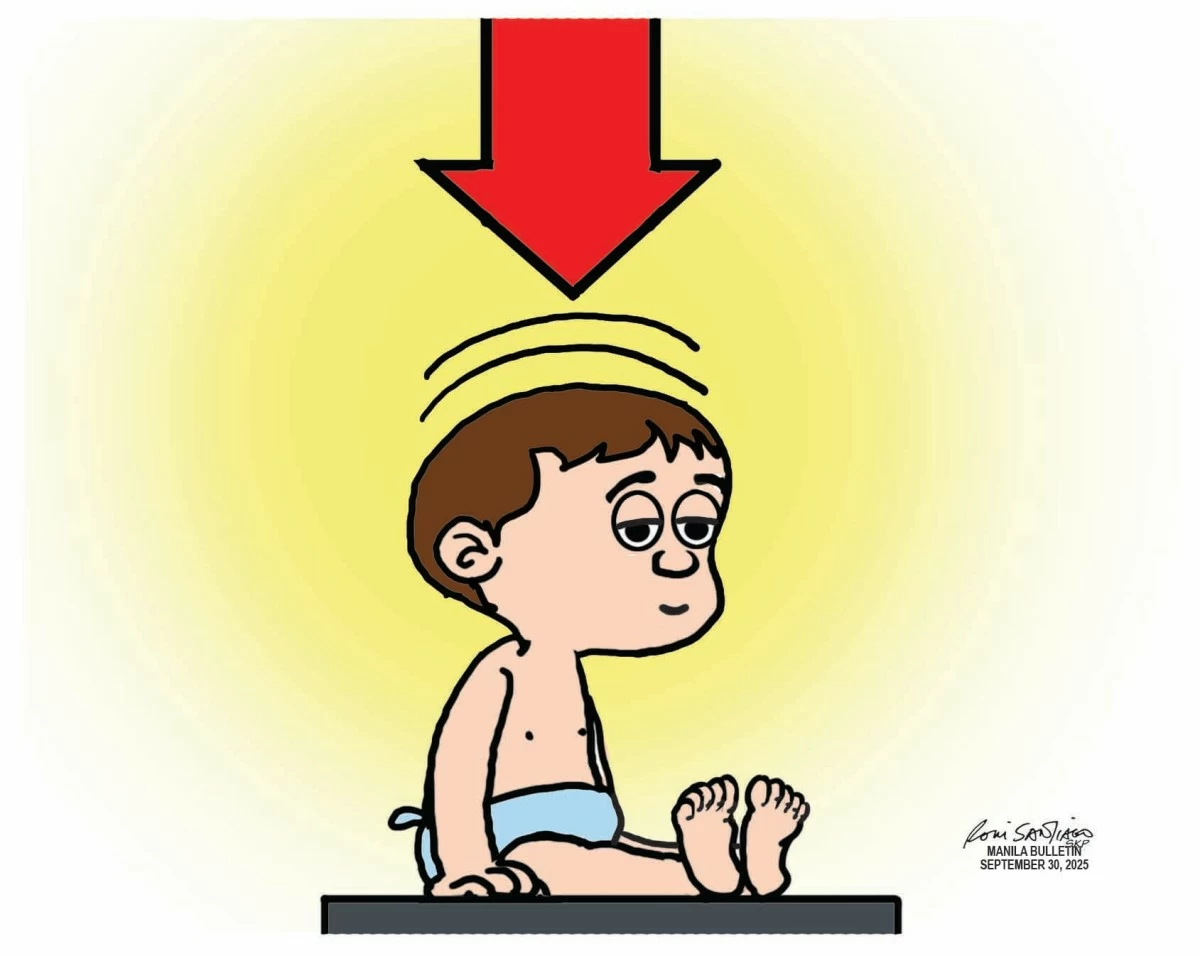
Increased use of various family planning methods has been instrumental in the decline in population growth from 1.63 percent in 2015-2020 to only 0.80 percent in 2020-2024. This report, issued over the weekend by the Commission on Population and Development (CPD) points to “substantial progress in family planning” as being instrumental in “the historic decline in the Philippines’ fertility rate to 1.9 percent.”
Explaining the significance of these new indicators, CPD Executive Director Lisa Grace Bersales notes that the country is “witnessing a transformative period for family planning.” The low fertility rate is directly linked to the record rate of family planning users. She notes further: “This signals a powerful societal shift toward planned parenthood and enables the economy to harvest its demographic dividend.”
In simple terms, the demographic dividend is a temporary economic boost a country can get when its population's age structure shifts in such a way that there is a larger proportion of working-age adults compared to children and the elderly. This happens as a country's birth and death rates fall, resulting in more people in the workforce relative to dependents and creating opportunities for increased productivity, higher savings, and faster economic growth.
This favorable situation was already noted during the administration of President Benigno S. Aquino, Jr. with the attainment of a record annual GDP growth rate of 6.2 percent. But the momentum stalled as the pandemic pushed the economy into a tailspin such that the growth rate dipped to 2.5 percent at the end of the Duterte regime.
Enthusiasm over the latest demographic trends is tempered by parallel downside indicators. Some 42 percent of sexually active unmarried women lack access to their preferred methods. This signals the imperative to broaden access to “a full range of modern contraceptives…especially for the poor and the marginalized,” according to the population experts. Also raising considerable concern is the continuing rise in adolescent birth rates.
Indeed, much work needs to be done toward managing population growth amid formidable economic and social challenges.
In light of the CPD’s latest report, the imperatives for Philippine population control management include: strengthening reproductive health and family planning services, particularly for young people, by integrating population education into school curricula and promoting informed choices for stable households.
It also emphasizes the need to integrate the population agenda into overall development plans, empower local government units (LGUs) to implement these strategies, and use demographic data to guide policies that address population issues that could foster sustainable and inclusive development.
Providing support and access to information and services for young people will enable them to make informed choices about their reproductive health and family formation, as highlighted by the increasing trend of cohabitation among young adults. Equally essential is the promotion of responsible parenthood, birth spacing, and family planning to improve the health of mothers, children, and the family unit.
Support for Local Government Units (LGUs) must also be upscaled in terms of adopting and implementing integrated population and development strategies, especially in the context of full devolution.
More intensive research will enable an improved knowledge management system for population and development that effectively interprets data to understand current conditions and inform effective action.
Finally, there must be a purposive focus on accelerating the pace of inclusive development among marginalized sectors of the population to ensure that everyone benefits from demographic opportunities and development progress.
ADVERTISEMENT
.most-popular .layout-ratio{ padding-bottom: 79.13%; } @media (min-width: 768px) and (max-width: 1024px) { .widget-title { font-size: 15px !important; } }

{{ articles_filter_1561_widget.title }}

.most-popular .layout-ratio{ padding-bottom: 79.13%; } @media (min-width: 768px) and (max-width: 1024px) { .widget-title { font-size: 15px !important; } }

{{ articles_filter_1562_widget.title }}

.most-popular .layout-ratio{ padding-bottom: 79.13%; } @media (min-width: 768px) and (max-width: 1024px) { .widget-title { font-size: 15px !important; } }

{{ articles_filter_1563_widget.title }}

{{ articles_filter_1564_widget.title }}

.mb-article-details { position: relative; } .mb-article-details .article-body-preview, .mb-article-details .article-body-summary{ font-size: 17px; line-height: 30px; font-family: "Libre Caslon Text", serif; color: #000; } .mb-article-details .article-body-preview iframe , .mb-article-details .article-body-summary iframe{ width: 100%; margin: auto; } .read-more-background { background: linear-gradient(180deg, color(display-p3 1.000 1.000 1.000 / 0) 13.75%, color(display-p3 1.000 1.000 1.000 / 0.8) 30.79%, color(display-p3 1.000 1.000 1.000) 72.5%); position: absolute; height: 200px; width: 100%; bottom: 0; display: flex; justify-content: center; align-items: center; padding: 0; } .read-more-background a{ color: #000; } .read-more-btn { padding: 17px 45px; font-family: Inter; font-weight: 700; font-size: 18px; line-height: 16px; text-align: center; vertical-align: middle; border: 1px solid black; background-color: white; } .hidden { display: none; }
function initializeAllSwipers() { // Get all hidden inputs with cms_article_id document.querySelectorAll('[id^="cms_article_id_"]').forEach(function (input) { const cmsArticleId = input.value; const articleSelector = '#article-' + cmsArticleId + ' .body_images'; const swiperElement = document.querySelector(articleSelector); if (swiperElement && !swiperElement.classList.contains('swiper-initialized')) { new Swiper(articleSelector, { loop: true, pagination: false, navigation: { nextEl: '#article-' + cmsArticleId + ' .swiper-button-next', prevEl: '#article-' + cmsArticleId + ' .swiper-button-prev', }, }); } }); } setTimeout(initializeAllSwipers, 3000); const intersectionObserver = new IntersectionObserver( (entries) => { entries.forEach((entry) => { if (entry.isIntersecting) { const newUrl = entry.target.getAttribute("data-url"); if (newUrl) { history.pushState(null, null, newUrl); let article = entry.target; // Extract metadata const author = article.querySelector('.author-section').textContent.replace('By', '').trim(); const section = article.querySelector('.section-info ').textContent.replace(' ', ' '); const title = article.querySelector('.article-title h1').textContent; // Parse URL for Chartbeat path format const parsedUrl = new URL(newUrl, window.location.origin); const cleanUrl = parsedUrl.host + parsedUrl.pathname; // Update Chartbeat configuration if (typeof window._sf_async_config !== 'undefined') { window._sf_async_config.path = cleanUrl; window._sf_async_config.sections = section; window._sf_async_config.authors = author; } // Track virtual page view with Chartbeat if (typeof pSUPERFLY !== 'undefined' && typeof pSUPERFLY.virtualPage === 'function') { try { pSUPERFLY.virtualPage({ path: cleanUrl, title: title, sections: section, authors: author }); } catch (error) { console.error('ping error', error); } } // Optional: Update document title if (title && title !== document.title) { document.title = title; } } } }); }, { threshold: 0.1 } ); function showArticleBody(button) { const article = button.closest("article"); const summary = article.querySelector(".article-body-summary"); const body = article.querySelector(".article-body-preview"); const readMoreSection = article.querySelector(".read-more-background"); // Hide summary and read-more section summary.style.display = "none"; readMoreSection.style.display = "none"; // Show the full article body body.classList.remove("hidden"); } document.addEventListener("DOMContentLoaded", () => { let loadCount = 0; // Track how many times articles are loaded const offset = [1, 2, 3, 4, 5, 6, 7, 8, 9, 10]; // Offset values const currentUrl = window.location.pathname.substring(1); let isLoading = false; // Prevent multiple calls if (!currentUrl) { console.log("Current URL is invalid."); return; } const sentinel = document.getElementById("load-more-sentinel"); if (!sentinel) { console.log("Sentinel element not found."); return; } function isSentinelVisible() { const rect = sentinel.getBoundingClientRect(); return ( rect.top < window.innerHeight && rect.bottom >= 0 ); } function onScroll() { if (isLoading) return; if (isSentinelVisible()) { if (loadCount >= offset.length) { console.log("Maximum load attempts reached."); window.removeEventListener("scroll", onScroll); return; } isLoading = true; const currentOffset = offset[loadCount]; window.loadMoreItems().then(() => { let article = document.querySelector('#widget_1690 > div:nth-last-of-type(2) article'); intersectionObserver.observe(article) loadCount++; }).catch(error => { console.error("Error loading more items:", error); }).finally(() => { isLoading = false; }); } } window.addEventListener("scroll", onScroll); });

Sign up by email to receive news.