






Manila Bulletin
 Philippines
National
Nazal explains why CHEd should be excluded from 29-year-old Palace directive
Philippines
National
Nazal explains why CHEd should be excluded from 29-year-old Palace directive
Philippines
National
Nazal explains why CHEd should be excluded from 29-year-old Palace directive
Nazal explains why CHEd should be excluded from 29-year-old Palace directive
Published Sep 30, 2025 09:39 am


At A Glance
- The Department of Budget and Management (DBM) should exclude the Commission on Higher Education (CHEd) from the coverage of Executive Order (EO) No. 338 so that funds for the Tertiary Education Subsidy (TES) can be properly managed and maximized for students.
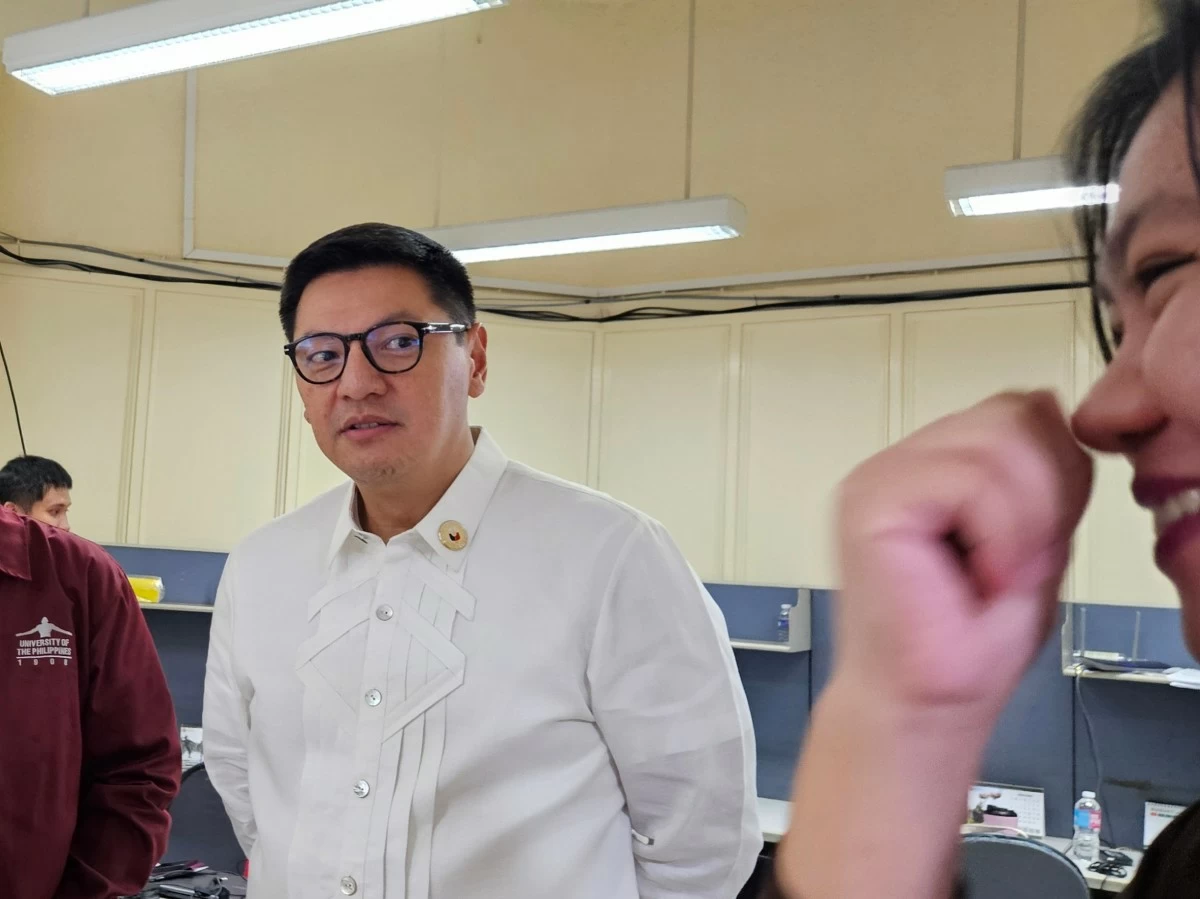
BH Party-list Rep. Roberto Nazal (Ellson Quismorio/ MANILA BULLETIN)
The Department of Budget and Management (DBM) should exclude the Commission on Higher Education (CHEd) from the coverage of Executive Order (EO) No. 338 so that funds for the Tertiary Education Subsidy (TES) can be properly managed and maximized for students.
Thus, said Bagong Henerasyon (BH) Party-list, whose nominee in the current 20th Congress is Rep. Roberto Nazal, a minority bloc member.
BH Party-list noted that EO No. 338, issued in 1996 by the late president Fidel V. Ramos, requires all government offices and agencies—including state universities and colleges (SUCs)—to transfer their cash balances and trust funds into the National Treasury.
Because of this order, the Higher Education Development Fund (HEDF), a trust fund created by law to expand access to college education, is being held by the Treasury instead of a government financial institution (GFI) as mandated by law.
In his interpellation during plenary debates on CHEd’s 2026 budget, it was Nazal who first said the HEDF has a balance of P11.7 billion--money that should be used to fund new Tertiary Education Subsidy (TES) grantees.
“Napakaraming estudyante ang nag-aabang ng scholarship, at hindi pwedeng nakatengga ang pondo habang libo-libong kabataan ang nangangarap ng kolehiyo (With so many students waiting for scholarships and dreaming of college, public funds simply can't be left idle),” he said.
Nazal revealed that CHEd also owes about P12.3 billion to SUCs under the Free Tuition Fee Law, including P1.1 billion to the Polytechnic University of the Philippines (PUP).
He stressed that the P11.7 billion HEDF should finance new college scholarships while the P12.3 billion arrears must be immediately paid to SUCs.
Nazal said this undermines the purpose of the fund, which was designed to be secure, earn interest and provide more scholarships for Filipino students.
“The law is clear: these funds should be placed in a government financial institution, not locked in the National Treasury. If the HEDF is managed by a GFI, the fund would not only be protected but would also generate billions in interest that should go directly to our scholars,” he explained.
Nazal noted that the HEDF has a standing balance of P11 billion, earns about P2 billion in revenues each year, and if invested at 5 percent interest, could yield at least P550 million annually for additional scholarships.
“If DBM insists on controlling the fund, even the interest should be spent exclusively for college scholarships. But once it is commingled with the General Fund, the money is moved around and no longer serves the very students it was intended for,” he continued.
Nazal was also baffled by CHEd’s explanation that the HEDF cannot be directly used because of EO No. 338, issued in 1996. He said that if one actually reads the EO, it is not applicable to the HEDF.
“I wonder why this was the response of CHEd, because clearly, the EO does not cover the HEDF,” Nazal emphasized.
He recalled that in the 2024 budget, Special Provision No. 2 allowed the HEDF to cover funding shortfalls in free higher education, but this safeguard was deleted in the 2025 GAA.
“Considering na may utang kayo sa SUCs, shouldn’t we restore this special provision for the 2026 GAA?” he asked.
He further said that earmarked funds must never be diverted away from their intended purpose of safeguarding students’ futures and expanding access to higher education.
Former BH Party-list Rep. Bernadette Herrera said this set-up violates both the letter and the spirit of the law.
“This money was never meant to disappear into the General Fund. It is a trust fund created for one sacred purpose—to guarantee that every Filipino youth has the chance to go to college without worrying about the cost,” Herrera said.
She said excluding CHEd from EO 338 would restore compliance with the law and safeguard the fund for students.