






Manila Bulletin
 Business
The Economy
Gov't mulls province-specific floor price to rescue palay prices
Business
The Economy
Gov't mulls province-specific floor price to rescue palay prices
Business
The Economy
Gov't mulls province-specific floor price to rescue palay prices
Gov't mulls province-specific floor price to rescue palay prices
Published Sep 30, 2025 03:30 pm


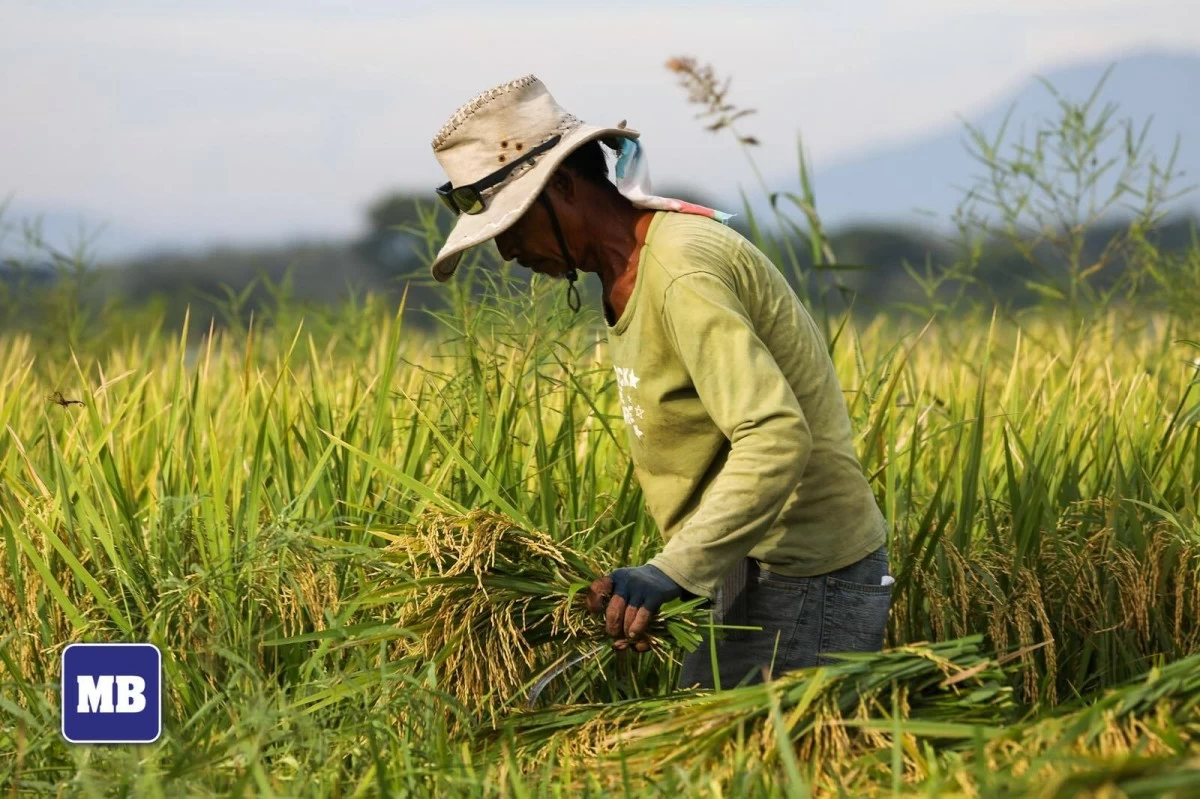
A farmer harvests rice crops in a field in Kalayaan, Laguna on Thursday, May 29. Photo by John Louie Abrina | MB
The government is planning to implement a province-specific floor price mechanism as part of a wider policy to improve prices of palay (unmilled rice), which has fallen to as low as ₱6 per kilo, according to the National Food Authority.
NFA Administrator Larry Lacson stated on Tuesday, Sept. 30, that the proposed floor price for buying palay is currently being developed at the Department of Agriculture (DA), headed by Secretary Francisco Tiu Laurel.
Tiu Laurel was recently directed by President Ferdinand “Bongbong” Marcos Jr. to help draft an executive order (EO) addressing the most urgent needs of farmers.
The proposed EO, which covers other reforms aimed at improving farmers’ income, will potentially include a pricing scheme tailored to each province.
The DA has since directed its regional field offices nationwide to calculate their respective local production costs.
Lacson said every rice-producing province has distinct “peculiarities” that make their production cost higher or lower than the nationwide average, making it unwise to set a standard floor price for the entire country.
For instance, he said a high-yielding province would typically see lower production costs. Other factors at play include the availability of farm workers and access to farm machinery.
“Different provinces have different production costs. So that's the first step, to know the production cost of each place,” said Lacson in a press briefing.
“And then we can set, from that production cost, the acceptable floor price so that our farmers won't lose money,” he added.
According to the DA, the average production cost for palay ranges between ₱12 to ₱14 per kilo.
With the onset of the peak harvest season, further worsened by the recent string of storms, prices have dropped to ₱6 per kilo.
While the planned floor price is still under evaluation, Lacson said the price range would be ideally higher or slightly lower than the current purchasing price of the NFA.
Currently, the NFA purchases dry palay at ₱23 per kilo and wet palay for ₱17 per kilo.
Lacson said the rice grains agency will maintain, or even increase, this buying price in the coming months to provide farmers with a platform to sell their rice without incurring losses.
He, however, admitted that these purchases are limited due to the lack of warehouse space to store the additional stocks.
As part of the planned EO, the NFA is expected to secure at least ₱3 billion for the emergency purchase of palay, which includes the authority to rent private warehouses to expand its storage capacity.
“If the national government won't support us in giving funds, we won't be able to do anything because we'll just have to make do with our existing resources, our warehouses that are almost full,” said Lacson.
The administrator stated that the number of warehouses and the volume of rice stocks it will carry would still depend on the final amount of funds allocated for this initiative and the availability of private warehouses.
As part of the funding, the NFA is planning to purchase storm-damaged rice to help farmers affected by recent severe weather disturbances. Since some of the rice are already damaged, they will be up for disposal.
Due to its poorer quality, the NFA will purchase the wet variety of damaged rice at around ₱14 per kilo, while the dry version is priced at approximately ₱20 per kilo.
Based on the DA’s latest report, damage to the country’s agriculture and fisheries sector has reached ₱1.95 billion, affecting over 67,000 farmers. The rice sector suffered the bulk of the damage, amounting to ₱1.27 billion.
Tiu Laurel said on Monday that the government plans to extend the suspension on rice imports until year-end to help stabilize palay prices.
He also stated that the government aims to prohibit government agencies and local government units (LGUs) from purchasing imported rice.
Further, the DA chief said there is a plan to raise the tariffs on rice imports from the current 15 percent, which will be implemented once the import ban is lifted.
Based on the DA’s latest monitoring in Metro Manila markets, the average retail price of premium rice is ₱43 per kilo, well-milled rice at ₱35 per kilo, and regular milled rice at ₱33 per kilo.