






Manila Bulletin
 Philippines
National
CICC crackdown uncovers over 1,000 illegal online gambling sites, 100+ influencers involved
Philippines
National
CICC crackdown uncovers over 1,000 illegal online gambling sites, 100+ influencers involved
Philippines
National
CICC crackdown uncovers over 1,000 illegal online gambling sites, 100+ influencers involved
CICC crackdown uncovers over 1,000 illegal online gambling sites, 100+ influencers involved
Published Sep 30, 2025 09:28 pm


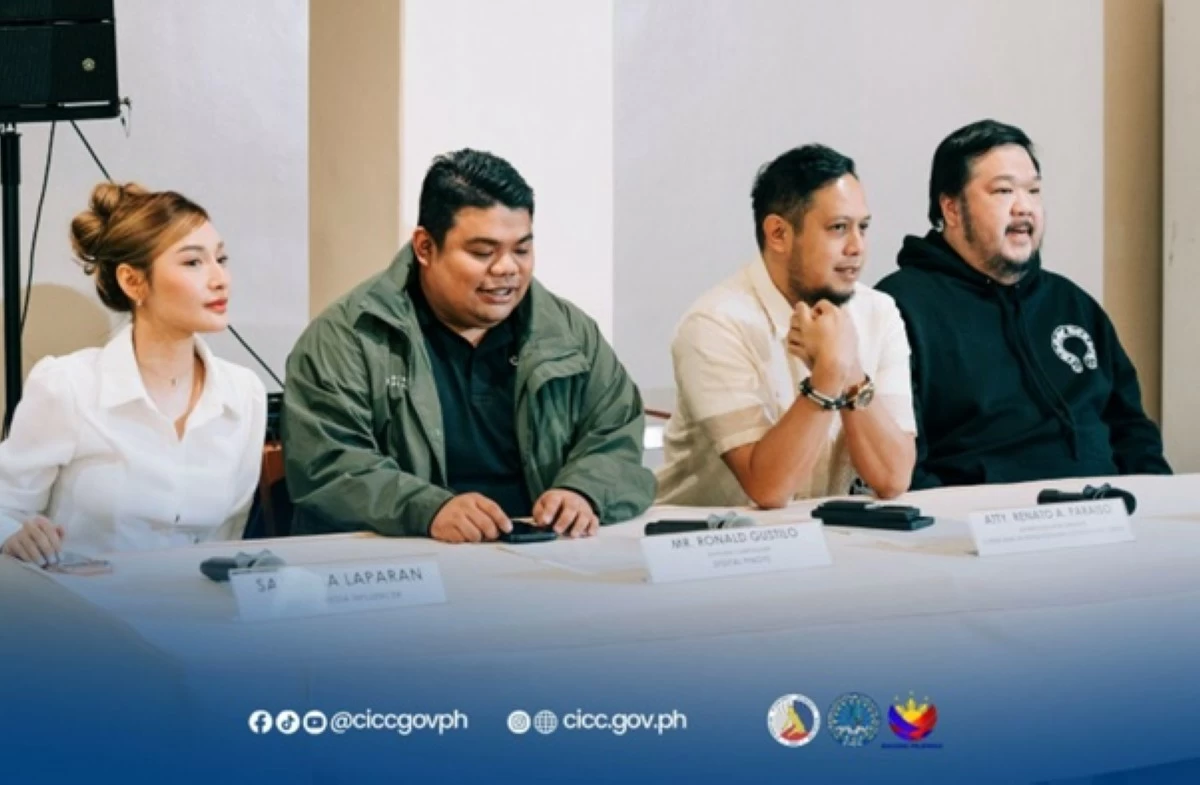
CICC exposes over 1,000 illegal online gambling sites in the Philippines, with 100 influencers promoting unlicensed platforms. Authorities push for responsible gaming. (CICC photo)
The Cybercrime Investigation and Coordinating Center (CICC) on Tuesday, September 30, exposed a massive network of illegal online gambling in the Philippines—revealing more than 1,000 unlicensed gambling websites and over 100 social media influencers promoting illicit operations.
CICC’s Threat Monitoring Center (TMC) reported that 1,007 online gambling sites are operating without authorization from the Philippine Amusement and Gaming Corporation (PAGCOR).
Meanwhile, 146 websites linked to illegal online “sabong” continue to operate despite the government’s ban.
The TMC report highlights the alarming role of social media influencers in sustaining these illegal activities.
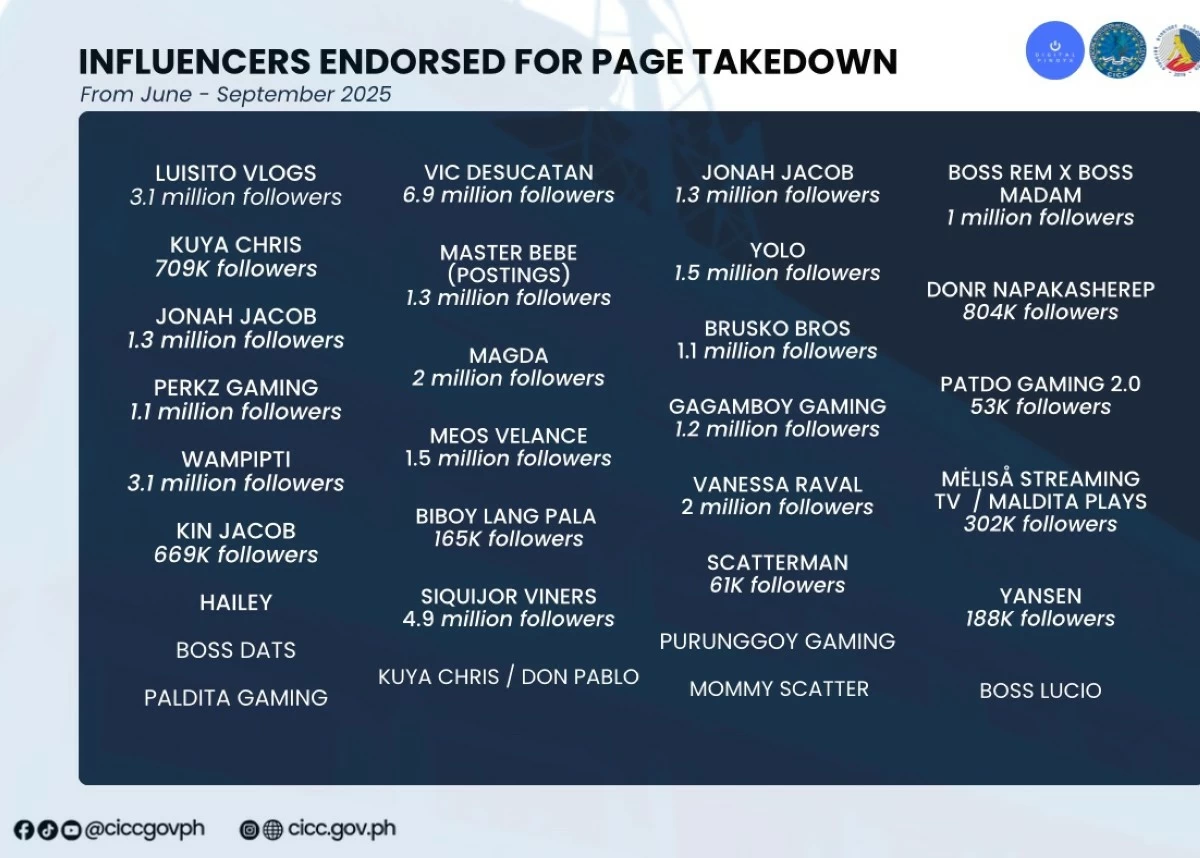
At least 119 influencers have been documented actively promoting gambling platforms through content creation, live-streaming, and referral links, effectively expanding the reach of these underground networks.
Complementing the findings, civil society partner Digital Pinoys reported 627 gambling-related URLs submitted by netizens and partner organizations.
(CICC photo)
Of these, 603 were verified as illegal, nine have been deactivated, and many were identified as mirror sites—duplicate websites designed to bypass regulatory takedowns.
Over 100 influencers were also implicated in endorsing these illegal platforms.
Further investigations revealed that the majority of these gambling sites are hosted overseas, highlighting the transnational scope of the threat. This cross-border setup complicates law enforcement efforts to track and apprehend offenders, emphasizing the urgent need for enhanced cooperation among government agencies, private platforms, and international regulators.
Despite these challenges, the CICC acknowledged that several influencers have taken a responsible stance by cooperating with authorities.
“We are grateful to our influencers who cooperate. They provide not only an example for others to follow but also educate the public on what is right,” CICC Acting Executive Director Usec. Aboy Paraiso said. “Further, they give us important insider insight on group chats and contacts within the syndicate,” he added.
Chilling effect, changes to take place
Meanwhile, Digital Pinoys National Campaigner Ronald Gustilo noted that the government’s July 11 ultimatum has already shifted behavior across the sector.
“When we carried out the initial takedown, there was indeed a chilling effect,” he said. “Although some brave individuals continued, many major influencers backed out or shifted to platforms they now endorse,” he added.
Gustilo pointed out that influencers Sachzna Laparan and Big Boy Cheng are proof that change is taking place after the ultimatum. The influencers, on their part, stressed the importance of accountability and the value of responsible and legitimate gaming.
“We should promote responsible and legitimate gaming. These illegal online gambling operations destroy lives,” Laparan said.
Cheng echoed Laparan’s remarks regarding the lack of KYC (Know-Your-Customer) regulations in illegal operations. “Moving forward, we will promote responsible gambling. We shall only endorse platforms that are registered,” he added.
The CICC, an attached agency of the Department of Information and Communications Technology (DICT), continues to urge the public to report illegal online gambling activities and to work with authorities to ensure a safe and responsible digital gaming environment.