ADVERTISEMENT

VAT reduction to 10% 'not doable' without deep spending cuts

Published Sep 29, 2025 03:30 pm  |  Updated Sep 29, 2025 01:04 pm
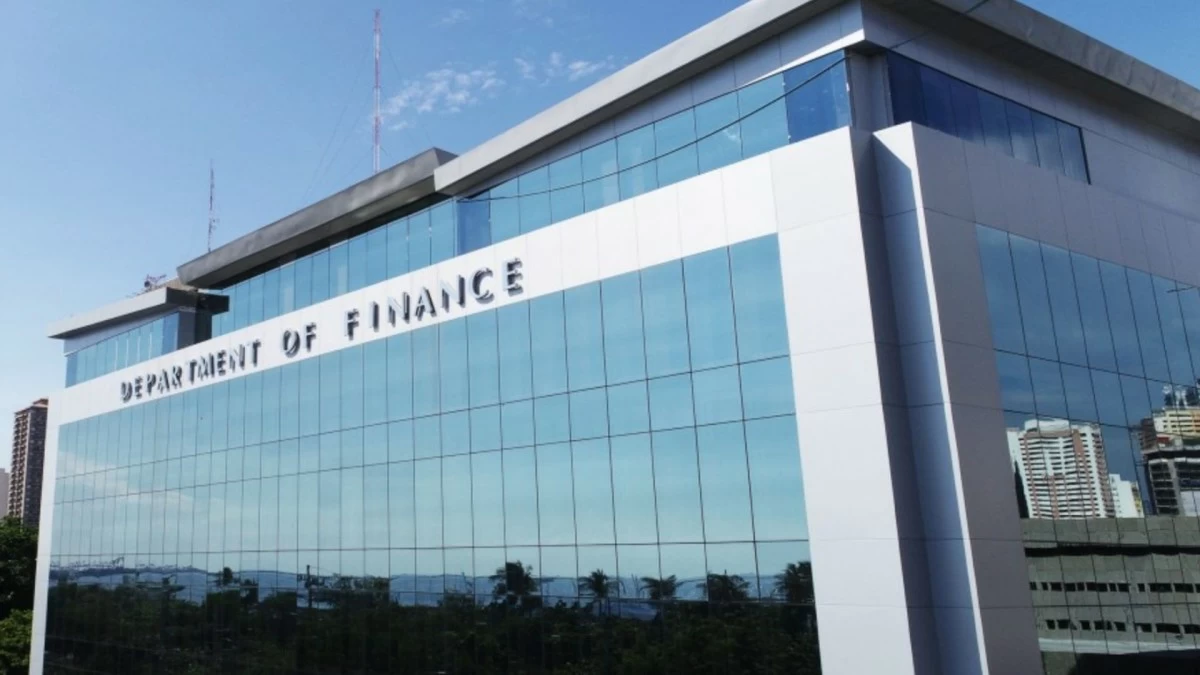
Department of Finance building in Manila (DOF photo)
Reducing the value-added tax (VAT) to 10 percent from the current 12 percent would erode the government’s fiscal consolidation, with total revenues expected to decline by an average of ₱330 billion annually, or one percent of the country’s economic output.
“From our estimates, the reduction of VAT from 12 percent to 10 percent is around one percent of GDP [gross domestic product], more or less ₱330 billion a year on average,” Finance Undersecretary Karlo Fermin S. Adriano said during the Philippine Tax Academy (PTA) Convention last week.
This would push the deficit to about 6.3 percent of GDP, above the government’s 5.3-percent target under its 2023-2027 fiscal program and wider than last year’s 5.6 percent.
This was based on a scenario posed by Adriano, who said that if the government has a target of a 5.5-percent fiscal deficit this year, the gap will jump to 6.5 percent should the VAT rate be reduced to 10 percent—a bill filed in Congress on the grounds that VAT is regressive.
“[As such], we will not be able to do fiscal consolidation because our fiscal deficit last year was only 5.7 percent. If we cannot show that we are capable of fiscal consolidation, interest payments will also increase,” Adriano said.
He explained this would be because the sovereign credit rating would be lower. Therefore, borrowing with higher interest rates would cause the debt pile to bloat.
An alternative action would be to decrease government spending by around ₱330 billion a year, Adriano said, but this would mean “less government programs” of a similar scale every year.
It can be recalled that the government hiked the VAT rate from 10 percent to 12 percent in February 2006, nearly two decades ago.
Meanwhile, the 12-percent VAT on digital service providers (DSPs) is expected to generate approximately ₱35 billion per year, although Adriano noted that this is a conservative estimate.
The total tax haul from the imposition of the 12-percent consumption levy on digital services in June has reached ₱2.8 billion over the past three months, encompassing both business-to-business and business-to-consumer transactions.
Adriano said the government’s goal is “not just revenues per se, but to actually level the playing field between local DSPs and foreign DSPs,” adding that DSP subscriptions, such as Netflix and Spotify, are largely consumed by middle- and high-income households.
“Who can afford subscriptions to DSPs? It’s not the farmers or fisher folks,” Adriano said.
He also disputed the assumption that VAT is regressive, pointing to a World Bank study showing the Philippine VAT system is considered “normal,” not regressive.
Adriano noted that exemptions—such as those on food—shield low-income households, whose spending is largely exempt from VAT. He added that cutting the VAT rate would mainly benefit higher earners, who are the biggest consumers and whose purchases are mostly subject to VAT.
Senen M. Quizon, business tax leader at management consulting firm Deloitte Philippines, said cutting VAT will be a relief for many Filipinos as “it will lower prices of goods and increase household purchasing power.”
“However, this could also put pressure on the government to enact new tax laws, find other sources of revenue, or resort to borrowing to finance its expenditures. To recoup the loss, it would be prudent to take a second look at VAT-exempt goods and services,” Quizon said.
On Sept. 3, Batangas 1st District Rep. Leandro Leviste filed House Bill No. 4302 seeking to lower VAT to 10 percent. He also moved for the bill to be prioritized by the House Ways and Means Committee for the 20th Congress.
Leviste said his proposal to lower VAT could trim government revenues by about ₱200 billion, or roughly ₱7,000 per household annually.
“How we will offset these foregone revenues can be the subject of further discussions, but we should have the options by our next meeting, and we should pass the bill lowering the VAT by the end of this year,” Leviste added.

Related Tags

Department of Finance (DOF) value-addex tax (VAT)
ADVERTISEMENT
.most-popular .layout-ratio{ padding-bottom: 79.13%; } @media (min-width: 768px) and (max-width: 1024px) { .widget-title { font-size: 15px !important; } }

{{ articles_filter_1561_widget.title }}

.most-popular .layout-ratio{ padding-bottom: 79.13%; } @media (min-width: 768px) and (max-width: 1024px) { .widget-title { font-size: 15px !important; } }

{{ articles_filter_1562_widget.title }}

.most-popular .layout-ratio{ padding-bottom: 79.13%; } @media (min-width: 768px) and (max-width: 1024px) { .widget-title { font-size: 15px !important; } }

{{ articles_filter_1563_widget.title }}

{{ articles_filter_1564_widget.title }}

.mb-article-details { position: relative; } .mb-article-details .article-body-preview, .mb-article-details .article-body-summary{ font-size: 17px; line-height: 30px; font-family: "Libre Caslon Text", serif; color: #000; } .mb-article-details .article-body-preview iframe , .mb-article-details .article-body-summary iframe{ width: 100%; margin: auto; } .read-more-background { background: linear-gradient(180deg, color(display-p3 1.000 1.000 1.000 / 0) 13.75%, color(display-p3 1.000 1.000 1.000 / 0.8) 30.79%, color(display-p3 1.000 1.000 1.000) 72.5%); position: absolute; height: 200px; width: 100%; bottom: 0; display: flex; justify-content: center; align-items: center; padding: 0; } .read-more-background a{ color: #000; } .read-more-btn { padding: 17px 45px; font-family: Inter; font-weight: 700; font-size: 18px; line-height: 16px; text-align: center; vertical-align: middle; border: 1px solid black; background-color: white; } .hidden { display: none; }
function initializeAllSwipers() { // Get all hidden inputs with cms_article_id document.querySelectorAll('[id^="cms_article_id_"]').forEach(function (input) { const cmsArticleId = input.value; const articleSelector = '#article-' + cmsArticleId + ' .body_images'; const swiperElement = document.querySelector(articleSelector); if (swiperElement && !swiperElement.classList.contains('swiper-initialized')) { new Swiper(articleSelector, { loop: true, pagination: false, navigation: { nextEl: '#article-' + cmsArticleId + ' .swiper-button-next', prevEl: '#article-' + cmsArticleId + ' .swiper-button-prev', }, }); } }); } setTimeout(initializeAllSwipers, 3000); const intersectionObserver = new IntersectionObserver( (entries) => { entries.forEach((entry) => { if (entry.isIntersecting) { const newUrl = entry.target.getAttribute("data-url"); if (newUrl) { history.pushState(null, null, newUrl); let article = entry.target; // Extract metadata const author = article.querySelector('.author-section').textContent.replace('By', '').trim(); const section = article.querySelector('.section-info ').textContent.replace(' ', ' '); const title = article.querySelector('.article-title h1').textContent; // Parse URL for Chartbeat path format const parsedUrl = new URL(newUrl, window.location.origin); const cleanUrl = parsedUrl.host + parsedUrl.pathname; // Update Chartbeat configuration if (typeof window._sf_async_config !== 'undefined') { window._sf_async_config.path = cleanUrl; window._sf_async_config.sections = section; window._sf_async_config.authors = author; } // Track virtual page view with Chartbeat if (typeof pSUPERFLY !== 'undefined' && typeof pSUPERFLY.virtualPage === 'function') { try { pSUPERFLY.virtualPage({ path: cleanUrl, title: title, sections: section, authors: author }); } catch (error) { console.error('ping error', error); } } // Optional: Update document title if (title && title !== document.title) { document.title = title; } } } }); }, { threshold: 0.1 } ); function showArticleBody(button) { const article = button.closest("article"); const summary = article.querySelector(".article-body-summary"); const body = article.querySelector(".article-body-preview"); const readMoreSection = article.querySelector(".read-more-background"); // Hide summary and read-more section summary.style.display = "none"; readMoreSection.style.display = "none"; // Show the full article body body.classList.remove("hidden"); } document.addEventListener("DOMContentLoaded", () => { let loadCount = 0; // Track how many times articles are loaded const offset = [1, 2, 3, 4, 5, 6, 7, 8, 9, 10]; // Offset values const currentUrl = window.location.pathname.substring(1); let isLoading = false; // Prevent multiple calls if (!currentUrl) { console.log("Current URL is invalid."); return; } const sentinel = document.getElementById("load-more-sentinel"); if (!sentinel) { console.log("Sentinel element not found."); return; } function isSentinelVisible() { const rect = sentinel.getBoundingClientRect(); return ( rect.top < window.innerHeight && rect.bottom >= 0 ); } function onScroll() { if (isLoading) return; if (isSentinelVisible()) { if (loadCount >= offset.length) { console.log("Maximum load attempts reached."); window.removeEventListener("scroll", onScroll); return; } isLoading = true; const currentOffset = offset[loadCount]; window.loadMoreItems().then(() => { let article = document.querySelector('#widget_1690 > div:nth-last-of-type(2) article'); intersectionObserver.observe(article) loadCount++; }).catch(error => { console.error("Error loading more items:", error); }).finally(() => { isLoading = false; }); } } window.addEventListener("scroll", onScroll); });

Sign up by email to receive news.