







Sotto, Lacson: Not all budget insertions are bad


At A Glance
- Senate President Vicente "Tito" Sotto III clarified that not all budget insertions can be considered illegal or bad as individual amendments or insertions made by lawmakers during Senate deliberations are part of the regular budget process.
Senate President Vicente “Tito” Sotto III on Monday, September 29 clarified that not all budget insertions can be considered illegal or bad as individual amendments or insertions made by lawmakers during Senate deliberations are part of the regular budget process.
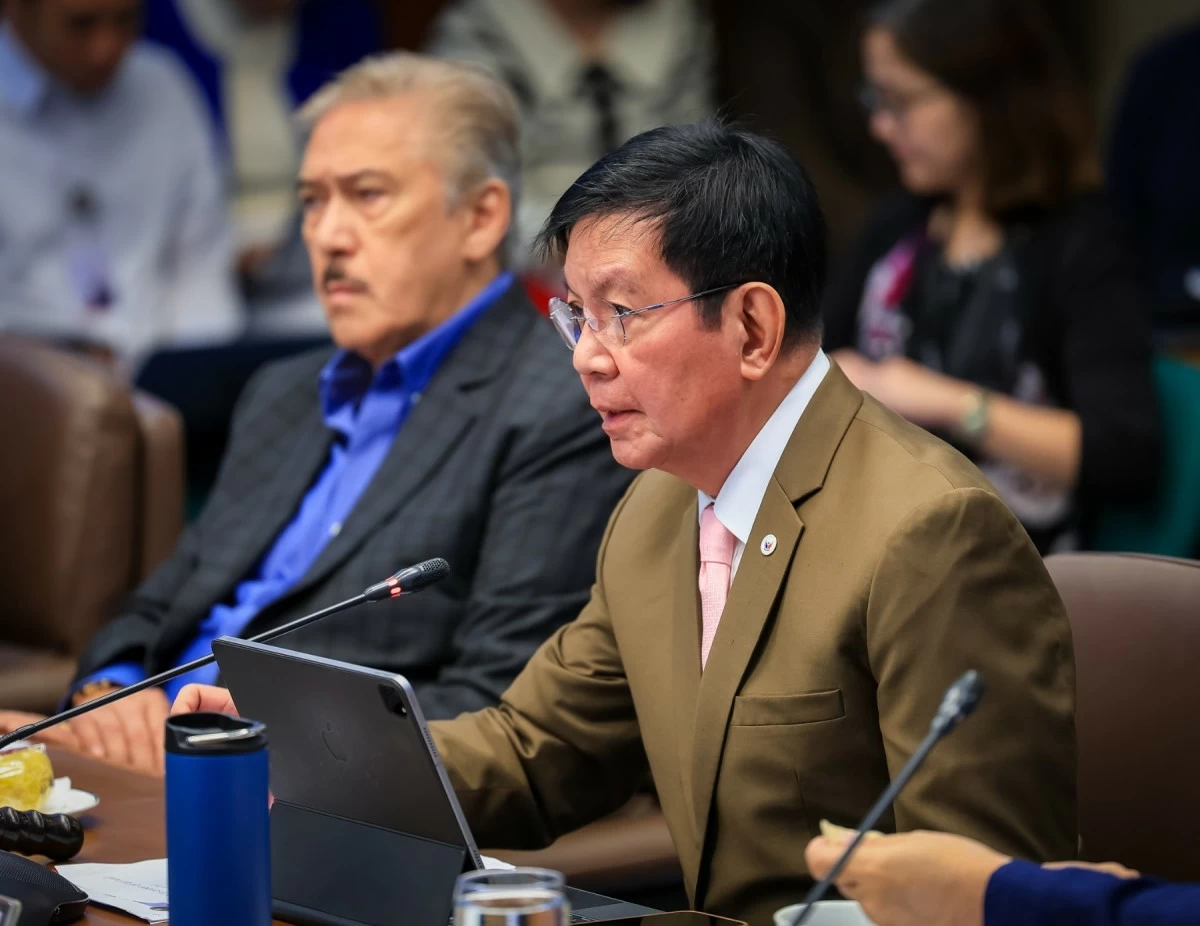
Sotto pointed this out afer Senate President Pro Tempore Panfilo Lacson revealed over the weekend that “almost all” senators of the 19th Congress made at least P100-billion in insertions to the 2025 General Appropriations Act (GAA).
“Amendments or insertions, whether individual or institutional, done during the deliberations in the Senate, are part of the regular budget process,” Sotto explained in a statement.
“It is unfortunate that the issue on ghost projects and failed flood control projects affect and generalized all amendments as illegal or improper,” the Senate chief said.
“Some of these amendments are for additional classrooms, farm to market roads and bridges that will benefit our people, especially those in the far flung provinces. Some of which were never funded and were tagged ‘for later release’ (FLR),” he pointed out.
Nevertheless, Sotto assured that for the 2026 budget, the Senate will institute changes for greater transparency, people’s participation and accountability.
He agreed with Senate Finance Committee chairman Sherwin Gatchalian’s suggestion to do away with Unprogrammed Appropriations in the GAA.
“I concur with (Sen.) Sherwin’s suggestion. My suggestion is for us to present our amendments on the floor during 2nd reading,” he said.
Lacson agreed with Sotto’s view but said the budget insertions are not illegal nor evil as they are part of the mandate of lawmakers in shaping the national budet, “but this mandate has been abused by lawmakers.”
According to Lacson, the House of Representatives has its own share of humongous amendments “a.k.a.” insertions in the 2025 budget.
“Introducing insertions are not illegal. It is our mandate as lawmakers to review the National Expenditure Program (NEP) and introduce amendments. The problem is that many lawmakers abused this mandate,” Lacson said in a mix of English and Filipino in an interview on DZBB radio.
“I hope that in 2026, we will practice self-restraint. The people are angry so we must reform the way we pass the budget,” he added.
He further said the insertions—more than P100 billion by the Senate alone—were for the budget of the Department of Public Works and Highways (DPWH) alone, to implement infrastructure projects including flood control projects.
Lacson also likened the document containing the list of House members who made insertions for the DPWH “like a roll call.”
When asked if the amount exceeded the insertions made by the Senate, Lacson replied: "Much, much more."
According to Lacson, the DPWH received such massive insertions because many lawmakers were likely in collusion with corrupt DPWH officials to carve out huge kickbacks from projects - even if it means giving the DPWH a bigger budget than the education sector, in violation of the 1987 Constitution.
"The system of corruption has been in place, with lawmakers dealing with the district engineer and former Undersecretary Roberto Bernardo. That's the pattern. You see the DPWH getting a bigger budget than the education sector because everyone involved got greedier and greedier, and stuffed the DPWH's budget. That is unacceptable,” he said.
Sen. Joseph Victor “JV” Ejercito also expressed his belief that not all amendments are bad, “especially those which help agencies and departments.
“One of our tasks is to introduce amendments after the budget hearings to support and further improve programs and projects,” Ejercito said.
“Amendments are not tainted as long as there is no post enactment intervention,” he also said.