







Prudent leap for nuclear energy development
Published Sep 29, 2025 12:05 am
|
Updated Sep 28, 2025 03:41 pm


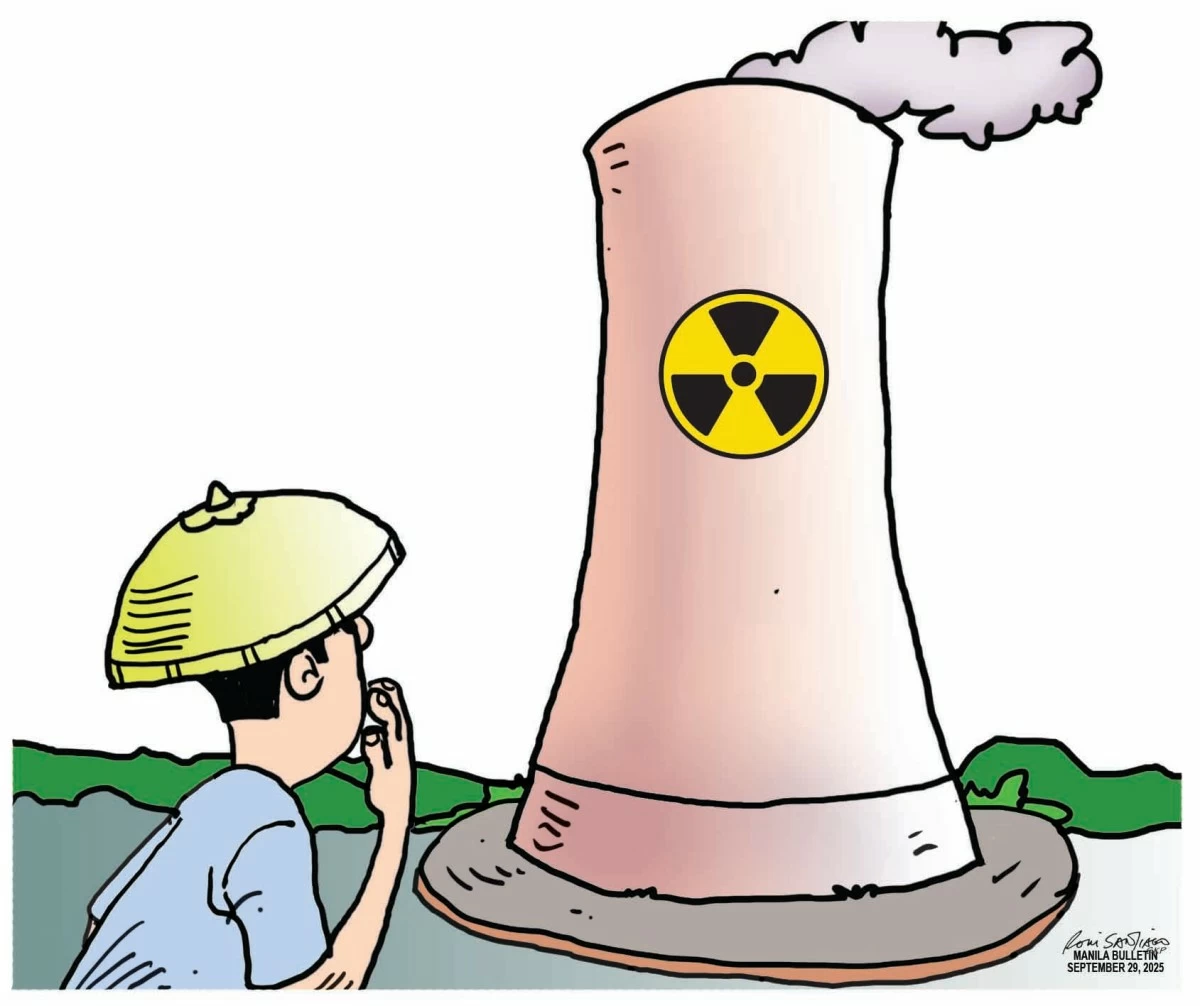
The signing into law of Republic Act No. 12305, the Philippine Nuclear Energy Safety Act, is more than a technical milestone: it is a political and economic turning point. By establishing an independent, modern regulator and a clear authorization framework for nuclear projects, the Philippines manifests its readiness to handle safely the complex technologies and long-term responsibilities that nuclear energy entails. This legal framework is the foundation for any credible program of nuclear power, medical isotope production, or advanced research.
Why is nuclear energy development imperative?
For middle-income countries with constrained land, rising electricity demand, and commitments to decarbonize, nuclear offers high-capacity, low-emissions baseload power that complements renewables. Properly sited and financed, the purposive development of emerging small modular reactors (SMRs) can stabilize grids, lower system costs over time by reducing fossil fuel imports, and support industrialization through reliable, 24/7 power. The Department of Energy (DOE) has signaled interest both in repurposing the mothballed Bataan Nuclear Power Plant and in exploring SMRs as pragmatic options.
But nuclear energy could be strategically beneficial only if three important conditions — premised on three hard lessons from countries with long nuclear experience — are met.
First, safety culture and regulator independence matter above all. Japan’s post-Fukushima reforms, including stronger, well-resourced inspection powers and a pervasive safety culture, demonstrate that public assurance and trust is built by rigorous oversight and transparent communication, not by technical assurances alone.
Second, lifecycle financing and waste policy must be settled in advance. France’s institutional approach to funding waste management, among which are dedicated provisions and long-term waste research and development, demonstrates how costs and liabilities can be made predictable for taxpayers and investors.
Third, industrial capability, as concretized by South Korea’s preeminent excellence, is attained through local vendor development, operator training, and exportable skills. These are the essential building blocks of nuclear development programs that deliver broader economic benefits while winning public trust and support.
Yet, concerns linger in the aftermath of the aborted Bataan experience. Fresh options should emerge from methodical, evidence-based and transparent steps such as: (a) assess full refurbishment to international standards and in concert with third-party technical and safety audits; and (b) evaluate partial repurposing of the BNPP site for SMR pilot units, research reactors, medical isotope production or a clean-energy industrial park.
If refurbishment is determined to be non-viable, the government must consider initiating a professionally managed decommissioning and site remediation, creating domestic capacity in decommissioning services.
The implementors of the authors are likely to steer the following courses of action.
First, establish the baselines of independent regulation such as: train and develop a cadre of competent inspectors; publish licensing roadmaps; and commence public consultations on a national emergency response plan.
Second, complete third-party technical, environmental and financial assessments for candidate projects including the BNPP; adopt waste-funding rules and siting criteria; and negotiate international cooperation and safeguards.
Third, pilot an SMR and research reactor project and establish a domestic training academy and local vendor development programs.
Fourth, operationalize long-term waste storage strategy, and scale industrial applications such as desalination and isotopes; and pursue export markets for Philippine technical and decommissioning services.
The new law is a necessary first act. The hard, generational work begins now: disciplined regulation, public trust, realistic financing, and honest accounting for waste and decommissioning liabilities.