







OPAPRU defends record amid criticisms
Published Sep 29, 2025 11:45 am


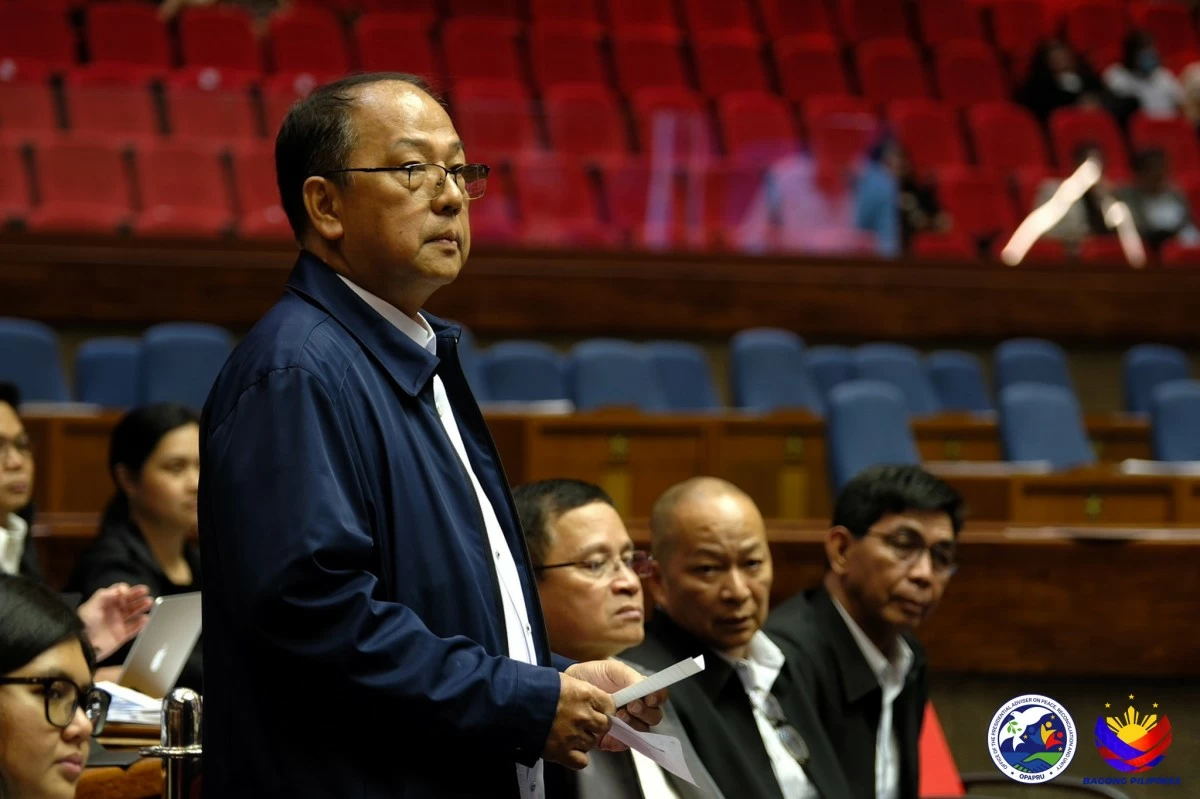
OPAPRU Secretary Carlito Galvez Jr. (File photo: OPAPRU)
The Office of the Presidential Adviser on Peace, Reconciliation and Unity (OPAPRU) on Monday, Sept. 29, pushed back against criticisms of its reported accomplishments in implementing peace agreements with former armed groups.
In a statement, the OPAPRU said its current leadership, headed by Presidential Peace Adviser Carlito Galvez Jr., was firmly committed to ensuring that every peso of public funds and international support is subjected to scrutiny.
“We welcome and are fully open to the public scrutiny of our operations and financial transactions, which are funded by the nation's taxpayers and supported by international partners dedicated to the country's goal of building prosperous, peaceful communities,” it said.
The peace agency underscored that monitoring mechanisms derived from peace agreements are in place to track progress and confirm performance.
Critics have earlier accused OPAPRU of overstating achievements and downplaying challenges in carrying out peace pacts with the Moro Islamic Liberation Front (MILF), Moro National Liberation Front (MNLF), Rebolusyonaryong Partido ng Manggagawa-Pilipinas/Alex Boncayao Brigade (RPM-ABB), Cordillera People’s Liberation Army (CPLA), and the Communist Party of the Philippines-New People’s Army-National Democratic Front (CPP-NPA-NDF).
The MILF Central Committee earlier announced that it had temporarily stopped the decommissioning of its remaining 14,000 fighters and several weapons due to the alleged lack of substantial progress in fulfilling other aspects of the normalization process, particularly the delivery of the agreed socio-economic packages to decommissioned fighters, as outlined by the peace implementing panels of both parties.
Some civil society groups and opposition figures have also claimed that the implementation of peace processes has been slow, funding has not always reached the intended communities, and commitments under the agreements have lagged behind expectations.
However, OPAPRU countered that such claims are “unfounded” and undermine the work of personnel engaged in what it described as the “most critical phase” of the country’s peace processes, which is the complex implementation of all signed peace agreements to address the root causes of conflict.
The agency acknowledged that while notable gains have been made in talks with former rebel groups, sustained resources and policies remain necessary to ensure commitments are fully translated into “transformative and inclusive outcomes” for conflict-affected communities.
“Achieving lasting peace is a long-term, shared national journey that requires the committed support and constructive engagement of all sectors of society, rather than rhetoric that can be divisive or distracting,” the OPAPRU stressed.
Last week, the House of Representatives approved in plenary the P7.28-billion budget of the OPAPRU for the fiscal year 2026.
Galvez said the approved budget is deemed critical to ensuring the continued rollout of various peace initiatives and the sustained implementation of peace agreements across the country's different peace tables.
The budget, he added, will also sustain key peacebuilding programs such as the PAyapa at MAsaganang PamayaNAn (PAMANA) Program and the work of the Social Healing and Peacebuilding Office (SHAPEO).
Galvez had assured lawmakers that there are no ghost projects in the OPAPRU’s infrastructure projects intended for rebel-returnees under the PAMANA program.