







BIR collects ₱2.8 billion from new digital service VAT levy
By Derco Rosal
Published Sep 29, 2025 12:00 am
|
Updated Sep 27, 2025 01:34 pm


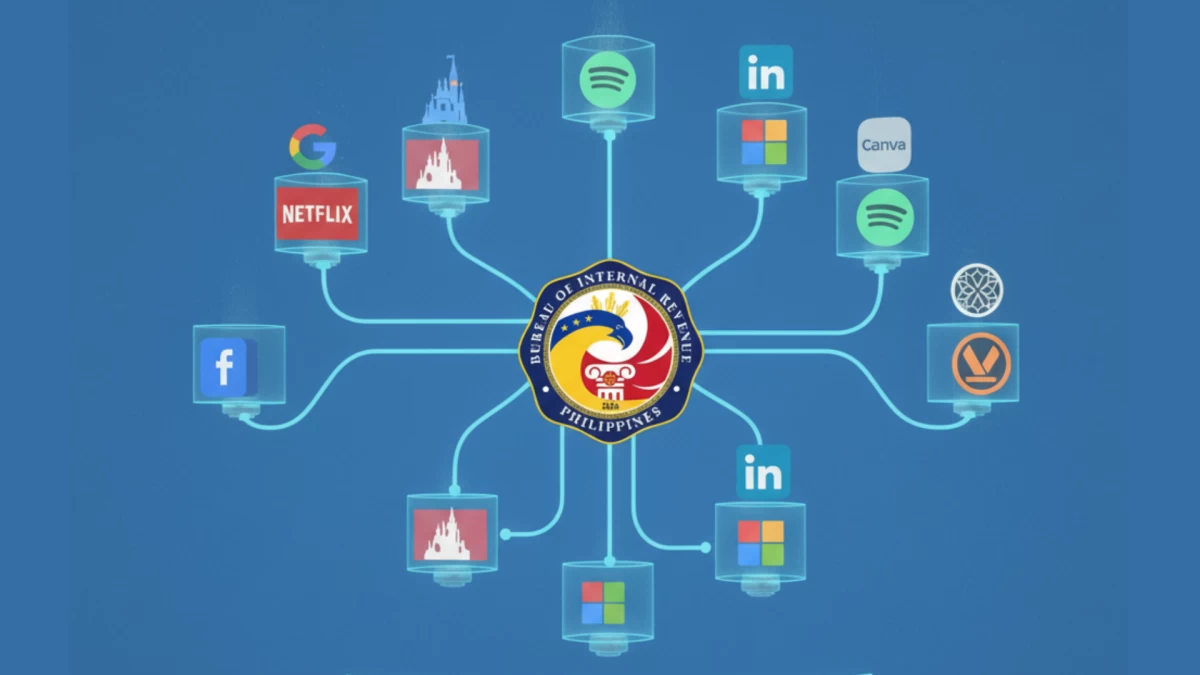
Compliance is high among foreign digital giants, as the Bureau of Internal Revenue (BIR) reported strong initial collections from the value-added tax (VAT) on digital services.
Total tax haul from the imposition of the 12-percent consumption levy on digital services in June has reached ₱2.8 billion over the past three months, covering both business-to-business and business-to-consumer transactions.
As of Sept. 9, the BIR has collected ₱1.64 billion from business-to-customer transactions, according to Glenn B. Alde, chief of the BIR’s collection programs division.
Of this, a bulk or ₱1.27 billion came from total payments received. There is an ongoing filing totaling ₱370.9 million, with ₱2.4 million pending payment.
For business-to-business transactions, the BIR collected a total of ₱1.14 billion.
Broken down, the BIR collected ₱1.13 billion in final withholding VAT under the reverse charge setup, covering digital services bought in the Philippines from non-resident providers. Another ₱7.6 million came from VAT withheld by local e-marketplaces on payments to foreign digital sellers.
“It’s quite a big addition to the collection of the BIR as a whole,” Alde said during the Philippine Tax Academy (PTA) Convention last week.
As of end-August, tax revenues by the BIR stood at ₱2.14 trillion, 11.5 percent higher than last year’s ₱1.92 trillion. This figure was equivalent to 66.2 percent of the full-year target tax collections of the BIR at ₱3.23 trillion.
As of September, there are a total of 370 registered digital service providers (DSPs). Major global platforms now registered with the BIR include Meta, Google Asia, Netflix, Disney, Canva, Spotify, LinkedIn, Microsoft, OpenAI and Valve.
Non-resident digital service providers (NRDSPs) were given until Aug. 5 to file their VAT returns—a deadline initially set earlier but extended due to the absence of the VAT on digital services (VDS) portal, currency mismatches and disruptions caused by typhoons.
“Under the law, non-resident digital service providers are required to pay in Philippine currency. But when the deadline came, we discovered that the amount actually had to be paid in US [United States] dollars, not in pesos. That caused significant delays in the payment of the 12-percent VAT on digital services,” said Senen M. Quizon, business tax leader of Deloitte Philippines, a management consulting firm.
Quizon reported that 20 percent of the 371 DSPs have been registered to the portal, but only 10 percent requested Deloitte Philippines to file and pay the VAT on their behalf. Most of those assisted operate in sectors such as online platforms, gaming, software solutions, news, streaming, music and video, cloud services and online booking.
Since June 2, digital services consumed in the Philippines have been slapped with a 12-percent VAT under Republic Act (RA) 12023, pulling non-resident providers and previously untaxed online transactions into the formal tax system.