







UN imposes 'snapback' sanctions on a hungrier, poorer and more anxious Iran
Published Sep 28, 2025 08:12 am


DUBAI, United Arab Emirates (AP) — The United Nations reimposed sanctions on Iran early Sunday over its nuclear program, further squeezing the Islamic Republic as its people increasingly find themselves priced out of the food they need to survive and worried about their futures.
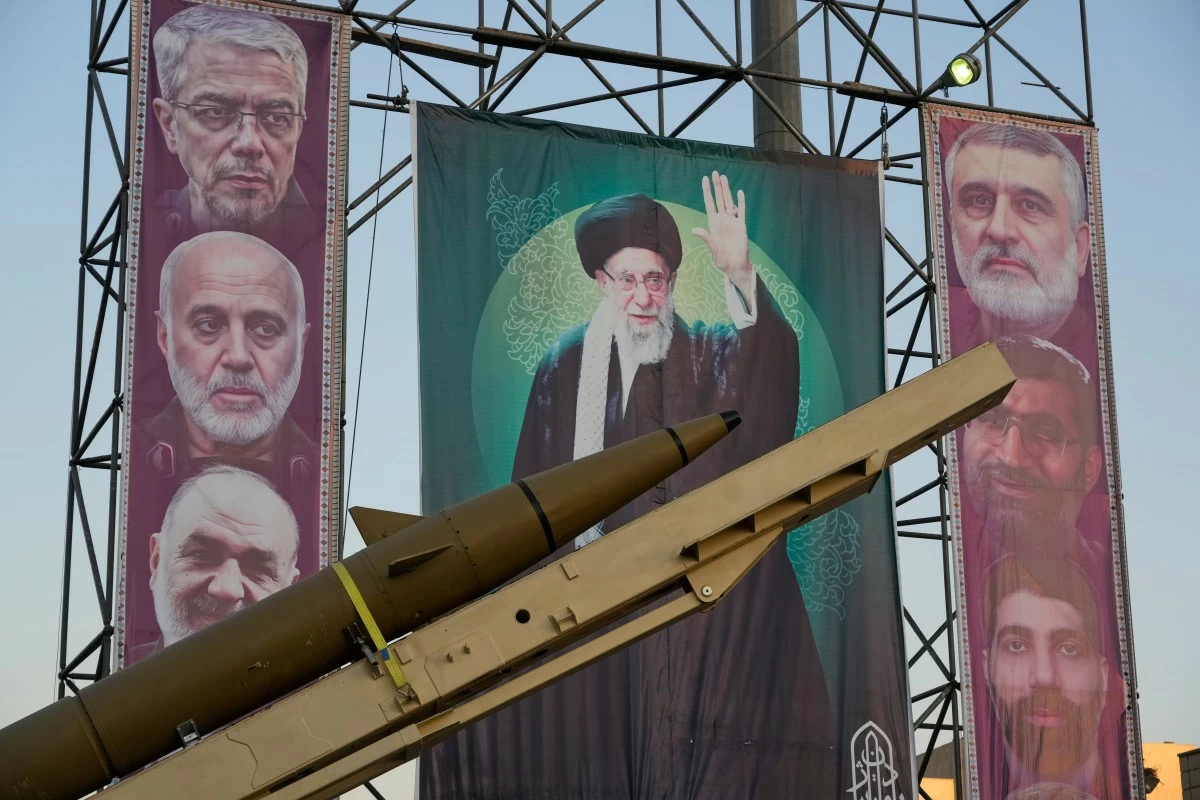
A domestically-built missile "Khaibar-buster," and banners showing portraits of the Iranian Supreme Leader Ayatollah Ali Khamenei, center, and the late armed forces commanders, who were killed in Israeli strike in June, are displayed in a military exhibition commemorating the anniversary of the start of the 1980-88 Iraq-Iran war, and 12-day war with Israel in June, at Baharestan Square, in Tehran, Thursday, Sept. 25, 2025. (AP Photo/Vahid Salemi)
After last-minute diplomacy failed at the U.N., the sanctions took effect Sunday at 0000 GMT (8 p.m. Eastern).
The sanctions will again freeze Iranian assets abroad, halt arms deals with Tehran, and penalize any development of Iran's ballistic missile program, among other measures. It came via a mechanism known as "snapback," included in Iran's 2015 nuclear deal with world powers, and comes as Iran's economy already is reeling.
Iran's rial currency sits at a record low, increasing pressure on food prices and making daily life that much more challenging. That includes meat, rice and other staples of the Iranian dinner table.
Meanwhile, people worry about a new round of fighting between Iran and Israel — as well as potentially the United States — as missile sites struck during the 12-day war in June now appear to be being rebuilt.
Activists fear a rising wave of repression within the Islamic Republic, which already has reportedly executed more people this year than over the past three decades.
Sina, the father of a 12-year-old boy who spoke on condition that only his first name be used for fear of repercussions, said the country has never faced such a challenging time, even during the deprivations of the 1980s Iran-Iraq war and the decades of sanctions that came later.
"For as long as I can remember, we've been struggling with economic hardship, and every year it's worse than the last," Sina told The Associated Press. "For my generation, it's always either too late or too early — our dreams are slipping away."
Iran sanctions set to 'snapback'
Snapback was designed to be veto-proof at the U.N. Security Council, meaning China and Russia could not stop it alone, as they have other proposed actions against Tehran in the past.
France, Germany and the United Kingdom triggered snapback over Iran 30 days ago for its further restricting monitoring of its nuclear program and the deadlock over its negotiations with the U.S.
Iran further withdrew from the International Atomic Energy Agency monitoring after Israel's war on the country in June, which also saw the U.S. strike nuclear sites in the Islamic Republic. Meanwhile, the country still maintains a stockpile of uranium enriched up to 60% purity — a short, technical step away from weapons-grade levels of 90% — that is largely enough to make several atomic bombs, should Tehran choose to rush toward weaponization.
Iran has long insisted its nuclear program is peaceful, though the West and IAEA say Tehran had an organized weapons program up until 2003.
Tehran has further argued that the three European nations shouldn't be allowed to implement snapback, pointing in part to America's unilateral withdrawal from the accord in 2018, during the first term of President Donald Trump's administration.
"The Trump administration appears to think it has a stronger hand post-strikes, and it can wait for Iran to come back to the table," said Kelsey Davenport, a nuclear expert at the Washington-based Arms Control Association. "Given the knowledge Iran has, given the materials that remain in Iran, that's a very dangerous assumption."
Risks also remain for Iran as well, she added: "In the short term, kicking out the IAEA increases the risk of miscalculation. The U.S. or Israel could use the lack of inspections as a pretext for further strikes."
Iran on Saturday recalled its ambassadors to France, Germany and the U.K. for consultations ahead of the sanctions being reimposed, the state-run IRNA news agency reported.
Hunger and anxiety grow in Iran
The aftermath of the June war drove up food prices in Iran, putting already expensive meat out of reach for poorer families.
Iran's government put overall annual inflation at 34.5% in June, and its Statistical Center reported that the cost of essential food items rose over 50% over the same period. But even that doesn't reflect what people see at shops. Pinto beans tripled in price in a year, while butter nearly doubled. Rice, a staple, rose more than 80% on average, hitting 100% for premium varieties. Whole chicken is up 26%, while beer and lamb are up 9%.
"Every day I see new higher prices for cheese, milk and butter," said Sima Taghavi, a mother of two, at a Tehran grocery. "I cannot omit them like fruits and meat from my grocery list because my kids are too young to be deprived."
The pressure over food and fears about the war resuming have seen more patients heading to psychologists since June, local media in Iran have reported.
"The psychological pressure from the 12-day war on the one hand, and runaway inflation and price hikes on the other, has left society exhausted and unmotivated," Dr. Sima Ferdowsi, a clinical psychologist and professor at Shahid Beheshti University, told the Hamshahri newspaper in an interview published in July.
"If the economic situation continues like this, it will have serious social and moral consequences," she warned, with the newspaper noting "people may do things they would never think of doing in normal circumstances to survive."
Executions surge in 2025
Iran has faced multiple nationwide protests in recent years, fueled by anger over the economy, demands for women's rights and calls for the country's theocracy to change. The most recent came in 2022 over the death of Mahsa Amini, a young woman who died after being detained by police allegedly for not wearing her hijab, or headscarf, to their liking.
In response to those protests and the June war, Iran has been putting prisoners to death at a pace unseen since 1988, when it executed thousands at the end of the Iran-Iraq war. The Oslo-based group Iran Human Rights and the Washington-based Abdorrahman Boroumand Center for Human Rights in Iran put the number of people executed in 2025 at over 1,000, noting the number could be higher as Iran does not report on each execution.
"Political and civic space in Iran has shrunk to nothing, and outside Iran, civil society activists and dissidents face transnational repression," the center warned. "The Iranian people, millions of whom aspire to more than a closed and brutal theocracy, have tried every option within their reach. Their leaders have not."