







Stop corruption; fix the system now
Published Sep 26, 2025 12:05 am
|
Updated Sep 25, 2025 05:55 pm


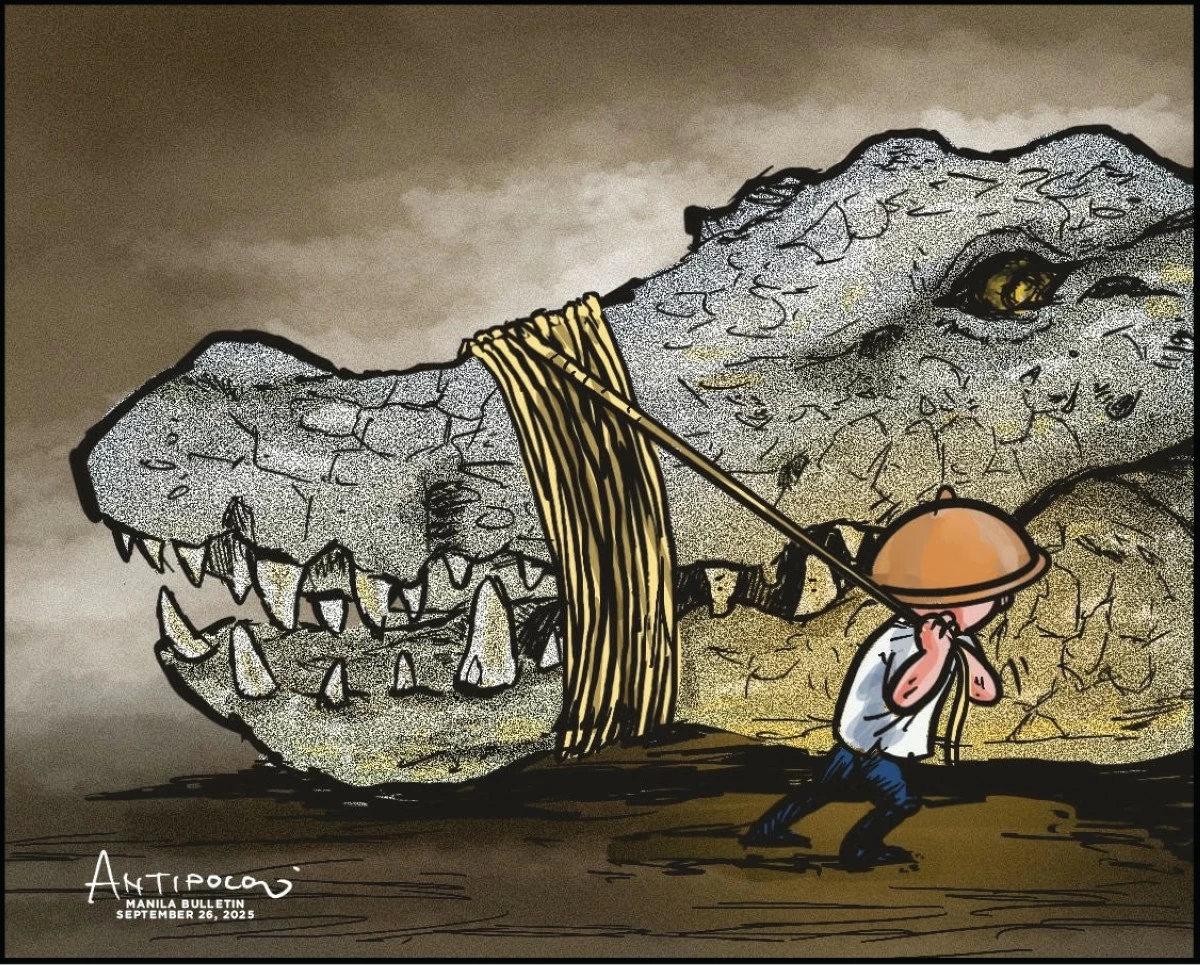
When former Public Works Secretary Manuel Bonoan revealed before the Senate Blue Ribbon Committee the existence of a so-called “leadership fund” within the National Expenditure Program (NEP), it unveiled a systemic normalization of budgetary manipulation in the guise of public service.
Described as a consolidation of funds intended for priority projects that may be requested by lawmakers, the so-called leadership fund raises serious ethical and structural questions. While Bonoan refrained from characterizing it as an insertion, his admission points to a longstanding and informal practice that exists in the blind spots of the public budgeting system—spaces where discretion, rather than regulation, governs the flow of billions in taxpayer money.
Such practices should no longer be tolerated. They are antithetical to fiscal transparency, public accountability, and the rule of law. They reveal the dangerous elasticity of budget mechanisms that can be easily stretched to serve political interests under the guise of public service.
This systemic flaw calls for nothing less than a comprehensive overhaul of the country’s fiscal policy.
Budgeting, in its ideal form, should reflect the priorities and needs of the nation as determined through evidence-based planning and public participation. The leadership fund, as disclosed, functions in the shadows of this ideal. It allows funds to be channeled through ambiguous processes, bypassing rigorous scrutiny and perpetuating a culture of transactional governance.
Similarly, unprogrammed appropriations, although theoretically justified as a contingency measure for unforeseen needs, have also become highly vulnerable to misuse. In recent years, these have served as conduits for off-budget spending, at times exploited by unscrupulous officials under the pretext of flexibility and expediency.
These two mechanisms—discretionary consolidations and unprogrammed appropriations—expose how systemic vulnerabilities in the budgeting process are routinely exploited to blur accountability, sidestep constitutional safeguards, and undermine public trust.
Correcting this deeply embedded problem requires decisive and coordinated action across all three branches of government.
The Executive must mandate full transparency in all discretionary and unprogrammed spending. This includes issuing executive directives requiring real-time reporting of such funds and clearly defining the criteria for their use.
The Legislature must enact laws that permanently bar lump-sum appropriations disguised under vague terms. Budget proposals must be itemized, fully disclosed, and subject to independent review.
The Judiciary, having already ruled on the unconstitutionality of the Priority Development Assistance Fund and the Disbursement Acceleration Program, must remain vigilant in reviewing new iterations of the same practices under different names.
These reforms must be institutional. They must create systems that prevent abuse.
However, the responsibility to eradicate systemic corruption in public budgeting does not rest with the government alone. Every Filipino must assume an active and vigilant role.
Citizens must engage in participatory budgeting initiatives, and insist on transparency from elected officials. Community organizations, academia, and media must continue to scrutinize budget allocations and demand accountability at every level. Elections must become opportunities to choose leaders with clear, actionable platforms on governance reform.
Silence in the face of such systemic manipulation is not neutrality, it is complicity.
The leadership fund, as revealed, is symptomatic of a deeper, institutionalized form of corruption that operates beneath layers of bureaucracy and technical language. Left unchecked, it erodes public institutions, distorts national priorities, and perpetuates inequality.
The Philippine fiscal system must be overhauled to reestablish credibility, restore public trust, and ensure that every peso of public funds is spent transparently, accountably, and in service of the common good.
If the public remains indifferent, these shady practices will continue to flourish. And the cost of that silence will be borne, not by those in power, but by every Filipino who continues to hope for a government that serves with integrity.