






Manila Bulletin
 Philippines
National
Philippines tops WorldRiskIndex 2025 as world's most disaster-prone country
Philippines
National
Philippines tops WorldRiskIndex 2025 as world's most disaster-prone country
Philippines
National
Philippines tops WorldRiskIndex 2025 as world's most disaster-prone country
Philippines tops WorldRiskIndex 2025 as world's most disaster-prone country
The country ranks No. 1 as the most disaster-prone nation, facing high flood risks, typhoons, and climate change impacts
Published Sep 26, 2025 02:43 pm


At A Glance
- Philippines tops the WorldRiskIndex 2025 as the most disaster-prone country due to high exposure to floods, typhoons, and other natural hazards
- Flood risks are the focus of this year's report, with Cagayan, Pampanga, Agusan del Norte, Maguindanao, Pangasinan, and Metro Manila identified as major hotspots
- Climate change and rapid urbanization are intensifying global disaster risks, with 2024 recorded as the warmest year in history
- The report stresses urgent adaptation measures, highlighting the need for stronger flood control, early warning systems, and addressing inequality and weak health systems
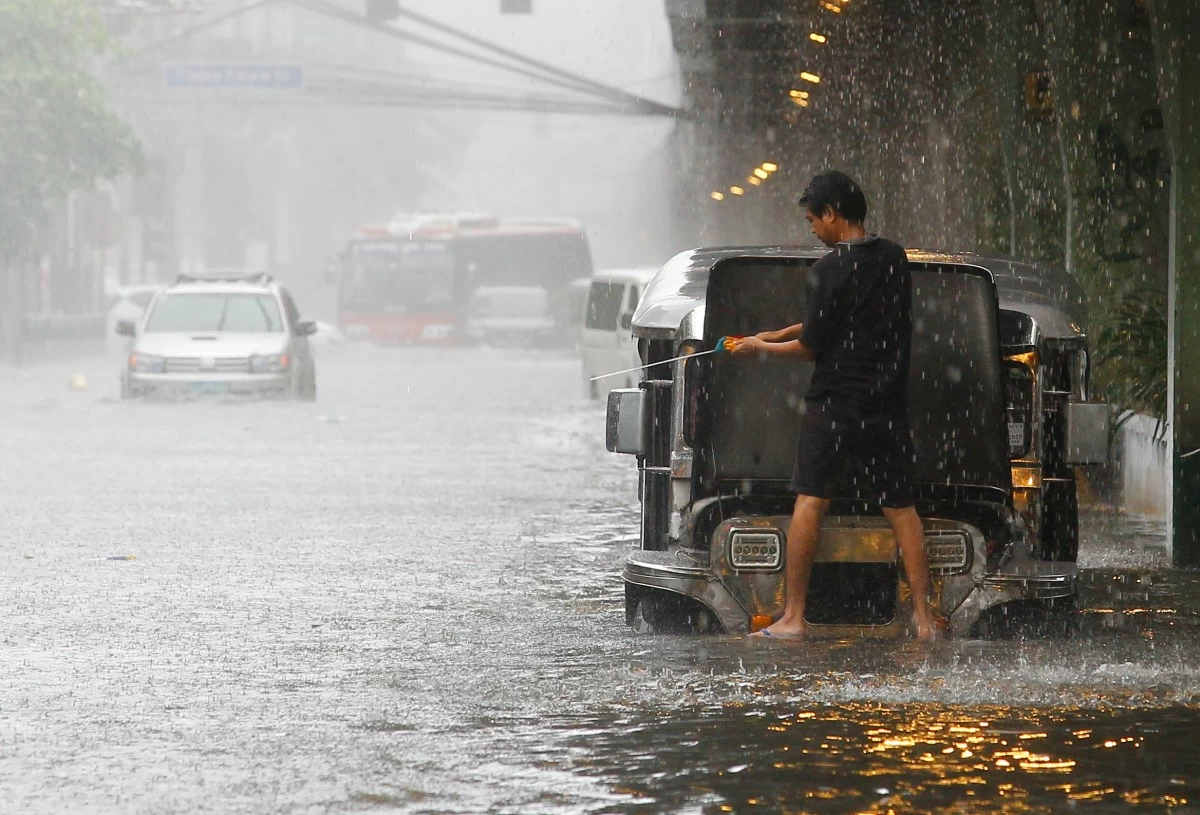
The Philippines tops the WorldRiskIndex 2025 as the most disaster-prone country, with floods, typhoons, and climate change driving high vulnerability. (MARK BALMORES / MANILA BULLETIN / FILE)
Amid scrutiny of flood control projects over alleged irregularities, the Philippines has once again topped the WorldRiskIndex 2025, ranking as the world’s most disaster-prone nation due to high risks from floods, storms, droughts, and earthquakes.
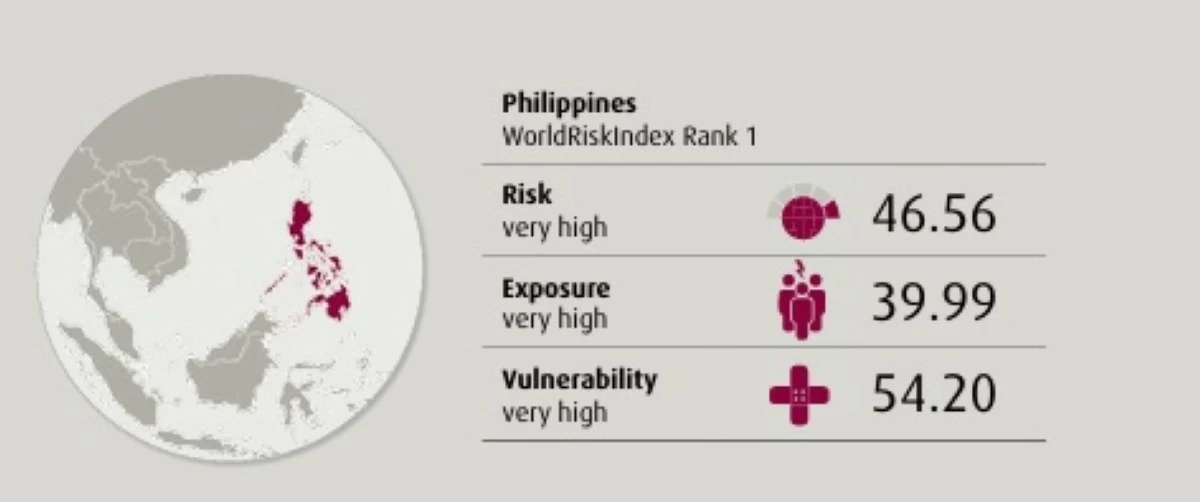
The Philippines ranks first in the WorldRiskIndex 2025 as the world’s most disaster-prone country, driven by high vulnerability to floods, typhoons, and the impacts of climate change. (Image courtesy of WorldRiskIndex 2025)
“The Philippines is once again at the top of the WorldRiskIndex this year: a country characterized by high geographic fragmentation and high exposure to weather-related extremes,” the report said.
The annual WorldRiskIndex, published on September 24, assessed disaster risks in 193 United Nations member states, covering over 99 percent of the global population. This year’s edition highlights flood risks, warning that climate change and rapid urbanization are intensifying global vulnerabilities.
Philippines ranks No. 1 in WorldRiskIndex 2025 global disaster risk
The Philippines’ high vulnerability score reflects its fragmented geography, dense coastal populations, and limited adaptive capacity against extreme weather.
India climbed to second place, surpassing Indonesia, while China re-entered the top 10, pushing Bangladesh to 11th place. Other high-risk countries in the top 10 include Colombia, Mexico, Myanmar, Mozambique, Russia, and Pakistan.
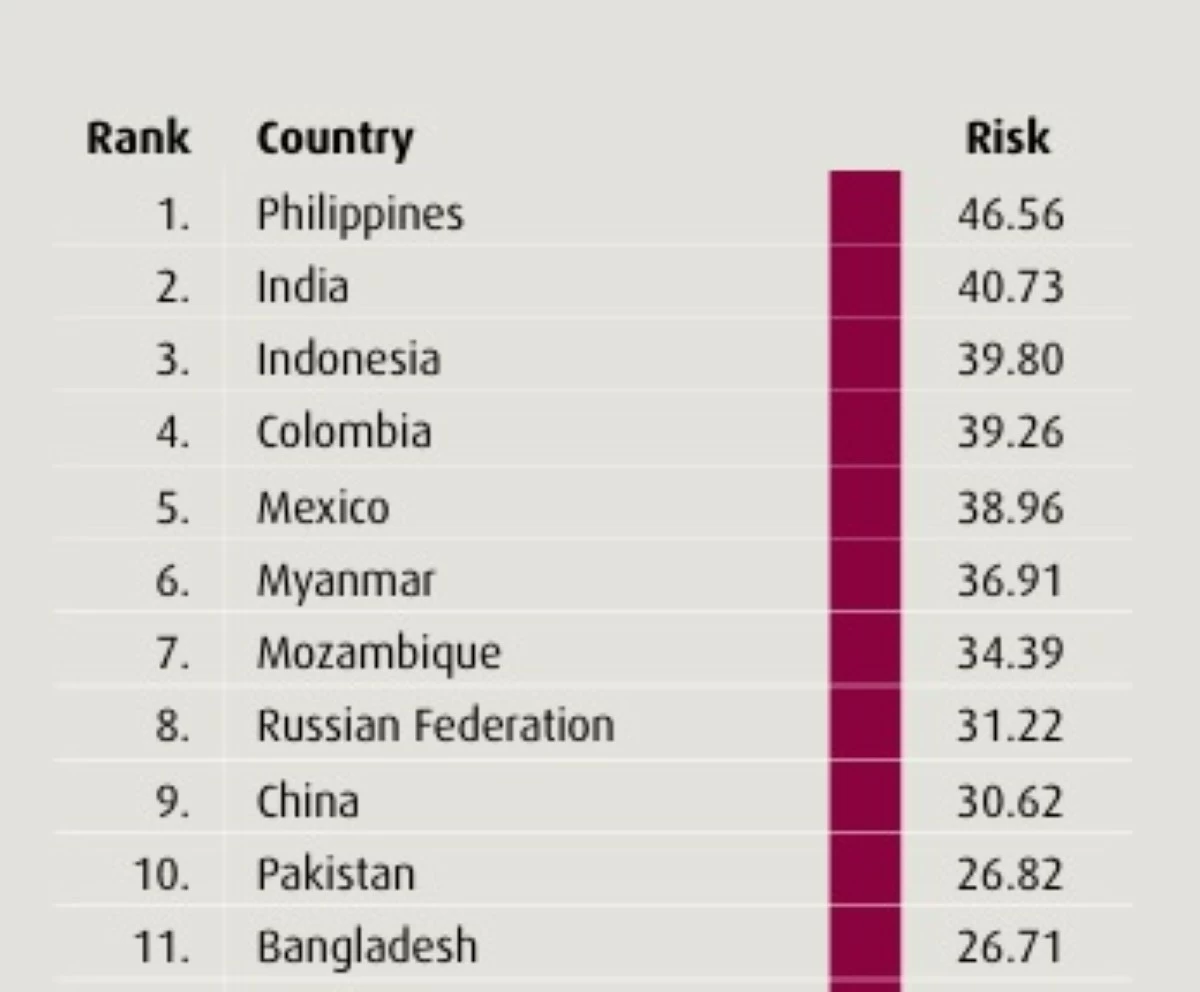
Philippines ranks No. 1 in WorldRiskIndex 2025 as the most disaster-prone nation, with flooding and climate change worsening disaster risks. (Image courtesy of WorldRiskIndex 2025)
The report identified Asia and the Americas as continuing hotspots, while Africa remains the most vulnerable continent, with nearly 80 percent of its land area classified as high or very high risk.
Flood exposure in Cagayan, Pampanga, and Metro Manila highlighted
With its archipelagic geography and frequent exposure to typhoons and floods, the Philippines retained the top spot in the global disaster risk ranking.
“The risk profile of the Philippines is characterized by a variety of natural hazards, with river and coastal flooding playing a particularly central role,” the report said.
WorldRiskIndex 2025: Philippines again named most disaster-prone country, citing high flood exposure, typhoons, and climate change threats. (Image courtesy of WorldRiskIndex 2025)
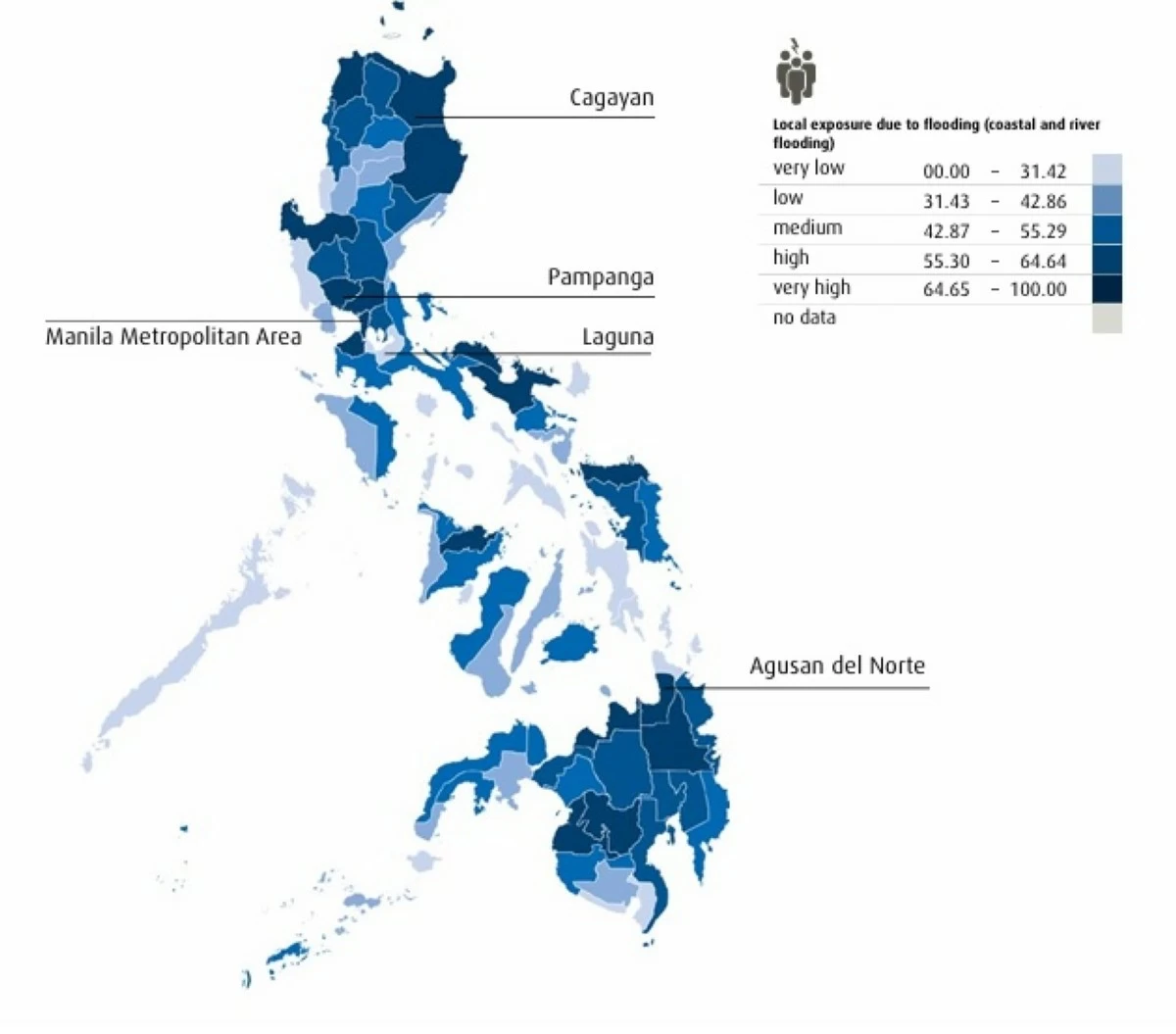
A province-level flood exposure analysis revealed that Cagayan, Agusan del Norte, Pangasinan, Pampanga, and Maguindanao top the list of flood-prone provinces, largely due to their flat terrain, wide river basins, and inadequate drainage systems.
Metro Manila ranks sixth, underscoring the vulnerability of the country’s most densely populated urban center. The capital is prone to flash floods due to its low-lying geography, the Pasig River system, and rapid urban development.
By contrast, Laguna ranks near the bottom at 80th, thanks to its hilly terrain and the buffering capacity of Laguna de Bay. Provinces like Batanes, Sarangani, and Marinduque also recorded low flood exposure due to favorable topography and smaller river systems.
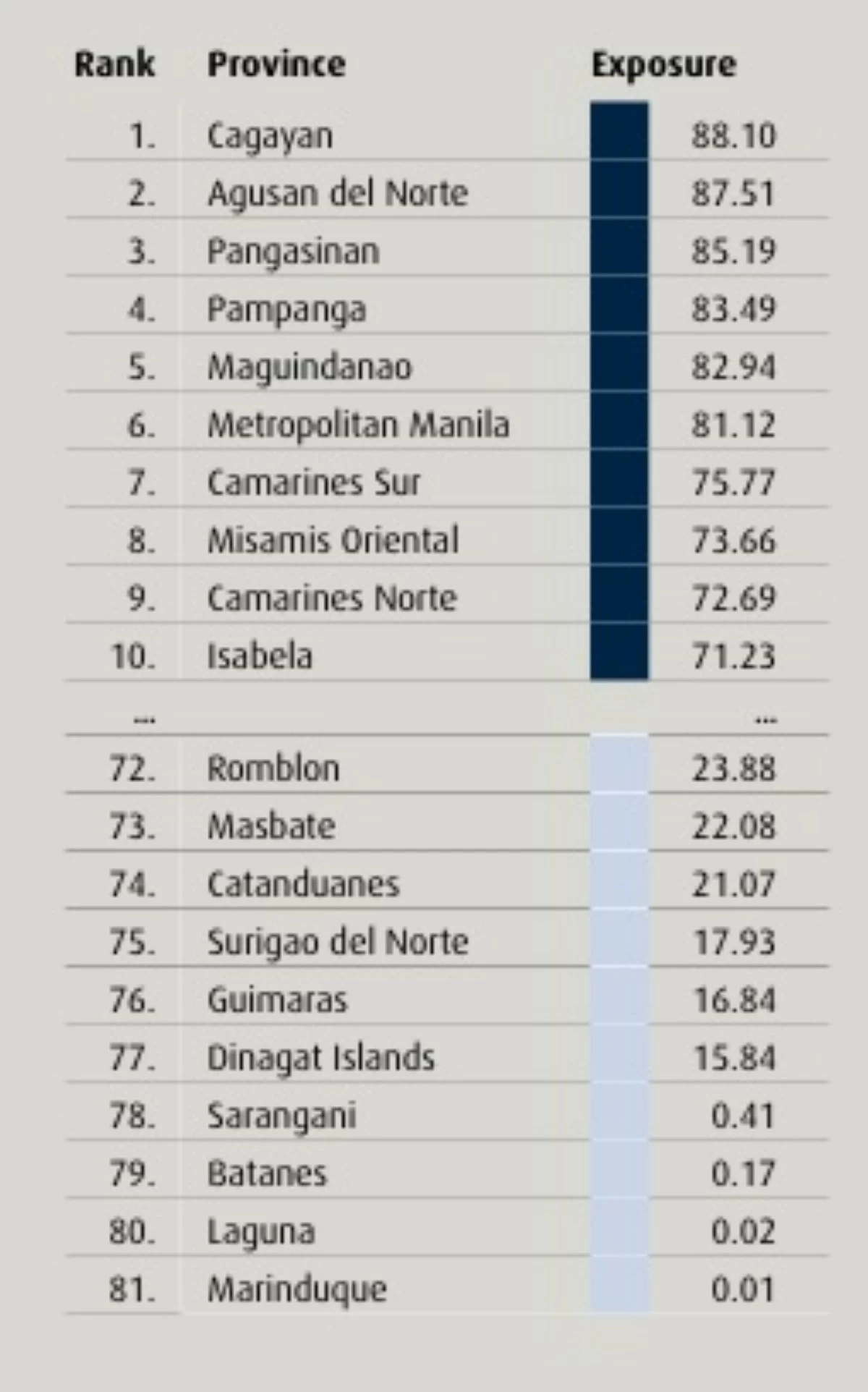
This year’s WorldRiskReport spotlights the Philippines, analyzing provincial exposure with a special focus on river and coastal flooding. (Image courtesy of WorldRiskIndex 2025)
Climate change, inequality drive rising disaster risks worldwide
Beyond physical hazards, the WorldRiskReport stressed that climate change, social inequality, and weak health systems are major drivers of disaster risk.
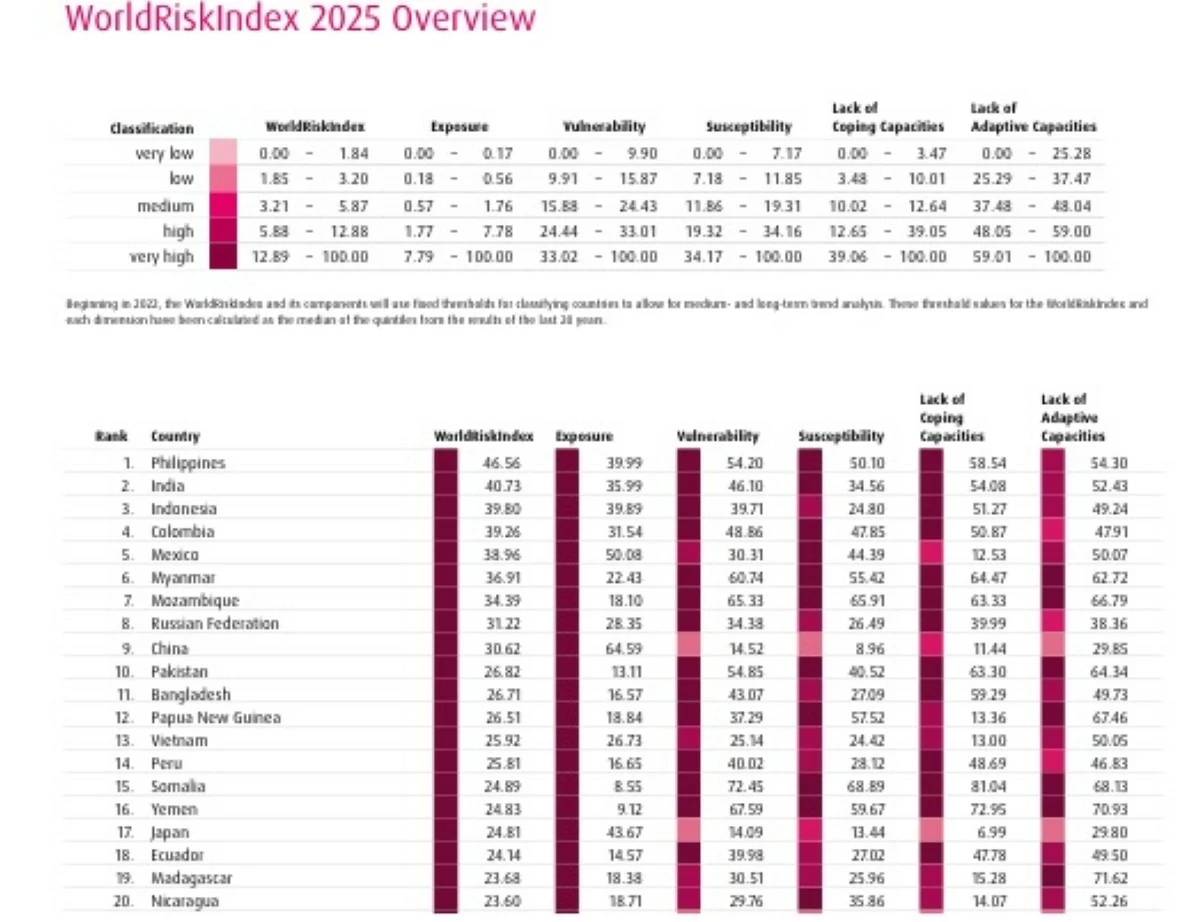
The Philippines tops global disaster risk ranking in WorldRiskIndex 2025, with floods and storms posing severe threats to communities. (Image courtesy of WorldRiskIndex 2025)
Even wealthy nations remain exposed when austerity measures weaken essential services such as healthcare and disaster response, the report pointed out.
The report also warned that climate change is pushing global risks to unprecedented levels. In 2024, the world experienced its warmest year on record, with global temperatures surpassing the Paris Climate Agreement threshold for 11 consecutive months.
More frequent and intense extreme weather events — including floods, cyclones, and droughts — are expected to worsen in the coming years.
Urgent action needed: Flood control, early warnings, and resilience
The WorldRiskIndex emphasized that reducing disaster risk requires targeted adaptation strategies — from strengthening flood control systems and improving early warning mechanisms to addressing social inequalities that limit resilience.
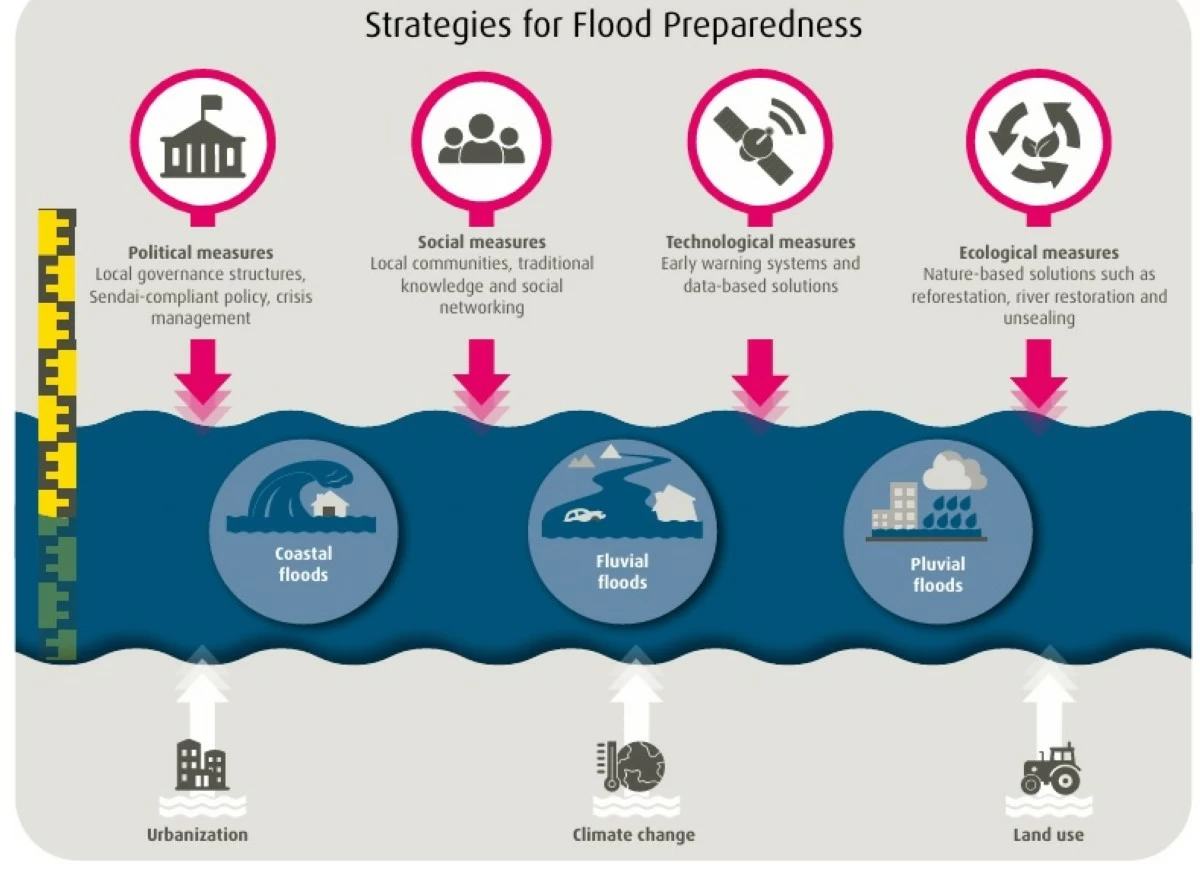
Driving factors such as urbanization and climate change cause different types of flooding, the consequences of which can be
mitigated by various complementary prevention strategies. (Image courtesy of WorldRiskIndex 2025)
“Global risk drivers include social inequality, structural vulnerability, and weak health systems. These reduce adaptability and resilience — even in wealthy countries, for example, through austerity measures in key societal sectors,” the report said.
For the Philippines, this means addressing chronic flooding in high-risk provinces while strengthening urban planning and disaster response capacity.
Copy of the report can be accessed here: https://reliefweb.int/report/world/worldriskreport-2025-focus-floods