






Manila Bulletin
 Environment and Sustainability
#MoveTogether2025 unites LGUs, NGOs in push for sustainable mobility
Environment and Sustainability
#MoveTogether2025 unites LGUs, NGOs in push for sustainable mobility
Environment and Sustainability
#MoveTogether2025 unites LGUs, NGOs in push for sustainable mobility
#MoveTogether2025 unites LGUs, NGOs in push for sustainable mobility
Published Sep 26, 2025 01:03 pm


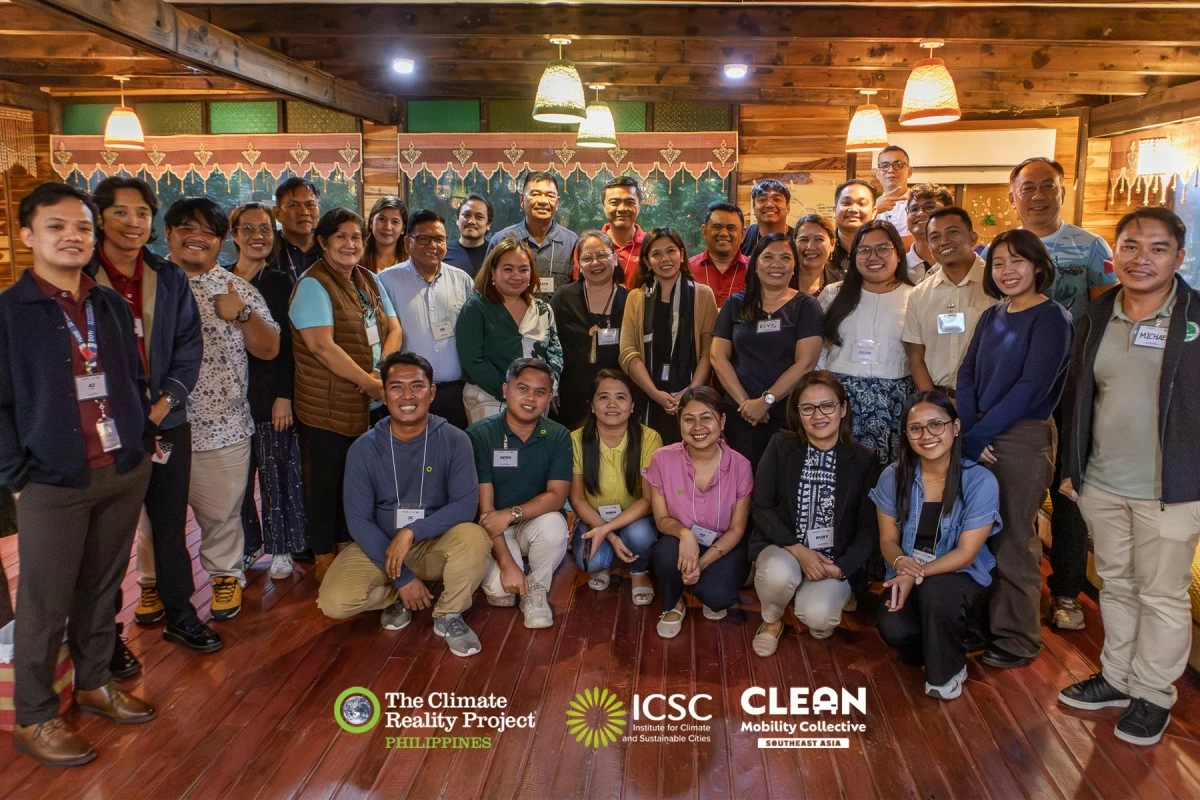
Last September 11 to 13, the Climate Reality Project Philippines gathered representatives from national government agencies (NGAs), local government units (LGUs), civil society organizations (CSOs), and the academe for Klima Pandayan #MoveTogether— a capacity and movement-building workshop on sustainable urban mobility.
“This event puts a spotlight on sustainable mobility -by sharing innovative solutions for active and public transport infrastructures and integration, this can lead to a movement towards a more sustainable, inclusive and efficient transportation system,” said Aimee P. Oliveros, Interim Branch Manager of Climate Reality Philippines.
Held in Panglao Island, Bohol, the MoveTogether workshop aimed to capacitate and empower participants to initiate discussion and action within their communities on solutions that would optimize freedom of movement. The three-day event integrated learning sessions with group activities to foster robust collaboration, camaraderie, and experience sharing between attendees.
A total of 16 LGUs were represented during the workshop, namely: Aklan, Bayugan, Baybay, Butuan, Cagayan de Oro, Calamba, Camarines Norte, Davao, General Santos, Laoag, Mandaue, Ormoc, San Remigio, Sorsogon, Surigao, and Tuguegarao.
By the end of the workshop, participants signed a common agreement pledging to promote collaborative and data-driven actions to advance sustainable mobility in their respective localities.
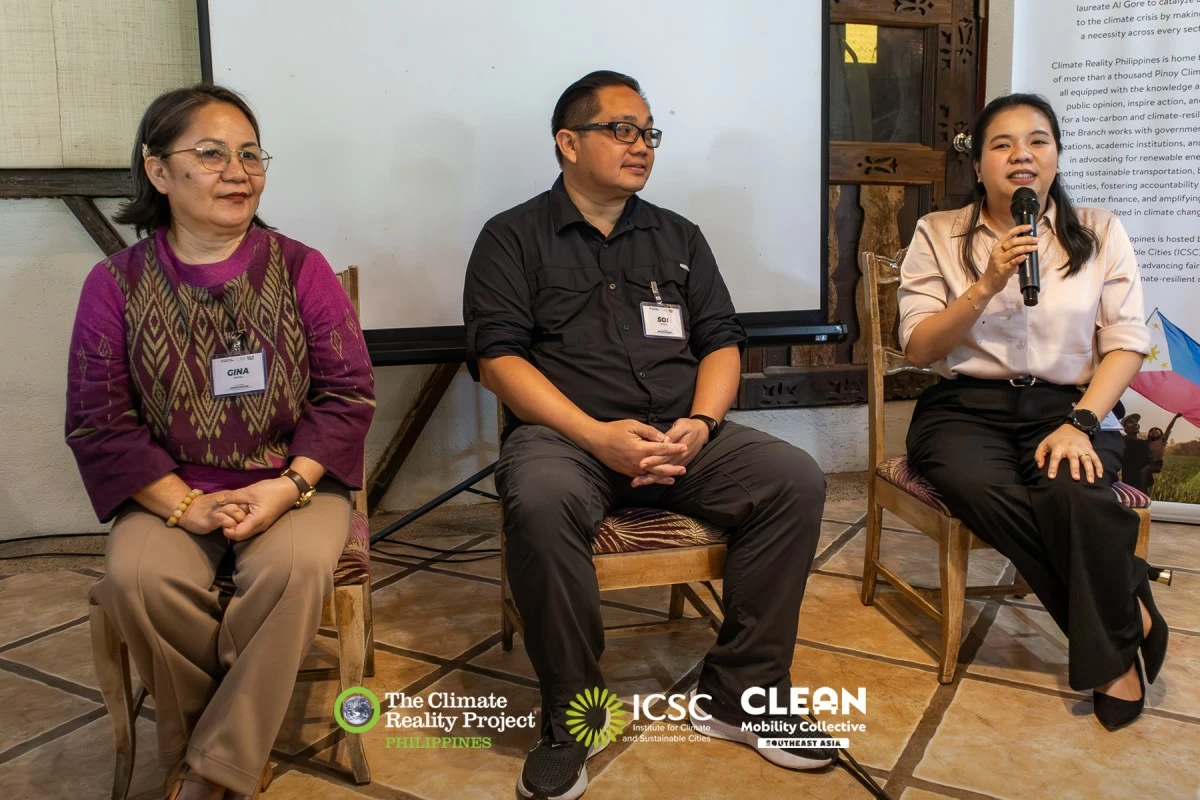
City government representatives from Davao City, Iloilo City, and Quezon City were also invited to speak on their communities’ experience in transforming their roads to prioritize active transport
Champion cities blazing trails in active transport planning and development
Representatives from the local governments of Quezon City, Iloilo City, and Davao City were invited to share their success in implementing active and public transport initiatives in their communities.
“[When it comes to active transport planning and development], LGUs should be part of the decision-making process. I trust that LGUs are able to identify community problems and potential. They know best the [needs of their] people, territory, and jurisdiction,” said Alyanna Mae S. Bernadette, Officer-in-Charge at the Quezon City Transportation Management Division.
Also in attendance were members of the Department of Transportation’s Active Transport Office, who discussed their agency’s national perspective in shaping the Philippines’ sustainable transportation development.
“A principle of active mobility is that those who have less in wheels should have more on the road— [this comes from the 2008 Executive Order 774: Reorganizing the Presidential Task Force on Climate Change],” said Arch. Alvin John A. Pajo, Lead Planning Officer at the DOTr's Active Transport Office.
A common trend across the participants was the perceived lack of technical capacity of their offices to kickstart active transport programs. To this sentiment, Eldon Joshua Dionisio, Project Manager at the DOTr’s Active Transport Office, recentered the conversation to the importance of the community’s collective willingness to transform their roads.
“Active transport infrastructure isn’t difficult in technical terms—more often than not, it’s about acceptability: both by the community and the decision makers. If there’s political will, [active transport projects] can move forward,” said Dionisio.
“It is essential to integrate land use and transport planning, as only by connecting where people live, work, and move can we build sustainable, resilient, and inclusive cities that truly serve their communities,” said Roma Mae C. Quijano, Division Chief at the Department of Human Settlements and Urban Development’s Environmental, Land Use and Urban Planning Development Division Region 7.
Moving people takes a village
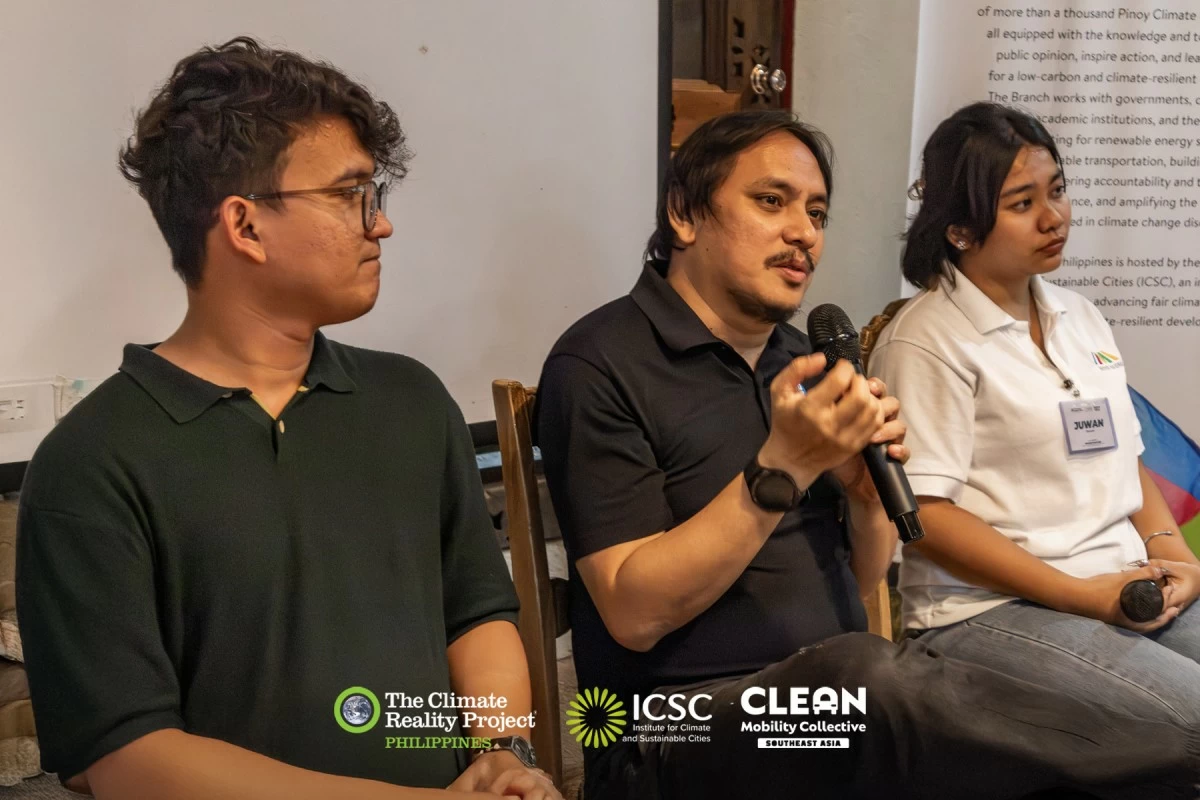
Active and public transport advocates took the stage to inspire participants in grassroots movement-building for sustainable mobility
A salient point emphasized throughout the workshop is the critical nature of stakeholder collaboration. To build safer roads for Filipinos, it will take more than the efforts of the government; a whole-of-nation approach is needed. This means the engagement of key actors such as the academe and CSOs.
“As part of civil society, we want everyone to have a seat on the table [when discussing sustainable mobility]. It’s very important to include the voices of pedestrians, cyclists, and commuters in conversations about active transport,” said Climate Reality Leader Sheen Milger A. Ochavo. Ochavo is also the executive director of iKilos Bayugan, a youth-led organization empowering Bayuganons to take part in community campaigns, particularly on active transport.
For the CSOs invited to the workshop, at the center of any urban planning program should be the people: commuters and pedestrians. This includes the most vulnerable on the road, like children, women, the elderly, and persons with disabilities (PWDs). According to speakers and participants alike, only by prioritizing people over cars can Philippine roads achieve safety, inclusivity, and sustainability.
“The transformation I hope would happen at the individual level is that we locate ourselves as part of a bigger society— and the choices and actions we take contribute towards bettering our communities’ conditions,” said Cesar Carlito R. Baclagon, Regional Finance Campaigner of 350.org Asia.
350 Pilipinas is a co-convenor of Mobility Awards, an initiative that inspires action to recognize active transport developments in the Philippines. Other Mobility Awards convenors are The Climate Reality Philippines, the Institute for Climate and Sustainable Cities (ICSC), MNL Moves, and Pinay Bike Commuter Community.
Mobility Awards recognizes efforts made by LGUs, workplaces, and businesses in promoting active mobility in their circles. Last September 19, the nominations for the Awards officially closed, garnering hundreds of nominees for the categories. This year, Mobility Awards has also expanded its recognition to celebrating pedestrian-friendly LGUs and bike-friendly academic institutions.
Accelerating sustainable mobility through data and collaboration
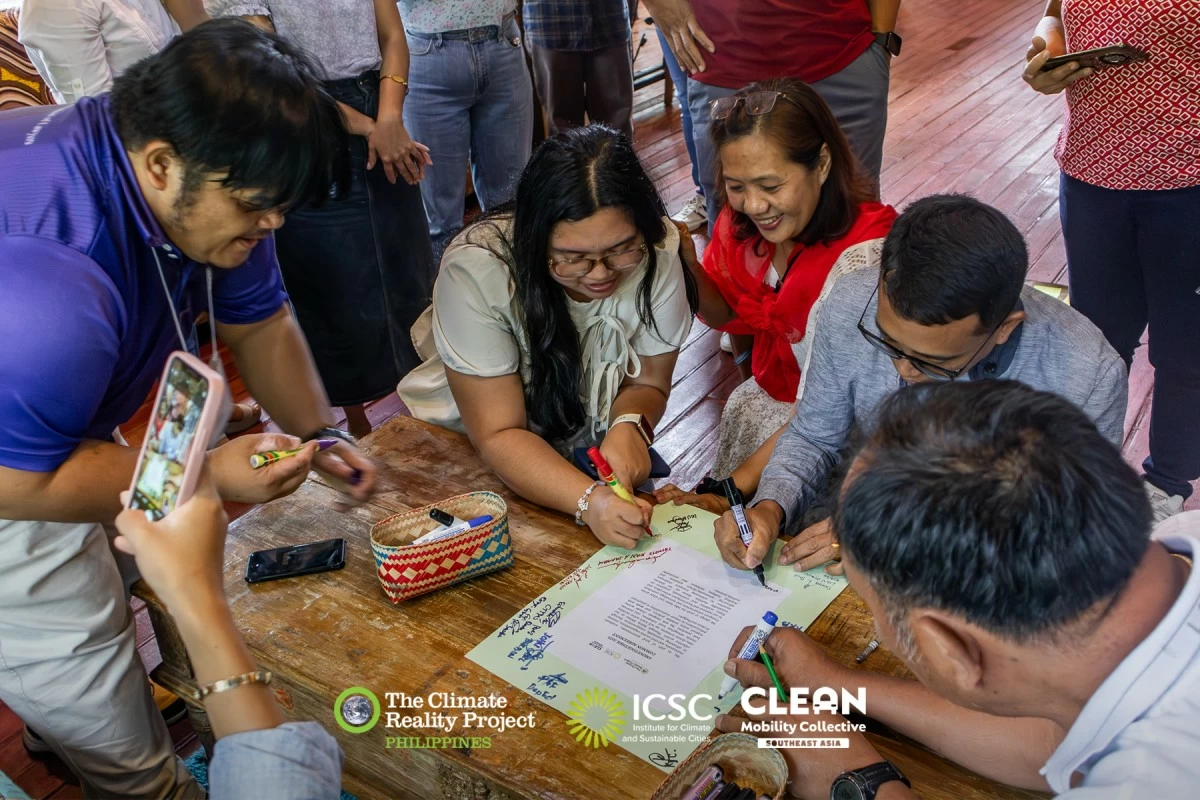
The three-day #MoveTogether workshop culminated with a common agreement signing among the participants, pledging to push for data-driven and community-centered solutions
As a culminating activity for the workshop, a commitment ceremony was held to cement the participants’ shared dedication to promoting sustainable mobility.
Using the principles of sustainable transport planning and development as their foundation, participants and speakers alike pledged to transform their communities into ones that are safe and inclusive for Filipinos— to move and live in.
Part of the commitment signed was the pledge to utilize bike counts as a common data-driven effort, as well as advancing community-driven solutions, and building resilient, inclusive, and sustainable urban mobility systems.
This is aligned with the Mobility Awards’ annual Bilang Siklista activities, which aims to track active mobility trends and strengthen community engagement. As of September 24, 15 cities have conducted bike count activities in their areas, mostly led by local bike groups and volunteers.
“We hope that when we come back to our respective cities and communities, we can be the seed to sprout that advances sustainable transport and become the champions of active mobility,” said Marisol D. Tuso, Climate Reality Philippines’ Mobility Awards Program Officer.