

ADVERTISEMENT

Top tennis players push Grand Slam tourneys again in bid for more money and more say

Published Sep 25, 2025 10:00 am

At A Glance

  • A collection of top-10 tennis players sent a second letter to the four Grand Slam tournaments to push for a greater share of revenues — aiming to rise from the current 16% to 22% by 2030 — contributions to pension, health and maternity benefits that would go from zero to $12 million annually by that same year, and greater say via a new player council.
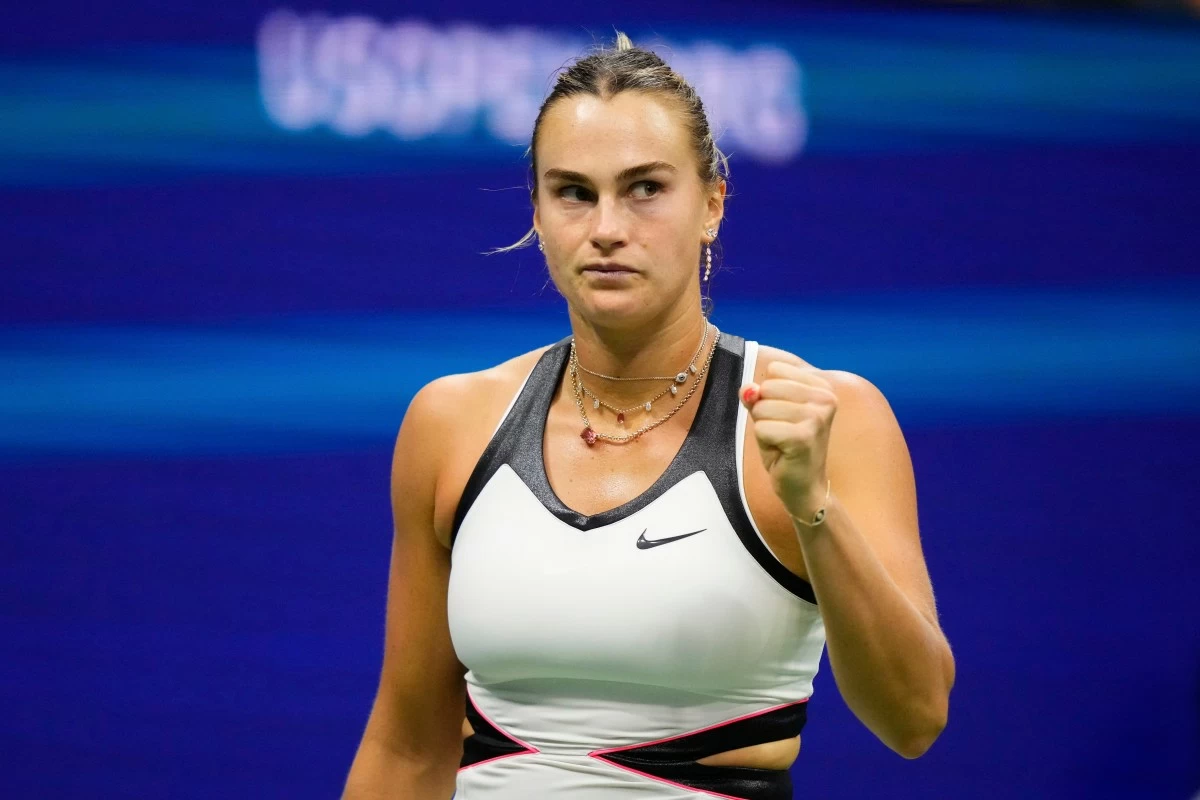
Aryna Sabalenka, of Belarus, reacts against Amanda Anisimova, of the United States, during the women's finals of the U.S. Open tennis championships, Saturday, Sept. 6, 2025, in New York. (AP Photo/Yuki Iwamura)
A collection of top-10 tennis players sent a second letter to the four Grand Slam tournaments to push for a greater share of revenues — aiming to rise from the current 16% to 22% by 2030 — contributions to pension, health and maternity benefits that would go from zero to $12 million annually by that same year, and greater say via a new player council.
This letter, signed by stars such as Aryna Sabalenka, Iga Swiatek, Coco Gauff, Carlos Alcaraz, Jannik Sinner and Jack Draper — but not, unlike the original letter sent by players to the Slam events in March, Novak Djokovic — was dated July 30.
The second letter, which was seen this week by The Associated Press, set out specific benchmarks for ways in which the sport's four most prestigious, and profitable, tournaments could offer more money and influence to the athletes.
The players are working with Larry Scott as a consultant; he used to be the chairman and CEO of the WTA women's tennis tour and, later, ran the Pac-12 conference in American college sports.
There have been meetings among Scott, some players and the leaders of the All England Club, which runs Wimbledon; the French Tennis Federation, which runs Roland-Garros; Tennis Australia, which runs the Australian Open; and the U.S. Tennis Association, which runs the U.S. Open.
All four were asked to reply to the July 30 letter, and all four did.
The USTA's response, dated Aug. 18 and obtained this week by the AP, was signed by Brian Vahaly, the group's interim co-CEO, and Stacey Allaster, the USTA's chief executive of professional tennis who just completed her last U.S. Open as tournament director.
“As you are aware, we have always been willing to increase compensation for players — as evidenced by the 57% growth of the U.S. Open purse over the past five years — particularly when additional collaboration on the part of the players helps to create additional revenue,” Vahaly and Allaster wrote. “For example, this year’s significant increase in compensation to $90 million reflects the addition of an extra day to the main draw singles competition and the resulting contribution made by players.”
U.S. Open singles champions Sabalenka and Alcaraz each received a record $5 million this month.
Vahaly and Allaster also wrote that they wanted “to reiterate our commitment to engaging in direct, honest and transparent discussions with the players to build a stronger future for the entire tennis ecosystem — including a healthier calendar, enhanced player consultation, and greater financial value for all involved.”
The March letter from players to the four Slam hosts came not long after the players’ association co-founded by Djokovic — the Professional Tennis Players' Association (PTPA) — filed an antitrust lawsuit against the women’s and men’s professional tours in federal court in New York. Djokovic was not listed as one of the plaintiffs.
That antitrust filing seeks more money for players, saying too little of the revenues end up in the athletes’ hands, and lays out a series of other complaints about the way the sport is run. In May, the WTA and ATP tours jointly filed a motion to dismiss the case against them.
The original case did not list the four Grand Slam tournament organizers as defendants, but they have been added, the PTPA announced this week.
“This is a necessary next step to guarantee accountability from all parties," the PTPA said, "and accelerate long-overdue reform across the entire tennis ecosystem.”
ADVERTISEMENT
.most-popular .layout-ratio{ padding-bottom: 79.13%; } @media (min-width: 768px) and (max-width: 1024px) { .widget-title { font-size: 15px !important; } }

{{ articles_filter_1561_widget.title }}

.most-popular .layout-ratio{ padding-bottom: 79.13%; } @media (min-width: 768px) and (max-width: 1024px) { .widget-title { font-size: 15px !important; } }

{{ articles_filter_1562_widget.title }}

.most-popular .layout-ratio{ padding-bottom: 79.13%; } @media (min-width: 768px) and (max-width: 1024px) { .widget-title { font-size: 15px !important; } }

{{ articles_filter_1563_widget.title }}

{{ articles_filter_1564_widget.title }}

.mb-article-details { position: relative; } .mb-article-details .article-body-preview, .mb-article-details .article-body-summary{ font-size: 17px; line-height: 30px; font-family: "Libre Caslon Text", serif; color: #000; } .mb-article-details .article-body-preview iframe , .mb-article-details .article-body-summary iframe{ width: 100%; margin: auto; } .read-more-background { background: linear-gradient(180deg, color(display-p3 1.000 1.000 1.000 / 0) 13.75%, color(display-p3 1.000 1.000 1.000 / 0.8) 30.79%, color(display-p3 1.000 1.000 1.000) 72.5%); position: absolute; height: 200px; width: 100%; bottom: 0; display: flex; justify-content: center; align-items: center; padding: 0; } .read-more-background a{ color: #000; } .read-more-btn { padding: 17px 45px; font-family: Inter; font-weight: 700; font-size: 18px; line-height: 16px; text-align: center; vertical-align: middle; border: 1px solid black; background-color: white; } .hidden { display: none; }
function initializeAllSwipers() { // Get all hidden inputs with cms_article_id document.querySelectorAll('[id^="cms_article_id_"]').forEach(function (input) { const cmsArticleId = input.value; const articleSelector = '#article-' + cmsArticleId + ' .body_images'; const swiperElement = document.querySelector(articleSelector); if (swiperElement && !swiperElement.classList.contains('swiper-initialized')) { new Swiper(articleSelector, { loop: true, pagination: false, navigation: { nextEl: '#article-' + cmsArticleId + ' .swiper-button-next', prevEl: '#article-' + cmsArticleId + ' .swiper-button-prev', }, }); } }); } setTimeout(initializeAllSwipers, 3000); const intersectionObserver = new IntersectionObserver( (entries) => { entries.forEach((entry) => { if (entry.isIntersecting) { const newUrl = entry.target.getAttribute("data-url"); if (newUrl) { history.pushState(null, null, newUrl); let article = entry.target; // Extract metadata const author = article.querySelector('.author-section').textContent.replace('By', '').trim(); const section = article.querySelector('.section-info ').textContent.replace(' ', ' '); const title = article.querySelector('.article-title h1').textContent; // Parse URL for Chartbeat path format const parsedUrl = new URL(newUrl, window.location.origin); const cleanUrl = parsedUrl.host + parsedUrl.pathname; // Update Chartbeat configuration if (typeof window._sf_async_config !== 'undefined') { window._sf_async_config.path = cleanUrl; window._sf_async_config.sections = section; window._sf_async_config.authors = author; } // Track virtual page view with Chartbeat if (typeof pSUPERFLY !== 'undefined' && typeof pSUPERFLY.virtualPage === 'function') { try { pSUPERFLY.virtualPage({ path: cleanUrl, title: title, sections: section, authors: author }); } catch (error) { console.error('ping error', error); } } // Optional: Update document title if (title && title !== document.title) { document.title = title; } } } }); }, { threshold: 0.1 } ); function showArticleBody(button) { const article = button.closest("article"); const summary = article.querySelector(".article-body-summary"); const body = article.querySelector(".article-body-preview"); const readMoreSection = article.querySelector(".read-more-background"); // Hide summary and read-more section summary.style.display = "none"; readMoreSection.style.display = "none"; // Show the full article body body.classList.remove("hidden"); } document.addEventListener("DOMContentLoaded", () => { let loadCount = 0; // Track how many times articles are loaded const offset = [1, 2, 3, 4, 5, 6, 7, 8, 9, 10]; // Offset values const currentUrl = window.location.pathname.substring(1); let isLoading = false; // Prevent multiple calls if (!currentUrl) { console.log("Current URL is invalid."); return; } const sentinel = document.getElementById("load-more-sentinel"); if (!sentinel) { console.log("Sentinel element not found."); return; } function isSentinelVisible() { const rect = sentinel.getBoundingClientRect(); return ( rect.top < window.innerHeight && rect.bottom >= 0 ); } function onScroll() { if (isLoading) return; if (isSentinelVisible()) { if (loadCount >= offset.length) { console.log("Maximum load attempts reached."); window.removeEventListener("scroll", onScroll); return; } isLoading = true; const currentOffset = offset[loadCount]; window.loadMoreItems().then(() => { let article = document.querySelector('#widget_1690 > div:nth-last-of-type(2) article'); intersectionObserver.observe(article) loadCount++; }).catch(error => { console.error("Error loading more items:", error); }).finally(() => { isLoading = false; }); } } window.addEventListener("scroll", onScroll); });

Sign up by email to receive news.