






Manila Bulletin
 Philippines
National
PH calls for 'substantial capitalization' for Loss and Damage Fund
Philippines
National
PH calls for 'substantial capitalization' for Loss and Damage Fund
Philippines
National
PH calls for 'substantial capitalization' for Loss and Damage Fund
PH calls for 'substantial capitalization' for Loss and Damage Fund
Published Sep 25, 2025 03:39 pm


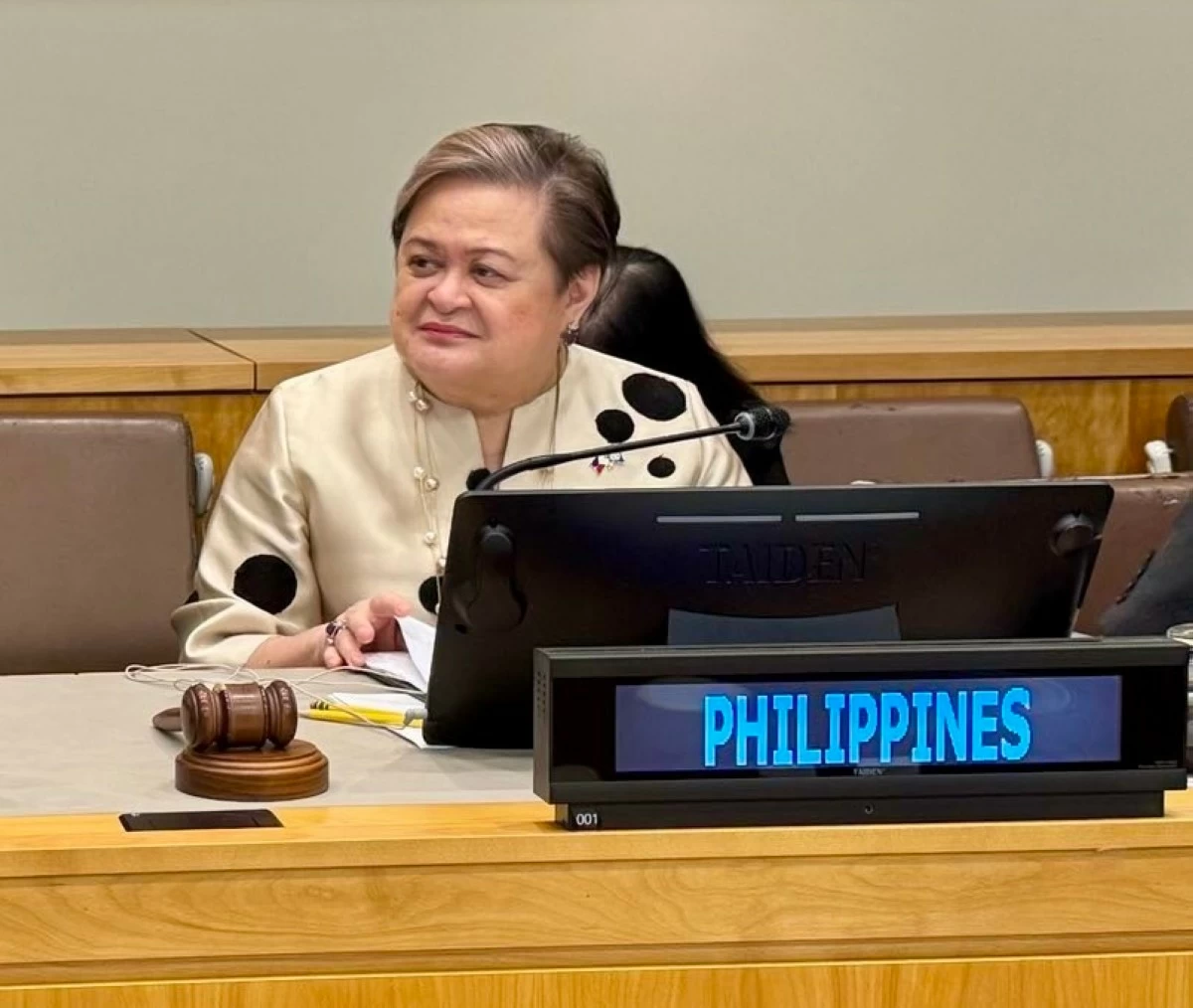
DFA Secretary Ma. Theresa Lazaro keynotes the Philippines' high-level meeting on Loss and Damage at the UN General Assembly in New York. (Photo from Sec. Lazaro via X post)
The Philippines called on developed countries not only to lead, but to provide “substantial capitalization” for the Loss and Damage Fund, which is mandated to assist developing countries in responding to economic and non-economic loss and damage associated with the effects of climate change.
In the keynote address delivered by Department of Foreign Affairs (DFA) Secretary Ma. Theresa Lazaro on Tuesday, Sept. 23 (US time), for the 80th Session of the United Nations General Assembly (UNGA), underscored the Philippines’ role as host of the Board of the Fund for Responding to Loss and Damage.
“In this role, we speak not only as one nation, but as part of a wider community affected by loss and damage induced by the climate crisis,” she said during the high-level event with the theme “Scaling Up Finance and Partnerships for Responding to Loss and Damage.”
“We call on all Member States to stand firmly behind the Fund. It must be adequately financed to meet urgent needs of developing countries, which bear the social and fiscal cost of loss and damage,” the official added.
“We urge developed countries to lead, supported by multilateral institutions, the private sector, and other partners, to ensure coherence and complementarity. Support must, therefore, mean substantial capitalization and replenishment on a predictable cycle, anchored in cooperation among States, and the wider financing system,” she furthered.
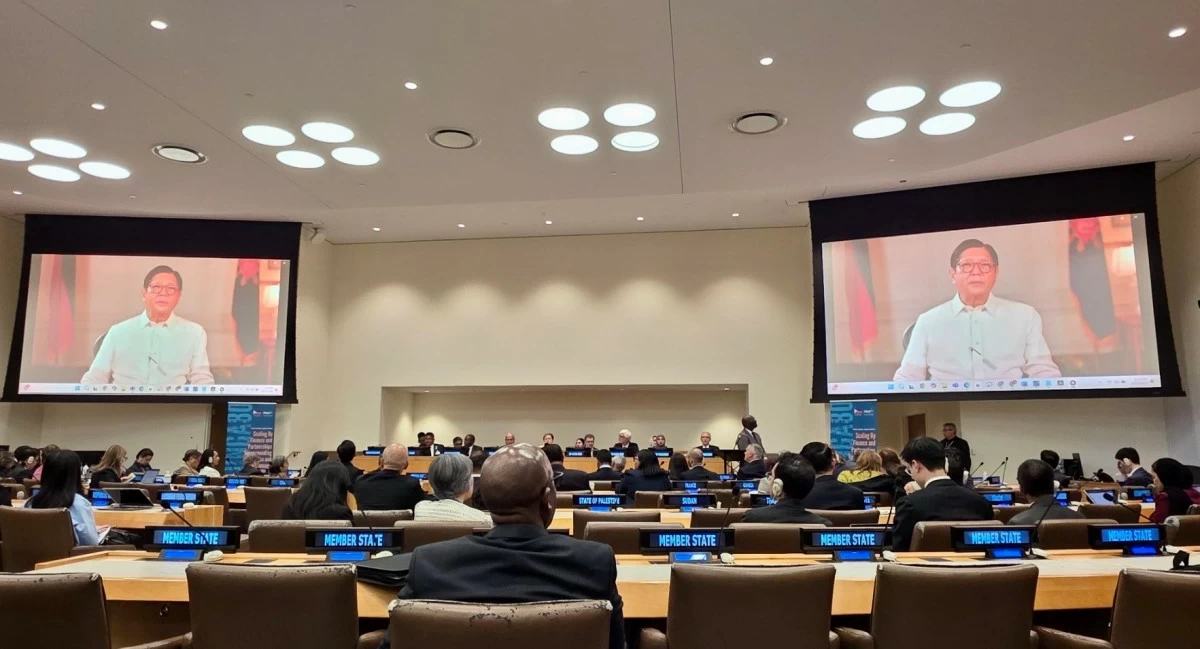
President Ferdinand ‘Bongbong’ Marcos Jr. delivers a video message at the 80th session of UNGA. (Photo courtesy of Sec. Lazaro)
The Loss and Damage Fund was established by the Conference of the Parties (COP) and the Conference of the Parties serving as the Meeting of the Parties to the Paris Agreement (CMA) to assist developing countries that are particularly vulnerable to the effects of climate change, including extreme weather events and slow-onset events.
In July, the Philippines was chosen to be the host country for the fund’s board.
In her speech, Lazaro pointed out that the resources must be accessible, timely, and equitable, and they must reach those who need them, including small island developing states, least developed countries, landlocked and vulnerable middle-income countries, and climate-affected communities.
The DFA chief vowed that the Philippines, for its part, “will continue to provide the platform and facilities for the Board to function effectively.”
“We will work to ensure it remains transparent, responsive, and strategic. We will continue to stand with those who see this Fund as a lifeline,” she stressed.