






Manila Bulletin
 Business
Trade & Industry
Ex-Cabinet secretary pushes for accelerated Philippine free trade agreements
Business
Trade & Industry
Ex-Cabinet secretary pushes for accelerated Philippine free trade agreements
Business
Trade & Industry
Ex-Cabinet secretary pushes for accelerated Philippine free trade agreements
Ex-Cabinet secretary pushes for accelerated Philippine free trade agreements
Published Sep 25, 2025 10:40 pm


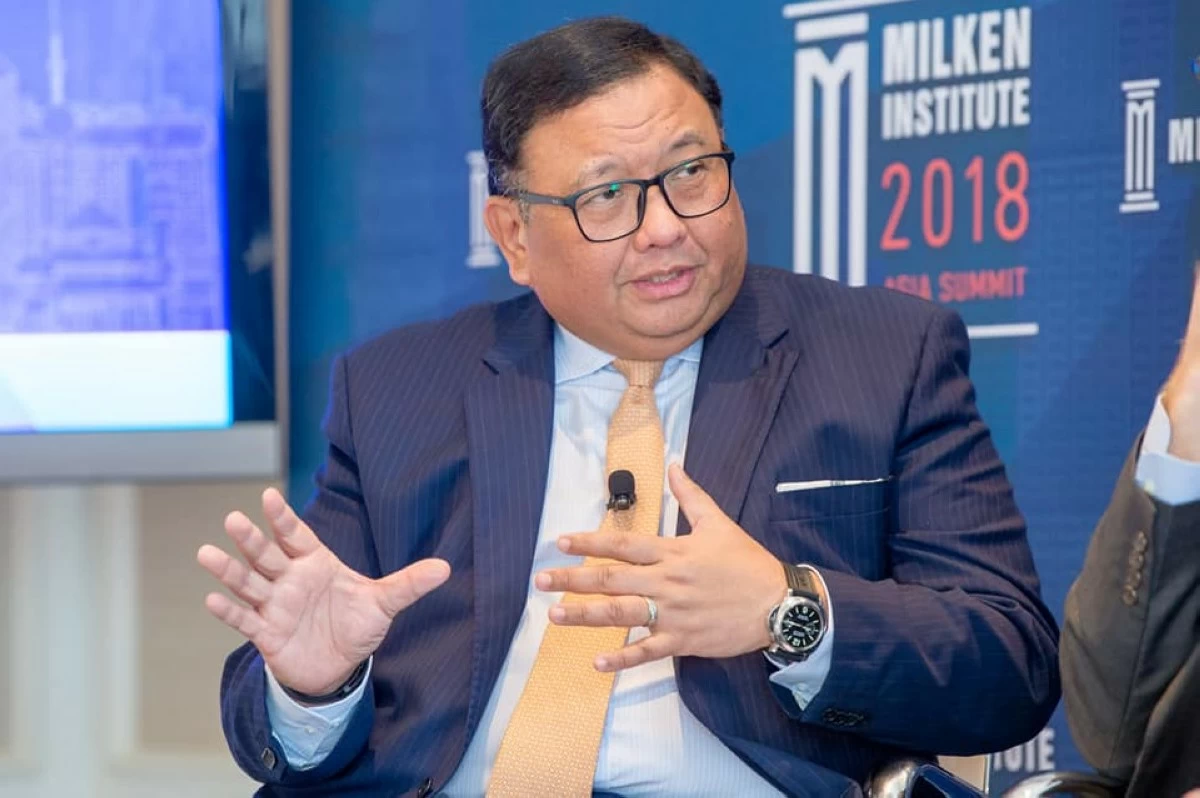
Rene Almendras (Manila Bulletin file photo)
Former Cabinet Secretary Rene Almendras is urging the government to expand the Philippines’ bilateral agreements with trading partners to increase potential investment sources, amid growing protectionist policies.
Almendras, who was presented with the Arangkada Lifetime Achievement Award on Thursday, Sept. 25, said bilateral agreements have now taken precedence over multilateral relationships.
Since United States (US) President Donald Trump’s return to office earlier this year, his protectionist policies have slowly unbuckled long-standing policies built by multilateral agreements.
“Nation-to-nation, economy-to-economy discussions and thus negotiations have become the norm,” said Almendras, who is also a former secretary of foreign affairs.
Speaking before the 2025 Arangkada Philippines Investment Forum hosted by the Joint Foreign Chambers of the Philippines (JFC), Almendras noted that foreign chambers are best positioned to foster these deals.
“You have the natural connection in place. You have and will continue to have a first-hand, up-front view of any developments here and in your home countries that will affect trade and businesses,” said Almendras.
“I ask then, that us together actively foster and enhance these relationships,” he added.
On the part of the government, he said there should be more focus exerted on accelerating the pending free trade agreements (FTAs).
According to the Department of Trade and Industry (DTI), agreements on the pipeline include the United Arab Emirates (UAE), Canada, Chile, the European Union (EU), and the Comprehensive and Progressive Agreement for Trans-Pacific Partnership (CPTPP).
In the same manner, Almendras said the country’s trade policy should also focus on the micro level, rather than solely on the macro perspective.
“This is best done by actively engaging with industry groups when addressing economic security and geoeconomic questions or issues as they come,” he said.
The former government official said there should be a more concerted effort to engage with private firms in order to secure their insights necessary to form policy discussions, strategy formulations, and decisions.
He said this should also serve as a basis for industries to prepare for the impact of future policy changes.
Further, Almendras suggested that President Ferdinand “Bongbong” Marcos Jr. himself should be open in regular meetings with the private sector.
“I know for a fact that one of our neighboring countries has a monthly meeting between the Prime Minister's office and specific industries that have been defined as critical to them. Whether there is a problem or not, they meet,” he said.
“And this is important. Why? Because by having a regular set of meetings on a regular cadence, it will enable us to monitor, keep abreast, and be proactive if and when possible,” he added.
Almendras further said that the Philippines doesn’t have the luxury of being reactive in every situation, as he stressed the urgency of coming together to be proactive amid the emergence of protectionism and an isolationist posture.