






Manila Bulletin
 Philippines
National
Erwin Tulfo grills ex-DPWH engineer's drivers: 'Maletas' of cash delivered to Co, Bernardo
Philippines
National
Erwin Tulfo grills ex-DPWH engineer's drivers: 'Maletas' of cash delivered to Co, Bernardo
Philippines
National
Erwin Tulfo grills ex-DPWH engineer's drivers: 'Maletas' of cash delivered to Co, Bernardo
Erwin Tulfo grills ex-DPWH engineer's drivers: 'Maletas' of cash delivered to Co, Bernardo
By Dhel Nazario
Published Sep 25, 2025 02:16 pm


Sen. Erwin Tulfo, on Thursday, Sept. 25, feels that there may be more names that will come up in the continuing probe of the Senate Blue Ribbon Committee into the flood control kickback scheme.
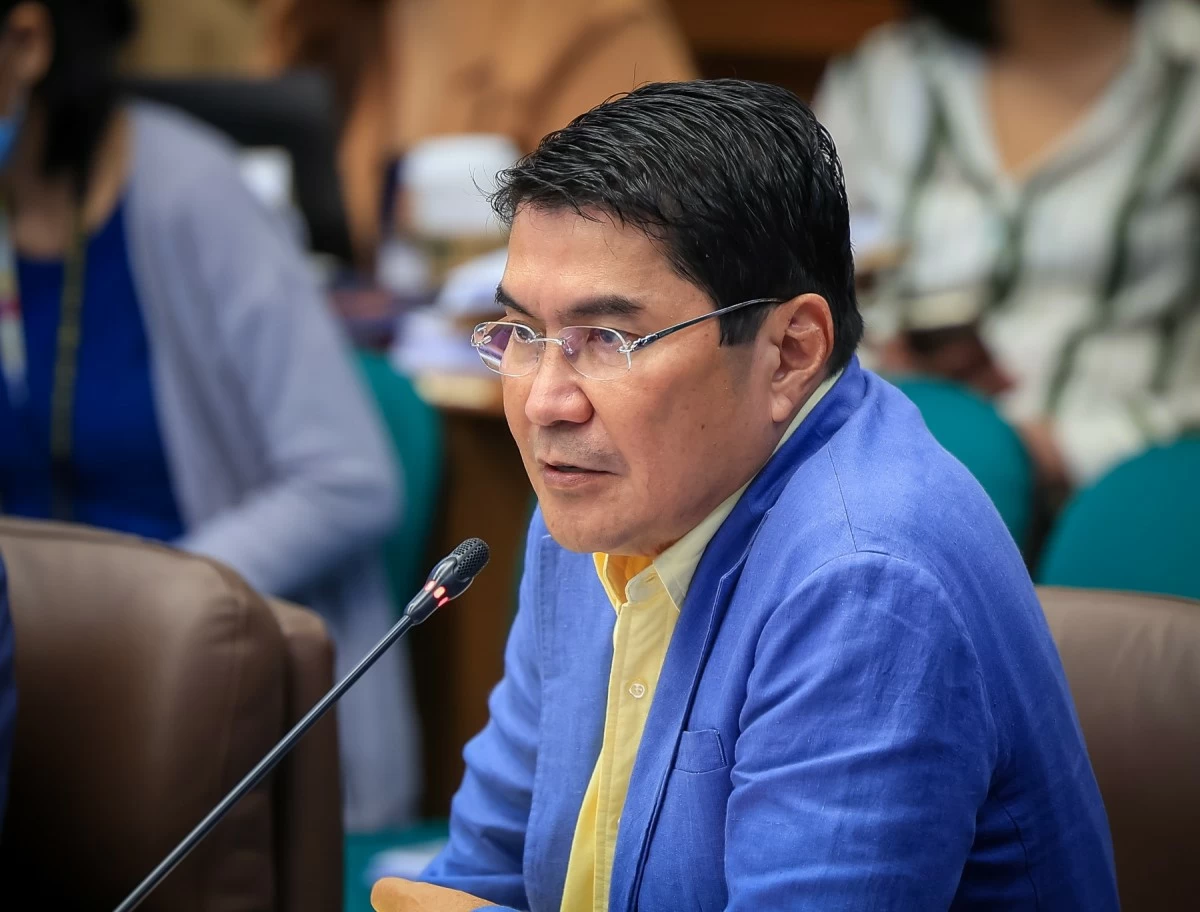
Senator Erwin Tulfo (Senate PRIB photo)
Tulfo expressed dismay over Department of Public Works and Highways (DWPH) Usec. Robert Bernardo for lack of pertinent details, and for only disclosing a few names of government officials who were involved in the anomalous flood control projects.
“Mr. Chair, I also feel that Usec. Bernardo’s statements are lacking. It seems like the people he pointed out are still not enough. So I believe we'll probably wait for the supplemental (affidavit) when he returns (at the Senate) because I don't believe it's just these four (officials). I'm sure he'll also mention something about the Congress (House of Representatives),” Tulfo said.
Meanwhile, Tulfo also zeroed in on two drivers identified by former Bulacan First District Engineering Office chief Henry Alcantara — Andrei Balatbat and Christian Santiago — who admitted to transporting multiple maletas believed to contain millions of pesos.
Balatbat admitted he once delivered 6 to 8 maletas to a house in Valle Verde, Pasig, but stated that they had no idea what it contained.
Still, he revealed that the transfer was made to a residence in Valle Verde, although he could not confirm if it was Congressman Zaldy Co’s house.
“Mga tauhan po yung nandun (Only the staff were present),” he said, noting no receipts or acknowledgments were issued.
Balatbat also pointed to another vehicle, that picked up the maletas during other transactions.
“Bale sila po yung kumuha sa sasakyan namin (They were the ones who took it from our vehicle),” he said, adding that the exchange happened at a Phoenix Petroleum station on Dahlia Street, Fairview.
Christian Santiago, another driver, admitted he delivered maletas seven times to the same Dahlia location.
Each time, he estimated carrying 8 to 10 maletas. He clarified he was Balatbat’s co-driver.
Asked when the deliveries took place, Santiago said: “Sa November limang beses po, tapos merong January at saka March po (In November, five times, then once in January and once in March).”
Tulfo turned to Alcantara for confirmation. The former DPWH district engineer replied: “Posible po, your honor. Hindi ko lang po talaga marecall.”
Alcantara revealed that each maleta typically contained ₱30 to ₱40 million.
"Pinakamababa na po yung pag maliit po yung maleta, mga nasa P25 million. Meron po, hindi ko po matandaan kung meron po kaming isang maletang malaking malaki na kaya po yung P50 million. Pero bihira po yung P50 million, P30 to P40 million po normally ang isang maleta po (The lowest would be when the suitcase is small, around ₱25 million. There was one time, I can’t quite remember, when we had one very large suitcase that could carry ₱50 million. But ₱50 million was rare — normally, a suitcase would contain ₱30 to ₱40 million)," Alcantara explained.
He clarified that deliveries to Valle Verde and Bonifacio Global City (BGC) were linked to Congressman Co, while the Fairview hand-offs involved Undersecretary Robert Bernardo.
Alcantara said he coursed instructions through his chief of staff, Engineer Carlo Rivera, who dealt with the drivers. “Hindi ko po kahit po ako, si Engr. Brice, si Engr. Jaypee, hindi po alam kung saan po talaga ang location po. Basta yung number lang po, kokontakin lang po ni Engr. Carlo,” he said.
Rivera, present at the hearing, confirmed he received contact numbers from Alcantara and relayed them to drivers without knowing the identities of the recipients.
“Number lang po yung binigay po sa akin. Then fino-forward ko po sa driver. Sila na po ang nag-uusap (I was only given a number. Then I forwarded it to the driver. They were the ones who talked afterwards),” Rivera said.
Tulfo also questioned other engineers involved. Brice Hernandez testified that commitments on projects were higher than what Bernardo earlier admitted.
“Your Honor, parang kulang po yung commitment na binanggit po ni Usec. Robert. Kasi as per instruction po sa amin ni Boss Henry, nasa 25 percent po ang pinapa-prepare na obligasyon (Your Honor, it seems the commitment mentioned by Usec. Robert was lacking. Because as per the instructions given to us by Boss Henry, the obligation being prepared was at 25 percent),” Hernandez said, adding that for senatorial funds, it sometimes reached 30 percent.
Jaypee Mendoza, another former DPWH Bulacan engineer involved in the scheme, supported Hernandez’s claim.
“So Bryce, mali po yung sinasabi ni Usec. So parang kulang kasi sinasabi niya 15% lang pero kayo iniimpake niyo yung 25%. So sa palagay mo, nasaan kaya nakapunta po yung 10%? (So Bryce, what Usec. said was wrong. It seems lacking because he said it was only 15%, but you were actually packing 25%. So in your opinion, where do you think the 10% went?)” Tulfo asked.
Hernandez said that it either went to Alcantara or to Bernardo.
Alcantara, however, insisted he only followed Bernardo’s instructions.
Tulfo went on to ask about so-called “pass-through charges” for district representatives, a kind of parking fee when funds are allocated outside their districts. Alcantara admitted these were at 5 percent, sometimes 6 percent.
Tulfo then summarized that with various deductions — including 8.5 percent for district engineering offices, 1 percent for COA, 5 percent for contractors, 3 percent for losing bidders, and 25–30 percent for commitments — only 30–35% of funds remain for actual project implementation.
“Thirty percent na lang to 35? Dahil yung 65 percent na sa commitment lahat (Only 30 to 35 percent is left? Because the 65 percent all goes to commitments),” Tulfo asked.
Alcantara confirmed this, stating that it goes to taxes and commitments.