ADVERTISEMENT

Bridging the gap: Future-proofing education for jobs that exist

Published Sep 25, 2025 12:01 am  |  Updated Sep 24, 2025 04:38 pm
While the nation’s attention was riveted on the unfolding scandal of ghost flood control projects, another national issue quietly made itself known: the Philippines dropped to 64th out of 69 countries in the 2025 World Talent Ranking by the International Institute for Management Development’s (IMD) World Competitiveness Center.
This isn’t just a number—it states our ability to equip Filipinos with the skills needed for the jobs of today and tomorrow.
The problem is painfully familiar. Jobs are available, but the talent pool doesn’t match industry needs. Despite producing thousands of graduates annually, companies across key industries struggle to hire qualified workers. As Management Association of the Philippines President Al Panlilio pointed out, it’s not that jobs don’t exist—it’s that people don’t have the skills compa-nies require.
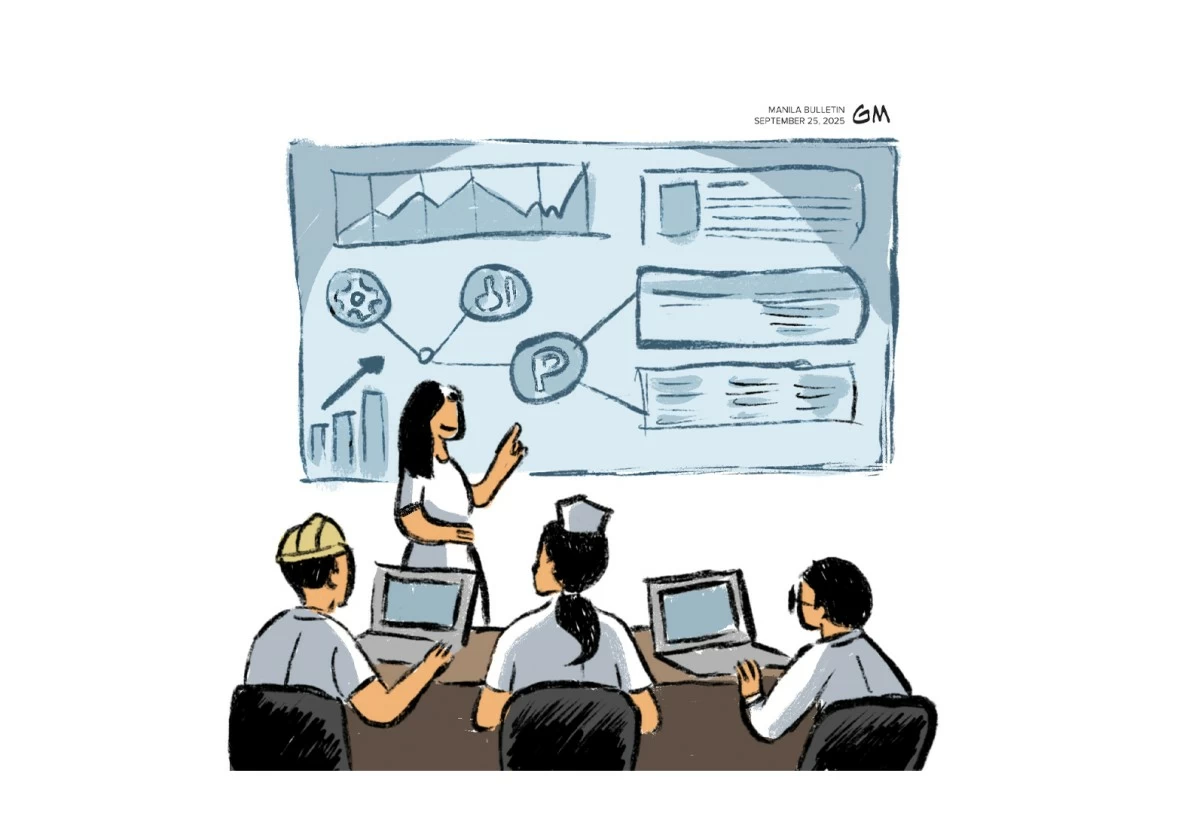
The good news: the Philippine education sector is finally responding. The recent signing of a Joint Memorandum Circular (JMC) by Commission on Higher Education (CHED) and Technical Education and Skills Development Authority (TESDA) is a much-needed step toward harmoniz-ing curricula across higher education and technical-vocational programs. This initiative focuses on six priority industry clusters—advanced manufacturing, digital technology, healthcare, financial services, tourism, and the creative economy—sectors vital to national development yet hampered by persistent skills shortages.
This unified approach will create a new Board for Curriculum Standards and Sector Skills Coun-cils to develop five-year industry roadmaps and relevant skills frameworks. It promises more than diploma-driven education; it aims to deliver industry-ready professionals. It also promotes a lad-derized system that allows students to seamlessly transition between technical-vocational and higher education—a long-overdue reform that can make education more flexible and inclusive.
“By establishing the Board for Curriculum Standards and Discipline Councils, we are directly addressing critical skills gaps identified by EDCOM 2, ensuring that our graduates are not just degree holders but highly competent professionals ready to meet the demands of our priority in-dustries,” CHED Chairperson Shirley Agrupis said
But while such reforms are welcome, they must go deeper. The Philippines ranked 66th in the “investment and development” pillar of the talent ranking. This highlights our low public spend-ing on education, overcrowded classrooms, and insufficient teacher training—especially in digital and STEM fields. As long as these foundational issues are neglected, the skills gap will persist.
CHED’s “ACHIEVE” agenda is a promising framework, especially its focus on real-time data and centralized human capital development. The CHED chairperson is correct in identifying that many academic programs are misaligned with market needs because the system lacks accurate labor data and demand-supply analysis. Unless course offerings are informed by workforce ana-lytics and employer feedback, education reform will remain a shot in the dark.
We must overhaul how we perceive education. It’s no longer about finishing college—it’s about being employable. Employers now prioritize 21st-century skills: critical thinking, adaptability, digital literacy, and problem-solving. The country’s goal should not be to train its people to leave, but to equip them to thrive here.
A bold and sustained increase in education funding is critical, especially for early education and teacher training. But just as crucial is ensuring those funds are spent wisely—on digital infra-structure, modernized curricula, and industry-aligned training.
Filipino talent has always had potential. But potential is not enough. In a global economy where skills are the currency, we must invest in our people because our future depends on it.

Related Tags

Joint Memorandum Circular CHED TESDA
ADVERTISEMENT
.most-popular .layout-ratio{ padding-bottom: 79.13%; } @media (min-width: 768px) and (max-width: 1024px) { .widget-title { font-size: 15px !important; } }

{{ articles_filter_1561_widget.title }}

.most-popular .layout-ratio{ padding-bottom: 79.13%; } @media (min-width: 768px) and (max-width: 1024px) { .widget-title { font-size: 15px !important; } }

{{ articles_filter_1562_widget.title }}

.most-popular .layout-ratio{ padding-bottom: 79.13%; } @media (min-width: 768px) and (max-width: 1024px) { .widget-title { font-size: 15px !important; } }

{{ articles_filter_1563_widget.title }}

{{ articles_filter_1564_widget.title }}

.mb-article-details { position: relative; } .mb-article-details .article-body-preview, .mb-article-details .article-body-summary{ font-size: 17px; line-height: 30px; font-family: "Libre Caslon Text", serif; color: #000; } .mb-article-details .article-body-preview iframe , .mb-article-details .article-body-summary iframe{ width: 100%; margin: auto; } .read-more-background { background: linear-gradient(180deg, color(display-p3 1.000 1.000 1.000 / 0) 13.75%, color(display-p3 1.000 1.000 1.000 / 0.8) 30.79%, color(display-p3 1.000 1.000 1.000) 72.5%); position: absolute; height: 200px; width: 100%; bottom: 0; display: flex; justify-content: center; align-items: center; padding: 0; } .read-more-background a{ color: #000; } .read-more-btn { padding: 17px 45px; font-family: Inter; font-weight: 700; font-size: 18px; line-height: 16px; text-align: center; vertical-align: middle; border: 1px solid black; background-color: white; } .hidden { display: none; }
function initializeAllSwipers() { // Get all hidden inputs with cms_article_id document.querySelectorAll('[id^="cms_article_id_"]').forEach(function (input) { const cmsArticleId = input.value; const articleSelector = '#article-' + cmsArticleId + ' .body_images'; const swiperElement = document.querySelector(articleSelector); if (swiperElement && !swiperElement.classList.contains('swiper-initialized')) { new Swiper(articleSelector, { loop: true, pagination: false, navigation: { nextEl: '#article-' + cmsArticleId + ' .swiper-button-next', prevEl: '#article-' + cmsArticleId + ' .swiper-button-prev', }, }); } }); } setTimeout(initializeAllSwipers, 3000); const intersectionObserver = new IntersectionObserver( (entries) => { entries.forEach((entry) => { if (entry.isIntersecting) { const newUrl = entry.target.getAttribute("data-url"); if (newUrl) { history.pushState(null, null, newUrl); let article = entry.target; // Extract metadata const author = article.querySelector('.author-section').textContent.replace('By', '').trim(); const section = article.querySelector('.section-info ').textContent.replace(' ', ' '); const title = article.querySelector('.article-title h1').textContent; // Parse URL for Chartbeat path format const parsedUrl = new URL(newUrl, window.location.origin); const cleanUrl = parsedUrl.host + parsedUrl.pathname; // Update Chartbeat configuration if (typeof window._sf_async_config !== 'undefined') { window._sf_async_config.path = cleanUrl; window._sf_async_config.sections = section; window._sf_async_config.authors = author; } // Track virtual page view with Chartbeat if (typeof pSUPERFLY !== 'undefined' && typeof pSUPERFLY.virtualPage === 'function') { try { pSUPERFLY.virtualPage({ path: cleanUrl, title: title, sections: section, authors: author }); } catch (error) { console.error('ping error', error); } } // Optional: Update document title if (title && title !== document.title) { document.title = title; } } } }); }, { threshold: 0.1 } ); function showArticleBody(button) { const article = button.closest("article"); const summary = article.querySelector(".article-body-summary"); const body = article.querySelector(".article-body-preview"); const readMoreSection = article.querySelector(".read-more-background"); // Hide summary and read-more section summary.style.display = "none"; readMoreSection.style.display = "none"; // Show the full article body body.classList.remove("hidden"); } document.addEventListener("DOMContentLoaded", () => { let loadCount = 0; // Track how many times articles are loaded const offset = [1, 2, 3, 4, 5, 6, 7, 8, 9, 10]; // Offset values const currentUrl = window.location.pathname.substring(1); let isLoading = false; // Prevent multiple calls if (!currentUrl) { console.log("Current URL is invalid."); return; } const sentinel = document.getElementById("load-more-sentinel"); if (!sentinel) { console.log("Sentinel element not found."); return; } function isSentinelVisible() { const rect = sentinel.getBoundingClientRect(); return ( rect.top < window.innerHeight && rect.bottom >= 0 ); } function onScroll() { if (isLoading) return; if (isSentinelVisible()) { if (loadCount >= offset.length) { console.log("Maximum load attempts reached."); window.removeEventListener("scroll", onScroll); return; } isLoading = true; const currentOffset = offset[loadCount]; window.loadMoreItems().then(() => { let article = document.querySelector('#widget_1690 > div:nth-last-of-type(2) article'); intersectionObserver.observe(article) loadCount++; }).catch(error => { console.error("Error loading more items:", error); }).finally(() => { isLoading = false; }); } } window.addEventListener("scroll", onScroll); });

Sign up by email to receive news.