






Manila Bulletin
 Philippines
National
Signal No. 1 up in 3 Eastern Visayas areas as 'Opong' intensifies
Philippines
National
Signal No. 1 up in 3 Eastern Visayas areas as 'Opong' intensifies
Philippines
National
Signal No. 1 up in 3 Eastern Visayas areas as 'Opong' intensifies
Signal No. 1 up in 3 Eastern Visayas areas as 'Opong' intensifies
Metro Manila may be placed under Signal No. 3 or 4 — PAGASA
Published Sep 24, 2025 01:22 pm


PAGASA
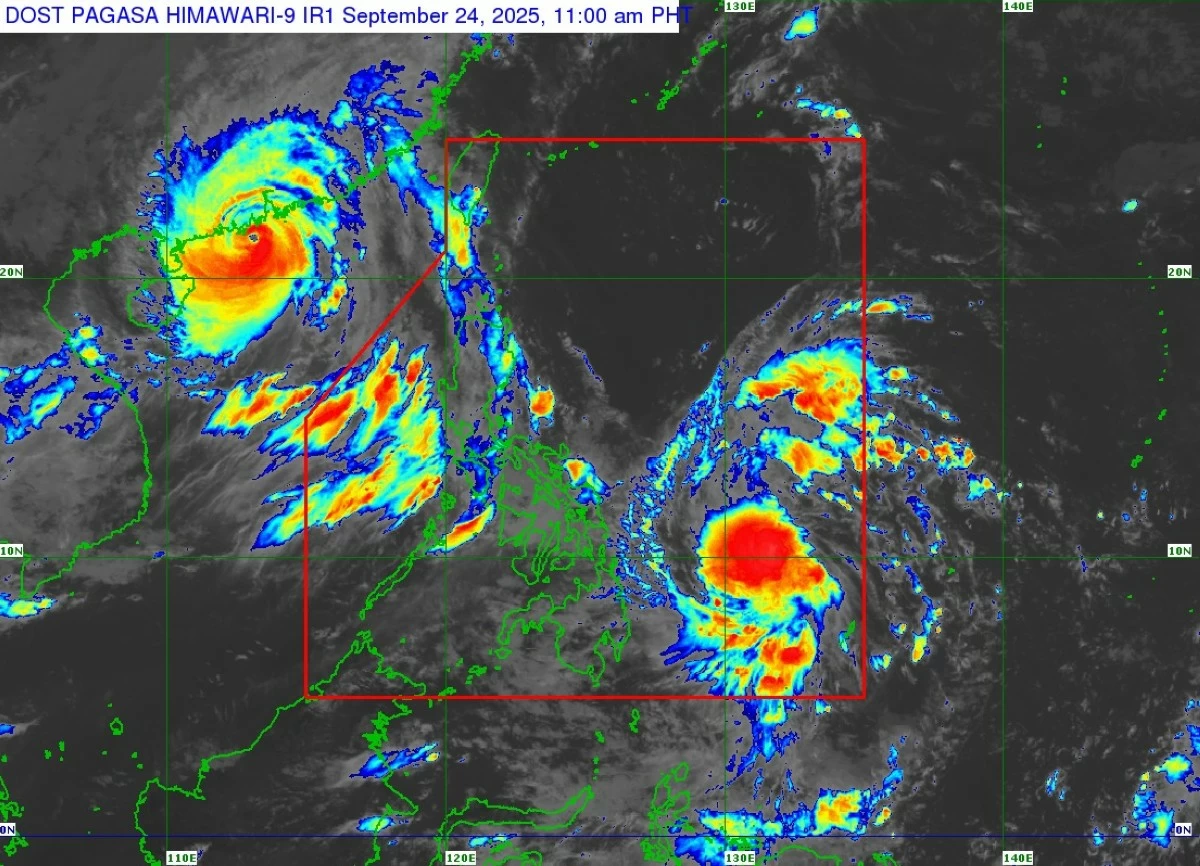
The Philippine Atmospheric, Geophysical and Astronomical Services Administration (PAGASA) on Wednesday, Sept. 24, raised Tropical Cyclone Wind Signal No. 1 in parts of Eastern Visayas as Tropical Storm Opong (international name: Bualoi) intensified further while moving west-southwestward over the Philippine Sea.
As of 11 a.m., Signal No. 1 was hoisted over Northern Samar, Eastern Samar, and Samar, where strong winds of 39 to 61 kilometers per hour (kph) may be experienced within 36 hours, PAGASA said.
The center of Opong was located 815 kilometers east of Northeastern Mindanao at 10 a.m.
It had maximum sustained winds of 85 kilometers per hour (kph) near the center and gustiness of up to 105 kph, while moving west-southwestward at 15 kph.
PAGASA said Opong may continue to intensify while over the Philippine Sea and could reach typhoon category before making landfall over Bicol region on Friday, Sept. 26.
It is expected to cross Southern Luzon until Saturday morning, Sept. 27, before exiting the Philippine Area of Responsibility (PAR) by Saturday evening or Sunday morning, Sept. 28.
In a press conference, PAGASA weather specialist Benison Estareja said Metro Manila should prepare for both strong winds and heavy rains starting Friday afternoon.
“Ang main impact sa Metro Manila ay parehong hangin at ulan dahil sa latest track, pagsapit ng hapon ng Friday ay posible nang maapektuhan ng malalakas na hangin at mataas na wind signal. Base sa latest track, Signal No. 3 o Signal No. 4 ang inaasahan natin (The main impact in Metro Manila will be both wind and rain. By Friday afternoon, strong winds may already be felt and the expected wind signal could be Signal No. 3 or Signal No. 4),” he said.
He added that while significant rains are not expected until Friday noon, accumulated rainfall of more than 100 millimeters may be experienced from Friday afternoon until Saturday noon, which could lead to flooding and possible landslides in mountainous areas of Metro Manila.
PAGASA Administrator Dr. Nathaniel Servando assured that the agency is closely coordinating with disaster management authorities for the approaching storm.
“Bukod sa pagbibigay ng madalas na update tungkol sa bagyong Opong, kami ay nakikipag-ugnayan nang mas malapit sa mga ahensyang involved sa disaster preparedness, partikular ang OCD [Office of Civil Defense]. Kahapon pa lamang, nakipagpulong na kami para paghandaan hindi lang ang epekto ng Super Typhoon Nando kundi pati ang papalapit na bagyong Opong (Aside from providing frequent updates about Tropical Storm Opong, we are closely coordinating with agencies involved in disaster preparedness, particularly the OCD. As early as yesterday, we held meetings to prepare not only for the effects of Super Typhoon Nando but also the approaching Tropical Storm Opong),” he said.
PAGASA Weather Division Chief Juanito Galang said Metro Manila and nearby provinces must also prepare for the storm’s nighttime passage.
“Sa nakikita nating forecast track ng bagyong Opong, ang pagdaan niya sa Metro Manila ay hapon, gabi, hanggang paumaga. Mas challenging kapag gabi dumadaan ang isang bagyo kaya ito ang dapat paghandaan ng mga kababayan natin (Based on the forecast track, Opong will pass over Metro Manila from the afternoon until morning. Storms passing at night can be more challenging, so our citizens must prepare),” he said.
Galang added that while the heaviest rains will be near the center of the storm, the southwest monsoon (habagat) will also bring rains to other parts of the country, including Western Visayas, Mimaropa, and Ilocos Region.
PAGASA-NCR Regional Services Division Chief Lorenzo Moron also reminded the public to prepare early, especially with soils already saturated by previous rains.
“Manatiling updated sa warnings mula sa PAGASA at iwasan ang mga fake news (Stay updated with PAGASA warnings and avoid fake news),” Deputy Administrator for Operations and Services Roy Badilla said, as he urged residents to heed official advisories.
PAGASA noted that Opong may weaken as it crosses Luzon but could remain under typhoon category before reintensifying once it emerges over the West Philippine Sea.