







Saved-up allowance helps 18-year-old student to build dream farm
Published Sep 24, 2025 05:05 pm


While most teenagers spend their money on the latest iPhone or sneakers, Karl Castro was saving his money for something far less ordinary — a greenhouse. With just his ₱50 daily allowance, tucked away peso by peso, Karl transformed what many would consider spare change into the seed capital for a thriving hydroponics business in R.T. Romuladez, Agusan del Norte.
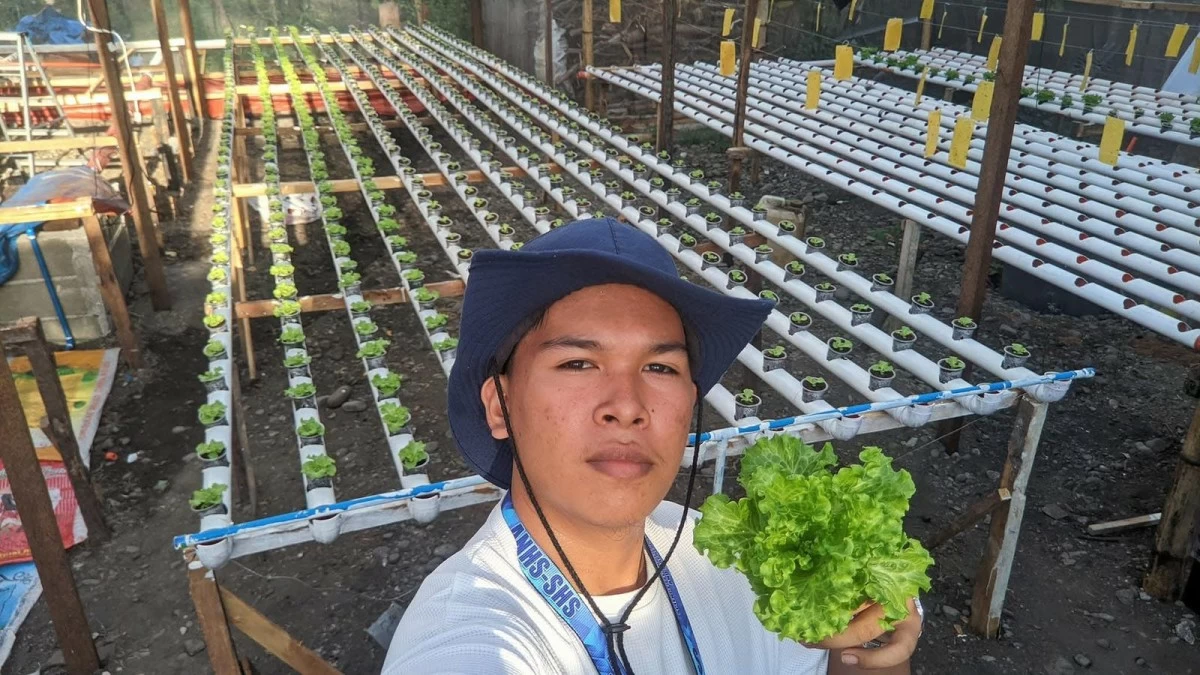
18-year-old Karl Castro shows off freshly harvested lettuce at his farm, HydroVeggie.
Now 18, Karl is not only a freshman Agriculture student at Caraga State University but also an agripreneur earning ₱30,000 to ₱34,000 a month from lettuce grown in his backyard.
Where did it all begin?
Like many who started in business, Karl began small. Over the course of a year, he saved about ₱3,000, which he used with his father to build a small greenhouse at home using scrap wood, mosquito nets, and recycled plastic bottles. The setup accommodated only 50 heads of lettuce, but for Karl, it was enough to get him started.
“I knew it wasn’t much,” Karl said. “But I told myself: if I can grow this small batch successfully, I can scale it up.”
Karl chose to pursue hydroponics, inspired by young agribusiness farmers he often saw on Facebook. Their stories, Karl said, showed him that farming could be modern, profitable, and well within the reach of someone his age.
He started by selling his harvest to teachers and neighbors, quickly realizing that demand for fresh lettuce was high. His lettuce and leafy greens were well-received for being pesticide-free and carefully grown. Customers appreciated the crisp, vibrant leaves, and word of mouth helped him expand his market.
The science of growing lettuce
Karl first used the Kratky method, a simple hydroponic system needing no pumps or electricity. Plants grow in nutrient-rich water supported by styrofoam. Success depends on water temperature—the sweet spot for lettuce is 18°C to 22°C; too cold slows roots, too warm reduces oxygen and stunts growth.
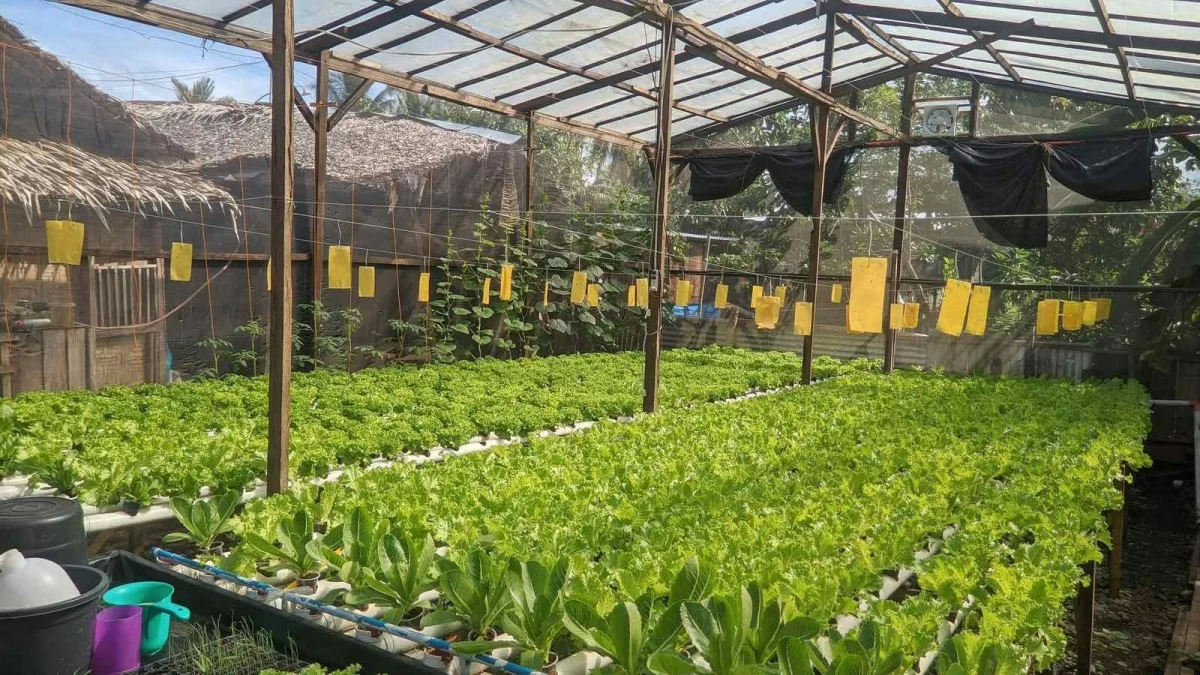
Karl’s 100-square-meter greenhouse filled with fresh lettuce, originally built from scrap wood and mosquito nets.
While his lettuce did well under Kratky, the system was bulky and limited space.
So, Karl made the switch.
Karl adopted the Nutrient Film Technique (NFT), a more advanced hydroponic system where a thin stream of nutrient solution flows through sloping PVC pipes. A pump recirculates the water from a reservoir, ensuring the roots have constant access to nutrients and oxygen.
This shift marked a turning point in his farm. NFT allowed him to maximize space, improve efficiency, and maintain a steady supply of high-quality lettuce.
“The NFT system is better because you can plant more in a smaller area,” Karl said.
Today, his 100-square-meter greenhouse produces around 1,500 heads per cycle.
Supplying local restaurants, cafés
Karl branded his venture “HydroVeggie” and shares updates on Facebook. Customers can place orders online or through contact numbers he posts. Photos of the orderly greenhouse and vibrant harvests drew attention from local vloggers and agriculture students seeking fieldwork experience.
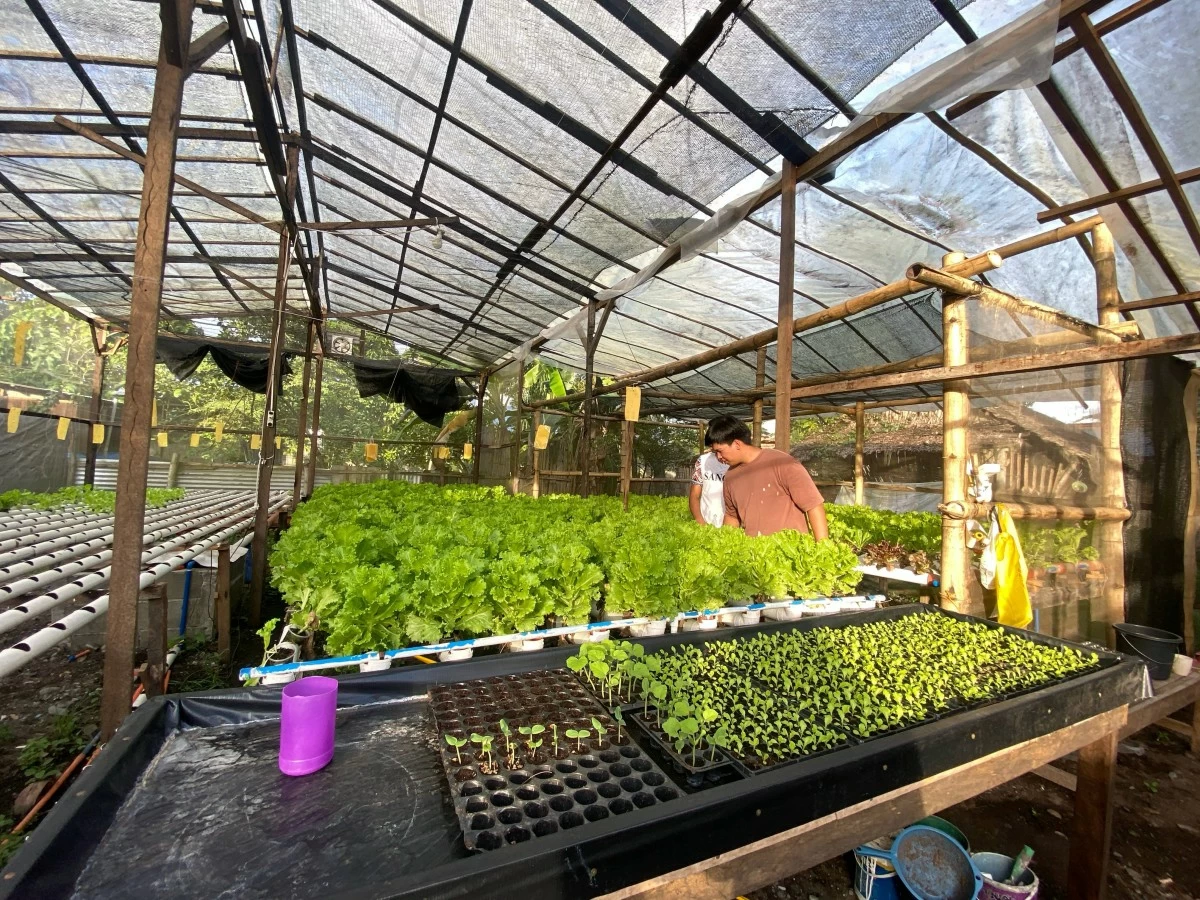
HydroVeggie now supplies several restaurants and cafés, particularly Korean barbecue establishments that require large volumes of fresh lettuce for samgyupsal dishes. He grows Jonction, Tourbillon, and Batavia lettuce, which are popular among his clients. Romaine lettuce is reserved mostly for his family, as demand is lower.
“It’s all about knowing what customers need,” Karl said. “If you grow the right varieties, there’s always a buyer.”
Mastering the nutrients
Hydroponics isn’t just about water and plants. Karl learned to mix his own nutrient solutions instead of relying on store-bought formulas. He adjusts the balance of nitrogen, phosphorus, and potassium according to the growth stage of his lettuce, ensuring healthy, robust leaves.
“You save much more if you make your own nutrient mix. I just replicated the ingredients from commercial formulas,” Karl said.
Expanding the business
Karl’s backyard greenhouse is now running at full capacity. To meet growing demand, Karl is negotiating to rent a vacant lot in neighboring Buenavista. This expansion will allow him to experiment with other high-value crops, like hydroponic honeydew melons.
Despite his growing income, Karl remains grounded. He uses his earnings for school, daily needs, and a portion to support his parents, who have been instrumental in his success. His mother helps care for seedlings, while his father assists with greenhouse operations.
“My parents became my emotional and financial support in this venture. Without them, I couldn’t have built any of this,” he said.
Karl sees hydroponics as a solution for food security, particularly in areas with limited land. “With modern farming like hydroponics, we can grow fresh and healthy food even in small spaces. It’s sustainable, saves resources, and creates opportunities for young people like me,” he said.
He hopes his story inspires other youth to view agriculture not as a last option but as a future full of possibilities.
“Farming isn’t outdated; it’s the future,” Karl said. (Photos courtesy of Karl Castro)