






Manila Bulletin
 Business
Trade & Industry
Paraguay gets nod to export meat to Philippines as gov't diversifies supply
Business
Trade & Industry
Paraguay gets nod to export meat to Philippines as gov't diversifies supply
Business
Trade & Industry
Paraguay gets nod to export meat to Philippines as gov't diversifies supply
Paraguay gets nod to export meat to Philippines as gov't diversifies supply
Published Sep 24, 2025 05:24 pm


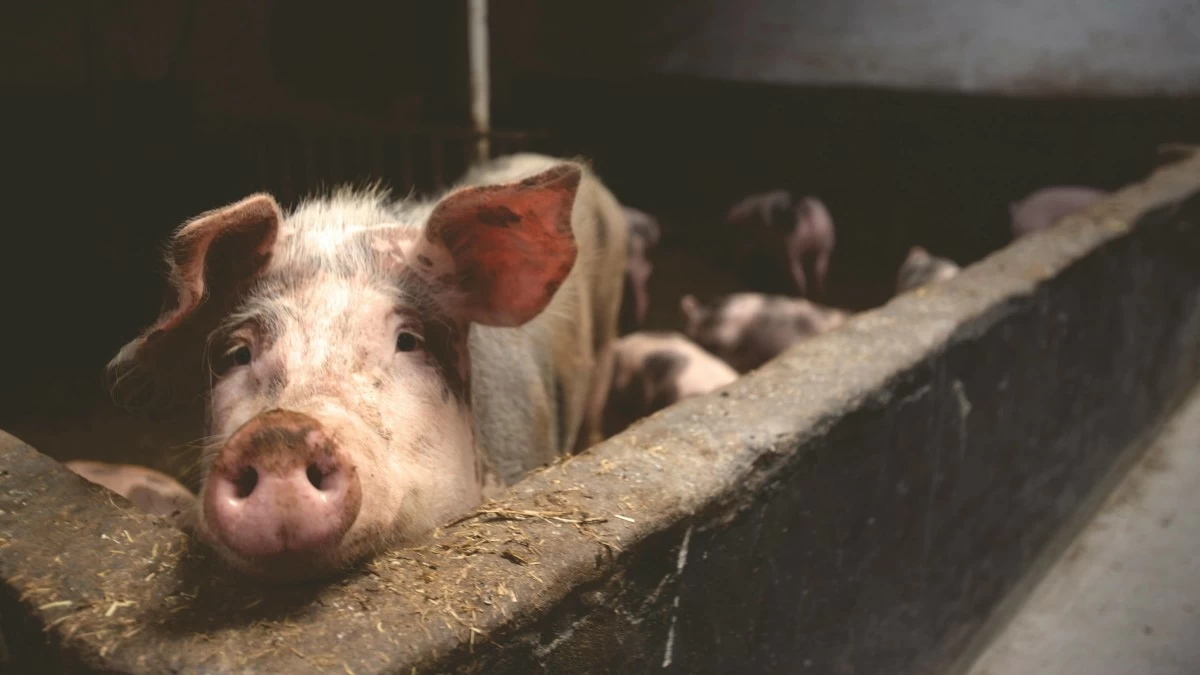
Paraguay has secured approval from the Department of Agriculture (DA) to export meat products to the Philippines, as the government works to diversify its sources to bolster supply amid growing demand.
Under Department Order No. 13, the DA granted system accreditation to Paraguay to export beef, pork, and poultry meat into the Philippines.
The accreditation is effective for three years, spanning Aug. 11 this year to Aug. 11, 2028.
Specifically, 14 foreign meat establishments (FMEs) from Paraguay secured DA approval to export meat products to the country.
These FMEs were allowed to export meat after the government’s inspection team found them compliant with the country’s quarantine and meat inspection system procedures.
To maintain accreditation, the veterinary authority of Paraguay must ensure the timely submission of animal health status annual reports, veterinary drug residue monitoring report, and other food safety concerns to the DA.
The meat for export is required to be derived from healthy animals and slaughtered, fabricated, processed in the FME.
The source of such meat shall be from animals born and raised in the South American country.
All imports still require the DA’s sanitary and phytosanitary import clearance (SPSIC) prior to export, ensuring they are free from animal diseases.
“As such, this order shall not automatically guarantee that beef, pork, and poultry (chicken) meat will be allowed to enter into the Philippines,” it read.
Agriculture Undersecretary Constante Palabrica previously said that several countries, including Paraguay, are seeking the department’s approval to export meat into the country.
Palabrica said diversifying meat sources will enable consumers “to get the best quality meat for the people at a reasonable price” since it would drive up competition.
He said increasingly import sources is a temporary move as the local hog sector works to recover from the impact of the African swine fever (ASF).
During the emergence of ASF in 2019, the swine population fell from nearly 13 million heads to around eight million.
“Once the repopulation of pork is fixed, then we can lift it off. That's why I'm in a hurry to repopulate,” Palabrica was quoted as saying.
The United States Department of Agriculture (USDA) expects the Philippines to ramp up importation of pork, beef, and chicken next year as local production continues to lag behind demand.
Pork imports are seen growing seven percent to 750,000 metric tons (MT) next year from the 2025 estimate of 700,000 MT.
For beef, imports are expected to expand by three percent to 300,000 MT from 290,000 MT this year.
The USDA projects chicken meat imports to reach 560,000 MT in 2026, up two percent to from this year’s estimate of 550,000 MT.