







Coconut export revenues seen higher next year
Published Sep 24, 2025 03:02 pm


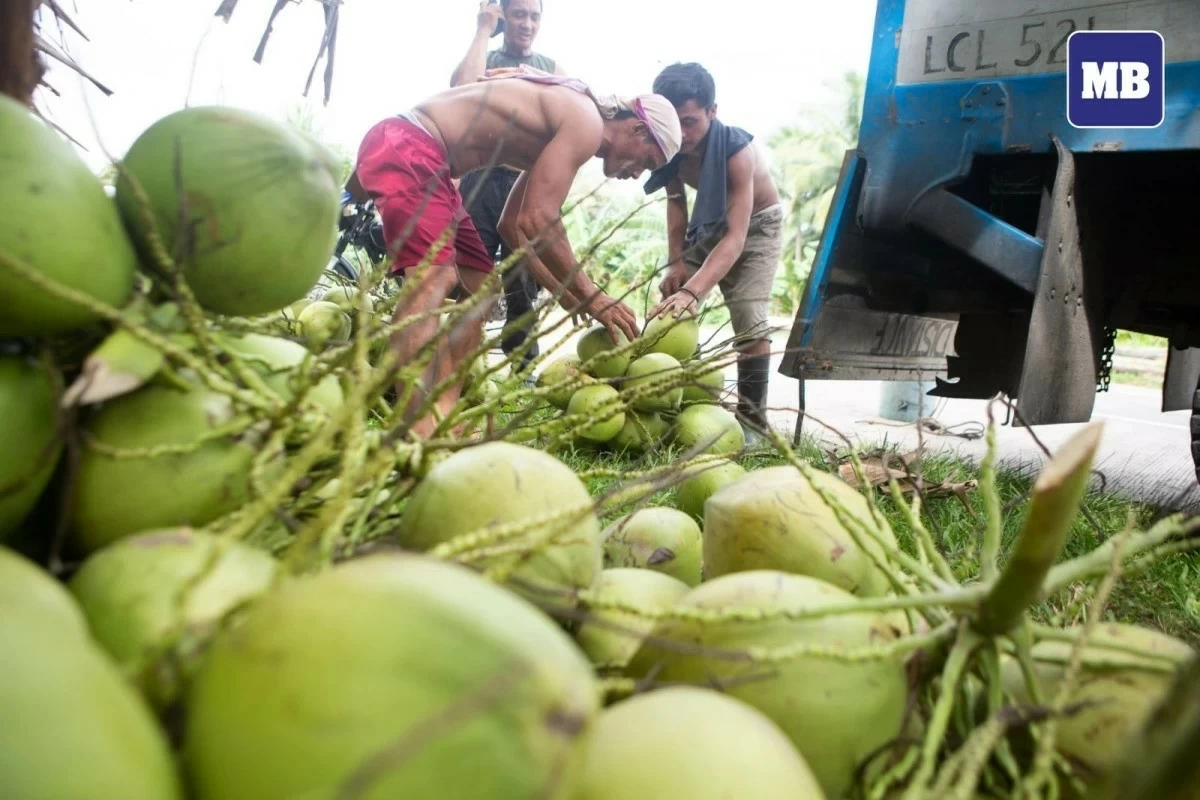
(Manila Bulletin file photo)
The Philippines’ coconut exports are expected to surpass this year’s estimate and reach as high as $3 billion in 2026, fueled by higher production and prices, according to the United Coconut Association of the Philippines (UCAP).
UCAP Chairman Marco Reyes said the industry’s export revenues next year could grow by as much as 15 percent to $3 billion, from this year’s projection of around $2.6 billion, roughly the same level as 2024.
Reyes is banking on better weather conditions to push coconut production higher next year, allowing it to recover from the impact of drought in the previous two years.
“Our forecast is a higher production since trees have now recovered, which is usually always right because we go around the Philippines to see rain patterns and there are no destructive typhoons,” Reyes said in a press briefing on Wednesday, Sept. 24.
He said higher yields, combined with expected better prices due to a more stable global supply, will create the perfect environment for the coconut industry to reach the $3-billion goal.
Reyes is even more confident given the consistent foreign uptake of the country’s coconut products.
Despite ranking third in global coconut production, the Philippines is recognized as the top country in terms of coconut revenues.
Reyes said the Philippines remains the go-to source for many countries where demand for coconut products is high, especially amid the growing interest in healthier food varieties.
Of the country’s total export market, Reyes said 45 percent has been cornered by Europe, while 25 percent is accounted for by the United States (US).
“The export market is just looking for whatever we have. And they need much, much more coconut,” he said.
Over 80 percent of total exports are coconut oil. Last year, the product accounted for $2.2 billion of the total revenues of $2.7 billion.
Reyes added that since coconut products are fully local, all of their contributions go straight to the domestic economy. He said this is in contrast to semiconductors, the country’s top export, which contribute less since most of their inputs are imported.
Semiconductor exports are expected to remain flat at $42.6 billion next year, even as the US moves to impose high tariffs on foreign-made semiconductors.
On the impact of tariffs on coconut exports, UCAP Vice Chairman Dean Lao Jr. noted that a number of coconut products are now exempt from the 19-percent tariffs imposed by the US last month.
Based on a document released by the White House detailing new tariff exemptions, coconut derivatives in the form of oil, desiccated meat, as well as fresh and raw varieties, are exempt from tariffs.
Since these exemptions cover all countries, Lao said they would simply maintain the status quo in exports, leaving no impact on projected revenues.
Nonetheless, he noted that the government must work on securing zero tariffs on other coconut derivatives, such as coconut water, which are still subject to the 19-percent tax.
Lao said this will be a burden on American consumers, noting that products like coconut water will become more expensive.
“The fact that the US consumers have demand for coconuts and they don’t have any coconut trees in the US. So, the balance of trade is that they need our coconuts,” he said.
Trade Secretary Cristina Roque said recently that the government is working to secure a tariff-free agreement on the country’s coconut exports, including byproducts.
Roque said this is still under negotiation, along with other products for which the country is seeking zero tariffs, including agricultural commodities and electronics such as semiconductors.