ADVERTISEMENT

Amid nuclear push, Philippines joins International Atomic Energy Agency board

Published Sep 24, 2025 02:03 pm
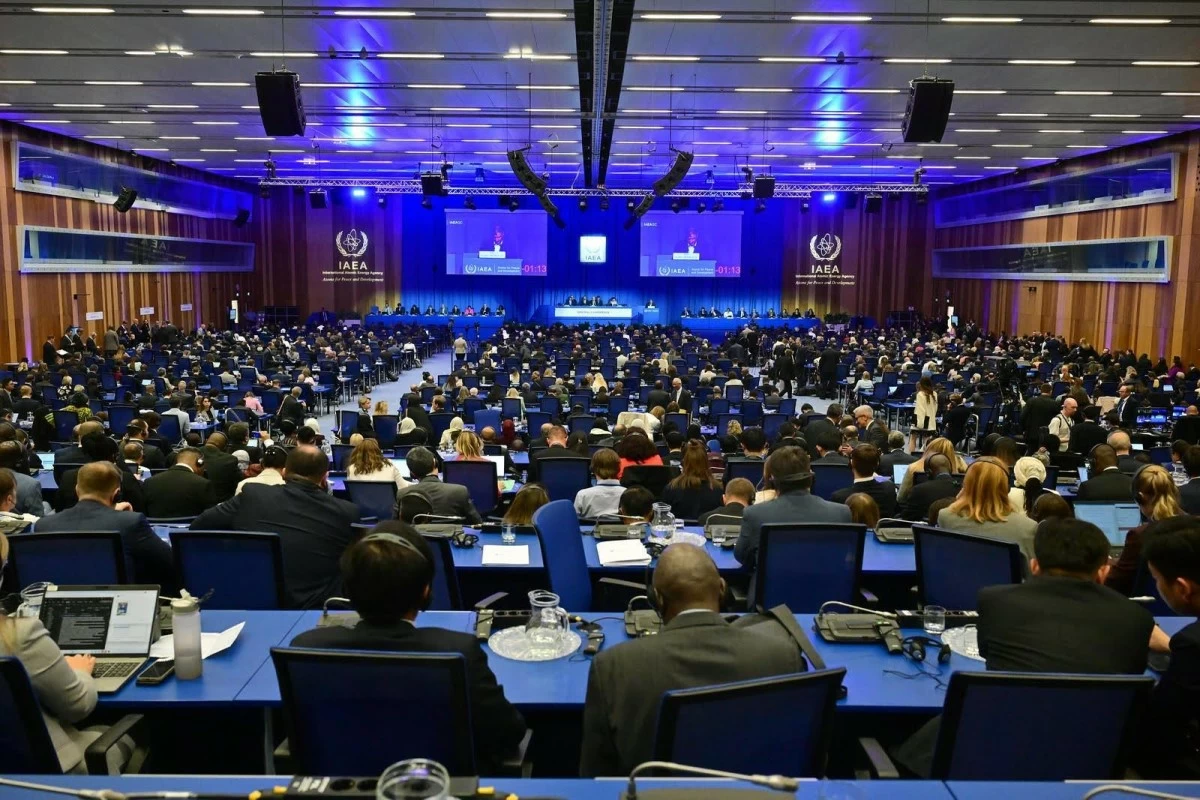
The Department of Energy (DOE) and the Department of Foreign Affairs (DFA) have announced that the Philippines has been elected to the board of the International Atomic Energy Agency (IAEA).
IAEA is a global organization that promotes the safe and peaceful utilization of nuclear energy.
According to the DOE, the Philippines would contribute to nuclear energy policies, engage in international collaboration, and exchange nuclear expertise.
“The DOE stands ready to engage in meaningful partnerships to support the safe, sustainable, and secure development of the country’s nuclear energy program as it crafts its nuclear energy roadmap,” it said.
Energy Secretary Sharon Garin believes that the country’s election to the IAEA board aligns with the Philippine Nuclear Energy Plan (PNEP), which targets over 4,800 megawatts (MW) worth of nuclear capacity by 2040.
“The country’s seat on the board opens opportunities to access technical cooperation in nuclear medicine, agriculture, food security, and energy; advance national priorities such as the safe and secure development of nuclear power; [and strengthen] international recognition as a responsible nuclear partner,” she said.
The country will be part of the IAEA board until 2027, following its previous term from 2015 to 2017.
This election was made possible during IAEA’s general conference in Vienna, Austria, last Sept. 19.
“The Philippines emerged as the consensus nominee from the Far East region after an intense election campaign that lasted over several months. The country’s candidature enjoyed overwhelming support, especially from developing countries and countries newly embarking in nuclear energy,” the DFA stated.
According to the DFA, the Philippines is one of the 11 countries elected this year. The current board members are Argentina, Australia, Belgium, Brazil, Canada, Chile, China, Colombia, Egypt, France, Georgia, Germany, Ghana, India, Italy, Japan, Jordan, Lithuania, Luxembourg, Morocco, the Kingdom of the Netherlands, Niger, Pakistan, Peru, the Philippines, Portugal, Romania, the Russian Federation, Saudi Arabia, South Africa, Thailand, Togo, the United Kingdom (UK) of Great Britain and Northern Ireland, the United States (US) and the Bolivarian Republic of Venezuela.
Earlier this year, the DOE held a technical workshop on environmental policies and regulations for nuclear power projects to ensure that applications for environmental compliance certificates (ECCs) uphold public trust and scientific integrity.
ADVERTISEMENT
.most-popular .layout-ratio{ padding-bottom: 79.13%; } @media (min-width: 768px) and (max-width: 1024px) { .widget-title { font-size: 15px !important; } }

{{ articles_filter_1561_widget.title }}

.most-popular .layout-ratio{ padding-bottom: 79.13%; } @media (min-width: 768px) and (max-width: 1024px) { .widget-title { font-size: 15px !important; } }

{{ articles_filter_1562_widget.title }}

.most-popular .layout-ratio{ padding-bottom: 79.13%; } @media (min-width: 768px) and (max-width: 1024px) { .widget-title { font-size: 15px !important; } }

{{ articles_filter_1563_widget.title }}

{{ articles_filter_1564_widget.title }}

.mb-article-details { position: relative; } .mb-article-details .article-body-preview, .mb-article-details .article-body-summary{ font-size: 17px; line-height: 30px; font-family: "Libre Caslon Text", serif; color: #000; } .mb-article-details .article-body-preview iframe , .mb-article-details .article-body-summary iframe{ width: 100%; margin: auto; } .read-more-background { background: linear-gradient(180deg, color(display-p3 1.000 1.000 1.000 / 0) 13.75%, color(display-p3 1.000 1.000 1.000 / 0.8) 30.79%, color(display-p3 1.000 1.000 1.000) 72.5%); position: absolute; height: 200px; width: 100%; bottom: 0; display: flex; justify-content: center; align-items: center; padding: 0; } .read-more-background a{ color: #000; } .read-more-btn { padding: 17px 45px; font-family: Inter; font-weight: 700; font-size: 18px; line-height: 16px; text-align: center; vertical-align: middle; border: 1px solid black; background-color: white; } .hidden { display: none; }
function initializeAllSwipers() { // Get all hidden inputs with cms_article_id document.querySelectorAll('[id^="cms_article_id_"]').forEach(function (input) { const cmsArticleId = input.value; const articleSelector = '#article-' + cmsArticleId + ' .body_images'; const swiperElement = document.querySelector(articleSelector); if (swiperElement && !swiperElement.classList.contains('swiper-initialized')) { new Swiper(articleSelector, { loop: true, pagination: false, navigation: { nextEl: '#article-' + cmsArticleId + ' .swiper-button-next', prevEl: '#article-' + cmsArticleId + ' .swiper-button-prev', }, }); } }); } setTimeout(initializeAllSwipers, 3000); const intersectionObserver = new IntersectionObserver( (entries) => { entries.forEach((entry) => { if (entry.isIntersecting) { const newUrl = entry.target.getAttribute("data-url"); if (newUrl) { history.pushState(null, null, newUrl); let article = entry.target; // Extract metadata const author = article.querySelector('.author-section').textContent.replace('By', '').trim(); const section = article.querySelector('.section-info ').textContent.replace(' ', ' '); const title = article.querySelector('.article-title h1').textContent; // Parse URL for Chartbeat path format const parsedUrl = new URL(newUrl, window.location.origin); const cleanUrl = parsedUrl.host + parsedUrl.pathname; // Update Chartbeat configuration if (typeof window._sf_async_config !== 'undefined') { window._sf_async_config.path = cleanUrl; window._sf_async_config.sections = section; window._sf_async_config.authors = author; } // Track virtual page view with Chartbeat if (typeof pSUPERFLY !== 'undefined' && typeof pSUPERFLY.virtualPage === 'function') { try { pSUPERFLY.virtualPage({ path: cleanUrl, title: title, sections: section, authors: author }); } catch (error) { console.error('ping error', error); } } // Optional: Update document title if (title && title !== document.title) { document.title = title; } } } }); }, { threshold: 0.1 } ); function showArticleBody(button) { const article = button.closest("article"); const summary = article.querySelector(".article-body-summary"); const body = article.querySelector(".article-body-preview"); const readMoreSection = article.querySelector(".read-more-background"); // Hide summary and read-more section summary.style.display = "none"; readMoreSection.style.display = "none"; // Show the full article body body.classList.remove("hidden"); } document.addEventListener("DOMContentLoaded", () => { let loadCount = 0; // Track how many times articles are loaded const offset = [1, 2, 3, 4, 5, 6, 7, 8, 9, 10]; // Offset values const currentUrl = window.location.pathname.substring(1); let isLoading = false; // Prevent multiple calls if (!currentUrl) { console.log("Current URL is invalid."); return; } const sentinel = document.getElementById("load-more-sentinel"); if (!sentinel) { console.log("Sentinel element not found."); return; } function isSentinelVisible() { const rect = sentinel.getBoundingClientRect(); return ( rect.top < window.innerHeight && rect.bottom >= 0 ); } function onScroll() { if (isLoading) return; if (isSentinelVisible()) { if (loadCount >= offset.length) { console.log("Maximum load attempts reached."); window.removeEventListener("scroll", onScroll); return; } isLoading = true; const currentOffset = offset[loadCount]; window.loadMoreItems().then(() => { let article = document.querySelector('#widget_1690 > div:nth-last-of-type(2) article'); intersectionObserver.observe(article) loadCount++; }).catch(error => { console.error("Error loading more items:", error); }).finally(() => { isLoading = false; }); } } window.addEventListener("scroll", onScroll); });

Sign up by email to receive news.