ADVERTISEMENT

Duterte formally charged with 3 counts of murder before ICC

Published Sep 23, 2025 07:38 am
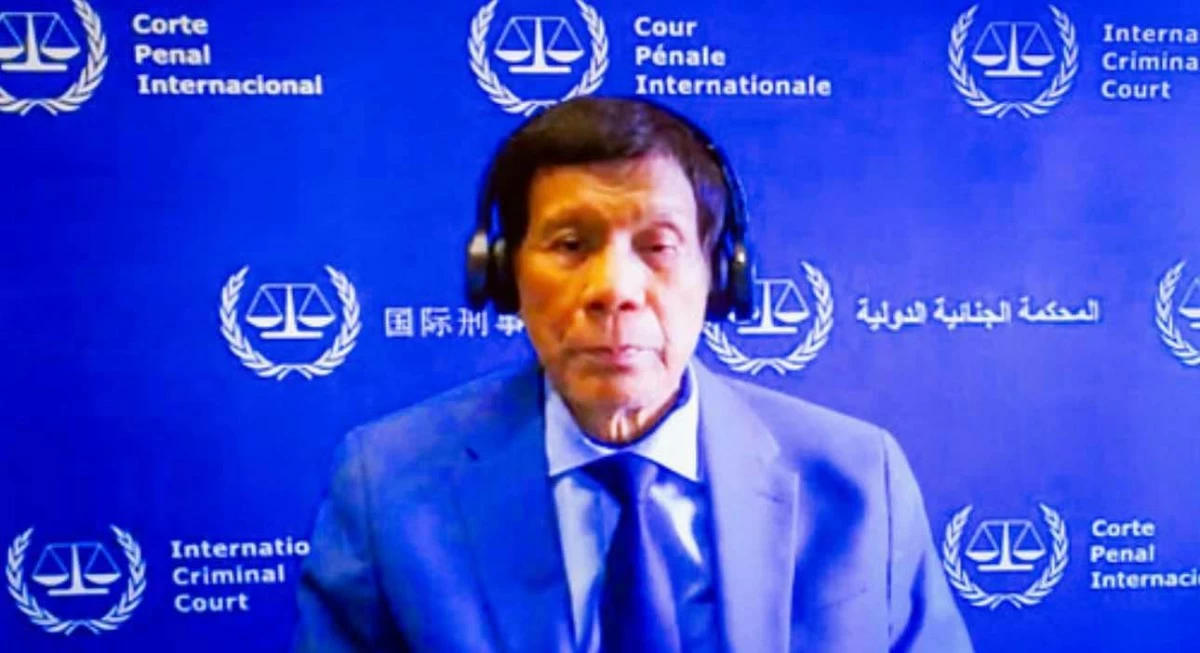
Former president Rodrigo Duterte (ICC Photo)
The International Criminal Court (ICC) has made public for the first time the charge sheet against former president Rodrigo Duterte, wherein the ICC’s prosecution recommended the filing of three counts of crimes against humanity of murder involving 78 victims of his bloody anti-crimes campaign.

The 15-page document, which was filed on July 4 but was only publicized on Monday night, Sept. 22 (Manila time) on the ICC’s website, said that the former chief executive must be held “criminally responsible” for the murder of 76 victims and the attempted murder of two victims from the time he was mayor of Davao City up to the time he became president.

ICC Deputy Prosecutor Mame Mandiaye Niang recommended the filing based on Duterte’s role in “indirect co-perpetration,” “ordering and/or inducing,” and “aiding and abetting” the murders pursuant to relevant Rome Statute provisions.

There were 49 incidents—all heavily redacted—laid out in the document.

The first count involved 19 victims in nine incidents between 2013 and 2016 when Duterte was still mayor in his hometown, while the second count involved “high-value targets” of 14 victims when he was already president from 2016 to 2017.

The third count involved murder and attempted murder charges as a crime against humanity during the “barangay clearance operations” in various locations across the country. It involved 45 victims—wherein 43 were killed—between 2016 and 2018.

In listing down the incident of the crimes, the ICC prosecution said that “the actual scale of victimisation during the charged period was significantly greater, as reflected in the widespread nature of the attack.”

“The attack was carried out pursuant to a State policy to ‘neutralise’ through violent crimes, including murder, alleged criminals in the Philippines who were perceived or allegedto be involved in drug-related (including production, sale and use) and other crimes (such as theft and murder),” it added.

The policy, the prosecution stated, was originally developed by Duterte and his close—mostly police—associates in Davao City and implemented at the local level before being expanded to the national level in 2016.

“Neutralising” alleged criminals “through violent crimes, including murder” became a “state policy” in the Philippines during Duterte’s presidential period, the prosecution claimed.

“The attack was widespread. It was carried out on a large scale and frequent basis, victimising a significant number of civilians over a broad geographic area and a prolonged period of time,” the document read.

“The attack was also systematic in that it was planned, organised and executed in a coordinated fashion, with the acts perpetrated in a clear pattern of violence directed at the targeted population,” it furthered.

Duterte has been in custody at The Hague, Netherlands since March after being extradited there on the basis of an ICC arrest warrant.

He was supposed to attend his confirmation of charges hearing on Tuesday, Sept. 23, but this was indefinitely postponed by the ICC’s pre-trial chamber after his defense team—led by Atty. Nicholas Kaufman—claimed that the former chief executive is not fit for trial due to his declining cognitive health.

In contrast, Vice President Sara Duterte—his daughter—said she talked with her father recently about his personal life, family, and politics.

Related Tags

ICC Rodrigo Duterte Murder attempted murder crimes against humanity
ADVERTISEMENT
.most-popular .layout-ratio{ padding-bottom: 79.13%; } @media (min-width: 768px) and (max-width: 1024px) { .widget-title { font-size: 15px !important; } }

{{ articles_filter_1561_widget.title }}

.most-popular .layout-ratio{ padding-bottom: 79.13%; } @media (min-width: 768px) and (max-width: 1024px) { .widget-title { font-size: 15px !important; } }

{{ articles_filter_1562_widget.title }}

.most-popular .layout-ratio{ padding-bottom: 79.13%; } @media (min-width: 768px) and (max-width: 1024px) { .widget-title { font-size: 15px !important; } }

{{ articles_filter_1563_widget.title }}

{{ articles_filter_1564_widget.title }}

.mb-article-details { position: relative; } .mb-article-details .article-body-preview, .mb-article-details .article-body-summary{ font-size: 17px; line-height: 30px; font-family: "Libre Caslon Text", serif; color: #000; } .mb-article-details .article-body-preview iframe , .mb-article-details .article-body-summary iframe{ width: 100%; margin: auto; } .read-more-background { background: linear-gradient(180deg, color(display-p3 1.000 1.000 1.000 / 0) 13.75%, color(display-p3 1.000 1.000 1.000 / 0.8) 30.79%, color(display-p3 1.000 1.000 1.000) 72.5%); position: absolute; height: 200px; width: 100%; bottom: 0; display: flex; justify-content: center; align-items: center; padding: 0; } .read-more-background a{ color: #000; } .read-more-btn { padding: 17px 45px; font-family: Inter; font-weight: 700; font-size: 18px; line-height: 16px; text-align: center; vertical-align: middle; border: 1px solid black; background-color: white; } .hidden { display: none; }
function initializeAllSwipers() { // Get all hidden inputs with cms_article_id document.querySelectorAll('[id^="cms_article_id_"]').forEach(function (input) { const cmsArticleId = input.value; const articleSelector = '#article-' + cmsArticleId + ' .body_images'; const swiperElement = document.querySelector(articleSelector); if (swiperElement && !swiperElement.classList.contains('swiper-initialized')) { new Swiper(articleSelector, { loop: true, pagination: false, navigation: { nextEl: '#article-' + cmsArticleId + ' .swiper-button-next', prevEl: '#article-' + cmsArticleId + ' .swiper-button-prev', }, }); } }); } setTimeout(initializeAllSwipers, 3000); const intersectionObserver = new IntersectionObserver( (entries) => { entries.forEach((entry) => { if (entry.isIntersecting) { const newUrl = entry.target.getAttribute("data-url"); if (newUrl) { history.pushState(null, null, newUrl); let article = entry.target; // Extract metadata const author = article.querySelector('.author-section').textContent.replace('By', '').trim(); const section = article.querySelector('.section-info ').textContent.replace(' ', ' '); const title = article.querySelector('.article-title h1').textContent; // Parse URL for Chartbeat path format const parsedUrl = new URL(newUrl, window.location.origin); const cleanUrl = parsedUrl.host + parsedUrl.pathname; // Update Chartbeat configuration if (typeof window._sf_async_config !== 'undefined') { window._sf_async_config.path = cleanUrl; window._sf_async_config.sections = section; window._sf_async_config.authors = author; } // Track virtual page view with Chartbeat if (typeof pSUPERFLY !== 'undefined' && typeof pSUPERFLY.virtualPage === 'function') { try { pSUPERFLY.virtualPage({ path: cleanUrl, title: title, sections: section, authors: author }); } catch (error) { console.error('ping error', error); } } // Optional: Update document title if (title && title !== document.title) { document.title = title; } } } }); }, { threshold: 0.1 } ); function showArticleBody(button) { const article = button.closest("article"); const summary = article.querySelector(".article-body-summary"); const body = article.querySelector(".article-body-preview"); const readMoreSection = article.querySelector(".read-more-background"); // Hide summary and read-more section summary.style.display = "none"; readMoreSection.style.display = "none"; // Show the full article body body.classList.remove("hidden"); } document.addEventListener("DOMContentLoaded", () => { let loadCount = 0; // Track how many times articles are loaded const offset = [1, 2, 3, 4, 5, 6, 7, 8, 9, 10]; // Offset values const currentUrl = window.location.pathname.substring(1); let isLoading = false; // Prevent multiple calls if (!currentUrl) { console.log("Current URL is invalid."); return; } const sentinel = document.getElementById("load-more-sentinel"); if (!sentinel) { console.log("Sentinel element not found."); return; } function isSentinelVisible() { const rect = sentinel.getBoundingClientRect(); return ( rect.top < window.innerHeight && rect.bottom >= 0 ); } function onScroll() { if (isLoading) return; if (isSentinelVisible()) { if (loadCount >= offset.length) { console.log("Maximum load attempts reached."); window.removeEventListener("scroll", onScroll); return; } isLoading = true; const currentOffset = offset[loadCount]; window.loadMoreItems().then(() => { let article = document.querySelector('#widget_1690 > div:nth-last-of-type(2) article'); intersectionObserver.observe(article) loadCount++; }).catch(error => { console.error("Error loading more items:", error); }).finally(() => { isLoading = false; }); } } window.addEventListener("scroll", onScroll); });

Sign up by email to receive news.