

ADVERTISEMENT

BYD's Yangwang U9X is world's fastest car at 496.21 km/h

World's fastest car is electric

Published Sep 23, 2025 11:57 am  |  Updated Sep 23, 2025 01:04 pm

At A Glance

  • The fastest production car in the world is a U9 Xtreme (U9X), from BYD's luxury sub-brand, Yangwang, achieving a top speed of 496.21 km/h in a closed circuit in Germany.
The fastest production car in the world is not a Koenigsegg, Bugatti or SSC. It’s a BYD. Specifically, it’s a U9 Xtreme (U9X), from BYD’s luxury sub-brand, Yangwang. The vehicle achieved a top speed of 496.21 km/h in a closed circuit in Germany.
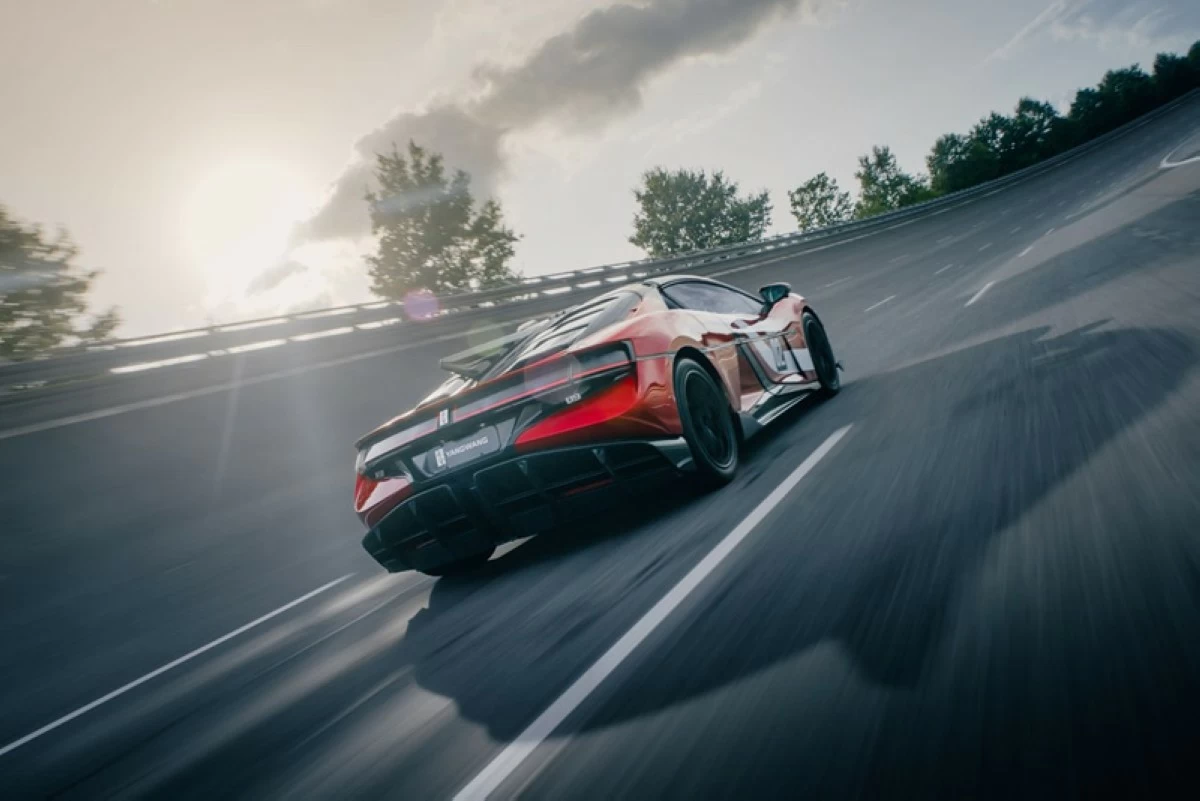
The feat was achieved with Yangwang’s latest U9 Xtreme hypercar on September 14, 2025 at the ATP Automotive Testing Papenburg test track in Germany. It must be noted that the Yangwang U9X is a fully electric vehicle. This modern milestone in engineering sets a new standard in electric mobility, mixing power and speed with zero emissions.
The car and the record
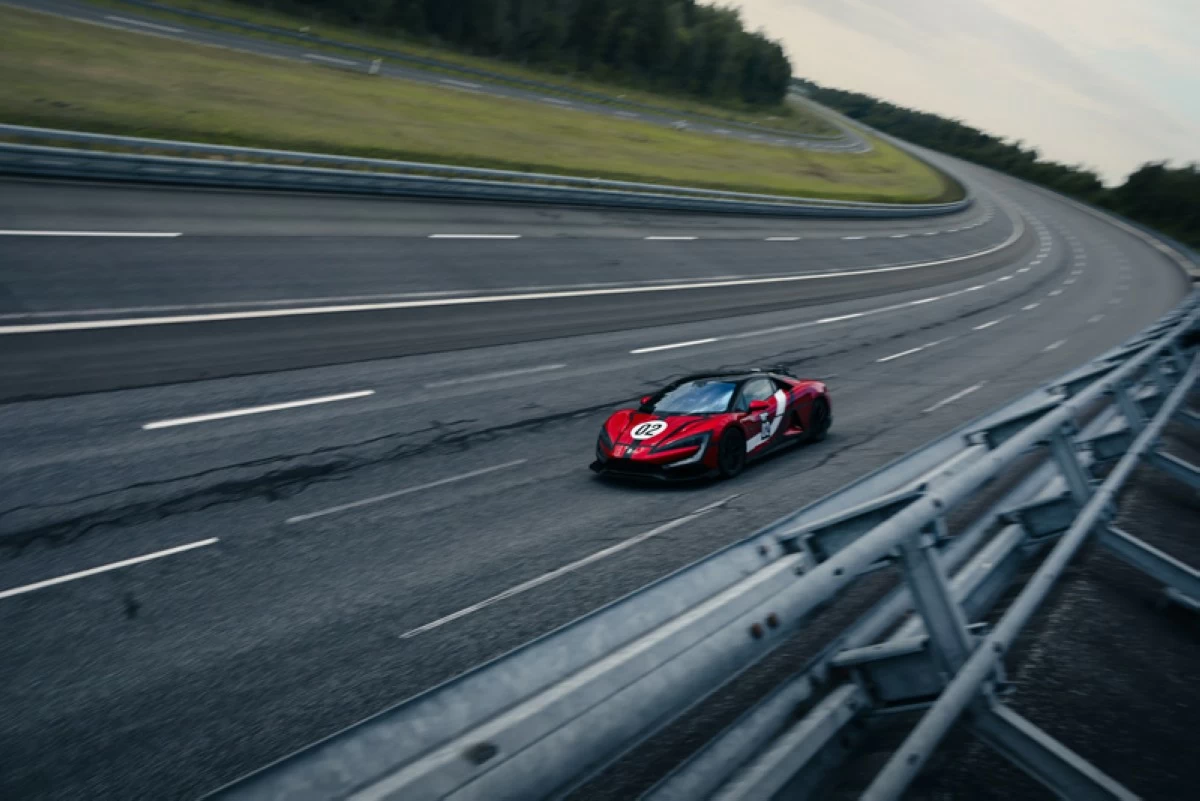
The Yangwang U9 Xtreme is an even more hardcore version of the regular U9 currently on sale in China. It takes the existing technical architecture of the U9 and harnesses the potential of a number of key evolutions.
These include an upgraded powertrain with 1200V ultra-high-voltage electrics (compared with the regular’s 800V), a lithium iron phosphate Blade Battery with a remarkable discharge rate of 30C, four ultra-high-speed motors that operate at up to 30,000 rpm and produce a total of more than 3000-PS, track-level semi-slick tires, and a revised DiSus-X suspension with specific tuning to cope with the increased stresses of circuit driving.
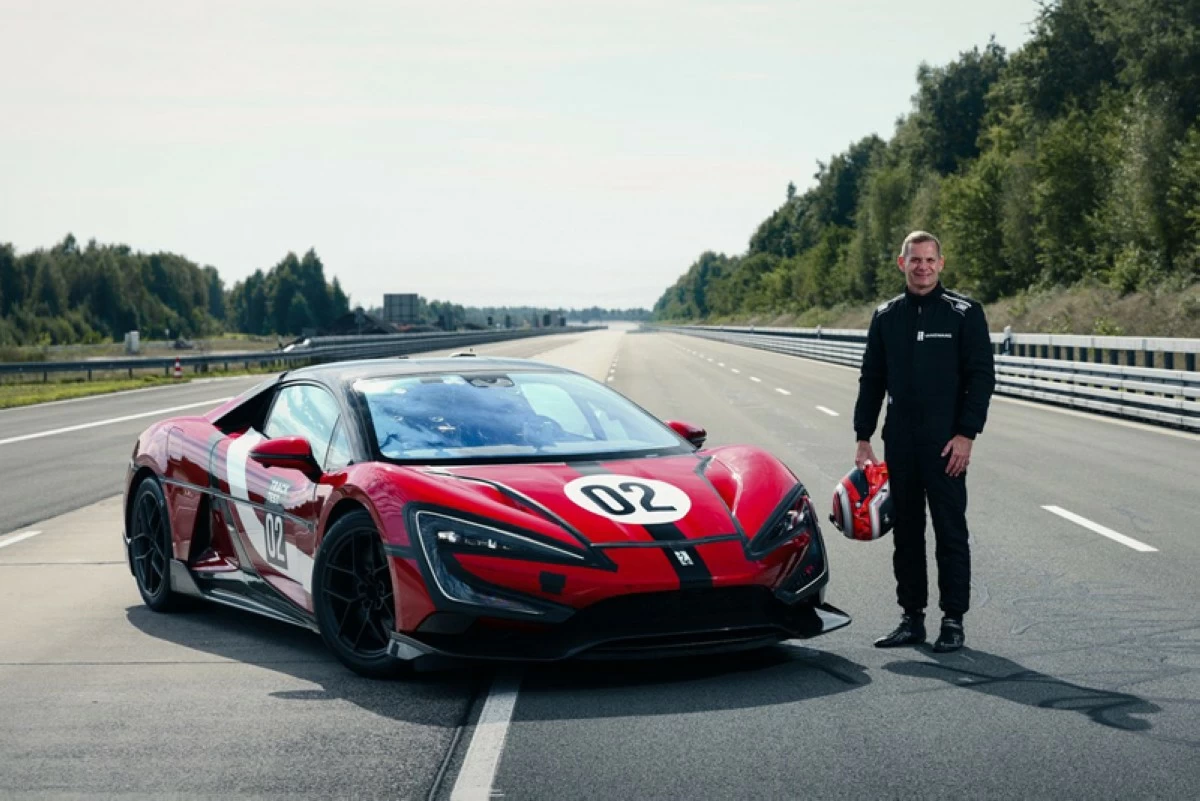
Marc Basseng with the Yangwang U9X record breaking car.
The driver for the U9X’s record-breaking run was Marc Basseng, a German track specialist with a long history in sports-car racing and endurance motorsport. “This record was only possible because the U9 Xtreme simply has incredible performance. Technically, something like this is not possible with a combustion engine. Thanks to the electric motor, the car is quiet, there are no load changes, and that allows me to focus even more on the track.”
For sale soon
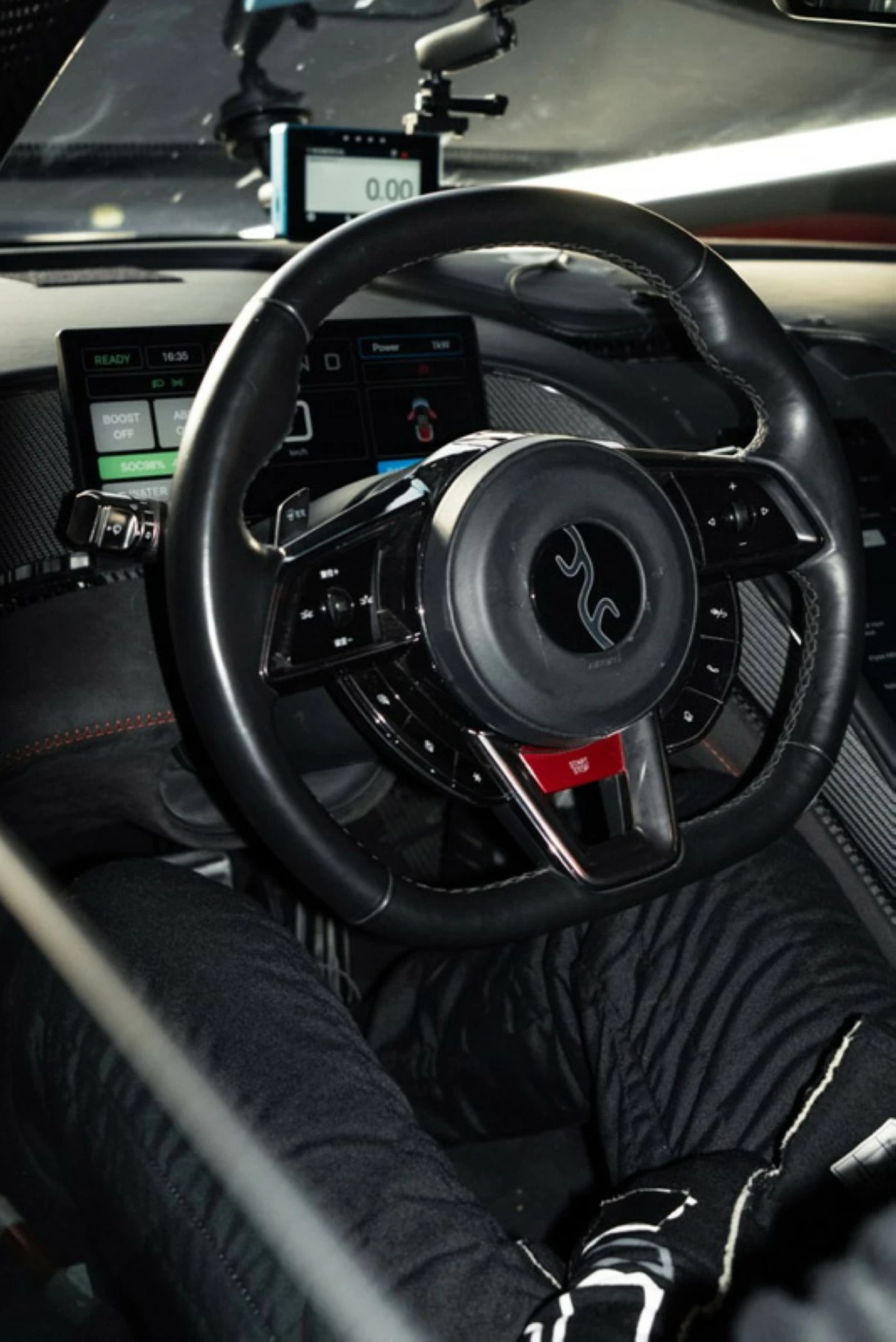
The U9 Xtreme is now being made available to customers, with a limited series production run of no more than 30 units. Its name is derived from ‘Extreme’, meaning ‘limit’ and ‘ultimate’, with added emphasis on the ‘X’, which represents the unknown. These qualities fit perfectly with Yangwang’s ethos of taking joy and delight from the act of exploration and the innovations that come through that process.
BYD Executive Vice President, Stella Li, said: “This is an incredibly proud moment for everyone in the research and development division. Yangwang is a brand that does not recognize the impossible, and only through this commitment to what’s coming next can you end up with a vehicle like the U9X. I extend my gratitude to the whole team, and my thanks to the driver, Marc Basseng, for his skill and technical input. It’s terrific that the fastest production car in the world is now electric.”
Some disclaimers
While BYD is celebrating, many critics still argue that this cannot be considered an official record for a number of circumstances. First of all, the Yangwang U9X is not a production car yet. The vehicle raced is a prototype and no examples of the U9X are available to the public yet. Second, prior record holders of the production car top speed record have achieved the claimed speed by running twice in both directions within a set time. The U9X attempt was only conducted in a single direction and was not replicated the other way.
Nonetheless, the speed achieved is still astonishing and eclipses the previous car which also performed the feat in a unidirectional run, the Bugatti Chiron Super Sport 300+ at 490.48 km/h.

Related Tags

BYD battery electric vehicle (BEV)
ADVERTISEMENT
.most-popular .layout-ratio{ padding-bottom: 79.13%; } @media (min-width: 768px) and (max-width: 1024px) { .widget-title { font-size: 15px !important; } }

{{ articles_filter_1561_widget.title }}

.most-popular .layout-ratio{ padding-bottom: 79.13%; } @media (min-width: 768px) and (max-width: 1024px) { .widget-title { font-size: 15px !important; } }

{{ articles_filter_1562_widget.title }}

.most-popular .layout-ratio{ padding-bottom: 79.13%; } @media (min-width: 768px) and (max-width: 1024px) { .widget-title { font-size: 15px !important; } }

{{ articles_filter_1563_widget.title }}

{{ articles_filter_1564_widget.title }}

.mb-article-details { position: relative; } .mb-article-details .article-body-preview, .mb-article-details .article-body-summary{ font-size: 17px; line-height: 30px; font-family: "Libre Caslon Text", serif; color: #000; } .mb-article-details .article-body-preview iframe , .mb-article-details .article-body-summary iframe{ width: 100%; margin: auto; } .read-more-background { background: linear-gradient(180deg, color(display-p3 1.000 1.000 1.000 / 0) 13.75%, color(display-p3 1.000 1.000 1.000 / 0.8) 30.79%, color(display-p3 1.000 1.000 1.000) 72.5%); position: absolute; height: 200px; width: 100%; bottom: 0; display: flex; justify-content: center; align-items: center; padding: 0; } .read-more-background a{ color: #000; } .read-more-btn { padding: 17px 45px; font-family: Inter; font-weight: 700; font-size: 18px; line-height: 16px; text-align: center; vertical-align: middle; border: 1px solid black; background-color: white; } .hidden { display: none; }
function initializeAllSwipers() { // Get all hidden inputs with cms_article_id document.querySelectorAll('[id^="cms_article_id_"]').forEach(function (input) { const cmsArticleId = input.value; const articleSelector = '#article-' + cmsArticleId + ' .body_images'; const swiperElement = document.querySelector(articleSelector); if (swiperElement && !swiperElement.classList.contains('swiper-initialized')) { new Swiper(articleSelector, { loop: true, pagination: false, navigation: { nextEl: '#article-' + cmsArticleId + ' .swiper-button-next', prevEl: '#article-' + cmsArticleId + ' .swiper-button-prev', }, }); } }); } setTimeout(initializeAllSwipers, 3000); const intersectionObserver = new IntersectionObserver( (entries) => { entries.forEach((entry) => { if (entry.isIntersecting) { const newUrl = entry.target.getAttribute("data-url"); if (newUrl) { history.pushState(null, null, newUrl); let article = entry.target; // Extract metadata const author = article.querySelector('.author-section').textContent.replace('By', '').trim(); const section = article.querySelector('.section-info ').textContent.replace(' ', ' '); const title = article.querySelector('.article-title h1').textContent; // Parse URL for Chartbeat path format const parsedUrl = new URL(newUrl, window.location.origin); const cleanUrl = parsedUrl.host + parsedUrl.pathname; // Update Chartbeat configuration if (typeof window._sf_async_config !== 'undefined') { window._sf_async_config.path = cleanUrl; window._sf_async_config.sections = section; window._sf_async_config.authors = author; } // Track virtual page view with Chartbeat if (typeof pSUPERFLY !== 'undefined' && typeof pSUPERFLY.virtualPage === 'function') { try { pSUPERFLY.virtualPage({ path: cleanUrl, title: title, sections: section, authors: author }); } catch (error) { console.error('ping error', error); } } // Optional: Update document title if (title && title !== document.title) { document.title = title; } } } }); }, { threshold: 0.1 } ); function showArticleBody(button) { const article = button.closest("article"); const summary = article.querySelector(".article-body-summary"); const body = article.querySelector(".article-body-preview"); const readMoreSection = article.querySelector(".read-more-background"); // Hide summary and read-more section summary.style.display = "none"; readMoreSection.style.display = "none"; // Show the full article body body.classList.remove("hidden"); } document.addEventListener("DOMContentLoaded", () => { let loadCount = 0; // Track how many times articles are loaded const offset = [1, 2, 3, 4, 5, 6, 7, 8, 9, 10]; // Offset values const currentUrl = window.location.pathname.substring(1); let isLoading = false; // Prevent multiple calls if (!currentUrl) { console.log("Current URL is invalid."); return; } const sentinel = document.getElementById("load-more-sentinel"); if (!sentinel) { console.log("Sentinel element not found."); return; } function isSentinelVisible() { const rect = sentinel.getBoundingClientRect(); return ( rect.top < window.innerHeight && rect.bottom >= 0 ); } function onScroll() { if (isLoading) return; if (isSentinelVisible()) { if (loadCount >= offset.length) { console.log("Maximum load attempts reached."); window.removeEventListener("scroll", onScroll); return; } isLoading = true; const currentOffset = offset[loadCount]; window.loadMoreItems().then(() => { let article = document.querySelector('#widget_1690 > div:nth-last-of-type(2) article'); intersectionObserver.observe(article) loadCount++; }).catch(error => { console.error("Error loading more items:", error); }).finally(() => { isLoading = false; }); } } window.addEventListener("scroll", onScroll); });

Sign up by email to receive news.