ADVERTISEMENT

AI in Philippine education: DepEd highlights AI projects for transparency, student support

Published Sep 23, 2025 04:29 pm
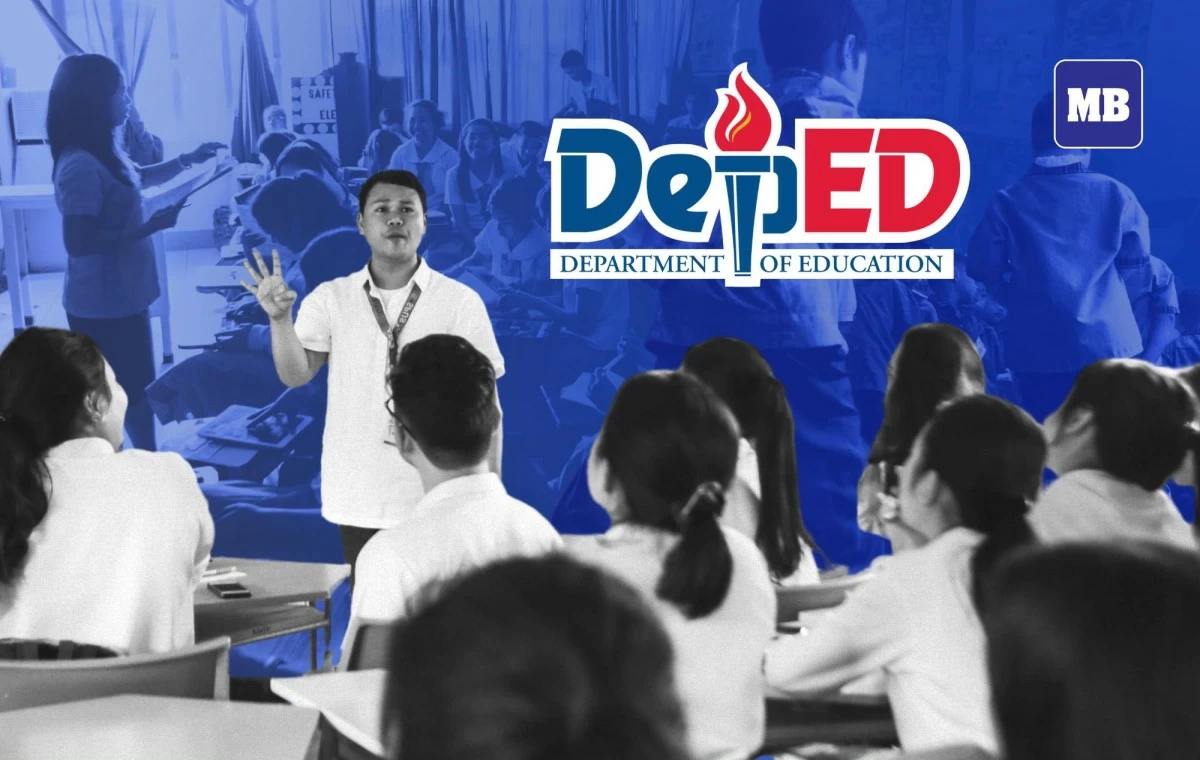
DepEd unveils AI-driven projects under ECAIR to promote transparency, data-driven reforms, and better support for students, teachers, and school leaders. (DepEd / MB Visual Content Group)
The Department of Education (DepEd) has unveiled major progress in its artificial intelligence (AI) projects designed to boost transparency, improve resource allocation, and strengthen student and teacher support across the country.
DepEd Secretary Sonny Angara, in a statement issued Tuesday, September 23, said the midyear report of the Education Center for AI Research (ECAIR) reflects the agency’s commitment to aligning technology with integrity and accountability under the directive of President Marcos.
“Hindi lamang ito tungkol sa teknolohiya, kundi sa pagtutuwid ng ating sistema (This is not just about technology, but about correcting our system),” Angara said.
“Kapag malinaw ang datos, mabilis ang tugon, at patas ang alokasyon, mas tumitibay ang tiwala ng mga guro, magulang, at mag-aaral sa DepEd (When data is clear, responses are swift, and allocation is fair, the trust of teachers, parents, and students in DepEd grows stronger),” he added.
DepEd’s key AI-driven projects under ECAIR
DepEd highlighted several flagship AI in education projects under ECAIR that aim to modernize governance and strengthen service delivery nationwide:
- Project TALINO – A digital mapping system providing real-time data on school needs, prioritizing underserved and remote communities. Its first phase has been turned over to the Adopt-A-School Secretariat, with new features streamlining private sector donations.
- Project DUNONG – An automated system for the National Qualifying Examination for School Heads (NQESH) that reduces outsourcing costs, speeds up result releases, and enhances accuracy. Dashboards also help the National Educators Academy of the Philippines (NEAP) address competency gaps, supporting the filling of over 24,000 school leadership vacancies.
- Project SALIKSEEK – A GenAI-powered tool that enables DepEd personnel to instantly access validated education data, reducing processing times from weeks to seconds. It has been turned over to DepEd’s Planning Service and ICTS for evidence-based decision-making.
- Project SIGLA – An AI-based growth screening tool for detecting malnutrition among learners, currently in pilot testing in NCR schools.
- Project SABAY – An AI-powered screening system for dyslexia and speech sound disorders, allowing teachers to identify learning difficulties earlier.
- Project LIGTAS – A multi-hazard analytics platform that tracks school resilience to disasters. A prototype geospatial dashboard will be handed over to the Disaster Risk Reduction and Management Service (DRRMS) by year-end.
Building a data-driven education culture
DepEd said these AI innovations in Philippine education are part of its long-term goal to institutionalize a culture of data-driven reforms.
By embedding AI in governance, the agency aims to strengthen transparency, accountability, and responsiveness while addressing urgent issues such as infrastructure gaps, malnutrition, disaster preparedness, and school leadership shortages.
The ECAIR report also confirmed that these AI projects will expand in 2026 to cover more regions, alongside additional training for teachers and learners to maximize the benefits of AI-driven solutions.

Related Tags

AI in Philippine education DepEd AI projects Education Center for AI Research ECAIR Sonny Angara DepEd AI in schools Philippines
ADVERTISEMENT
.most-popular .layout-ratio{ padding-bottom: 79.13%; } @media (min-width: 768px) and (max-width: 1024px) { .widget-title { font-size: 15px !important; } }

{{ articles_filter_1561_widget.title }}

.most-popular .layout-ratio{ padding-bottom: 79.13%; } @media (min-width: 768px) and (max-width: 1024px) { .widget-title { font-size: 15px !important; } }

{{ articles_filter_1562_widget.title }}

.most-popular .layout-ratio{ padding-bottom: 79.13%; } @media (min-width: 768px) and (max-width: 1024px) { .widget-title { font-size: 15px !important; } }

{{ articles_filter_1563_widget.title }}

{{ articles_filter_1564_widget.title }}

.mb-article-details { position: relative; } .mb-article-details .article-body-preview, .mb-article-details .article-body-summary{ font-size: 17px; line-height: 30px; font-family: "Libre Caslon Text", serif; color: #000; } .mb-article-details .article-body-preview iframe , .mb-article-details .article-body-summary iframe{ width: 100%; margin: auto; } .read-more-background { background: linear-gradient(180deg, color(display-p3 1.000 1.000 1.000 / 0) 13.75%, color(display-p3 1.000 1.000 1.000 / 0.8) 30.79%, color(display-p3 1.000 1.000 1.000) 72.5%); position: absolute; height: 200px; width: 100%; bottom: 0; display: flex; justify-content: center; align-items: center; padding: 0; } .read-more-background a{ color: #000; } .read-more-btn { padding: 17px 45px; font-family: Inter; font-weight: 700; font-size: 18px; line-height: 16px; text-align: center; vertical-align: middle; border: 1px solid black; background-color: white; } .hidden { display: none; }
function initializeAllSwipers() { // Get all hidden inputs with cms_article_id document.querySelectorAll('[id^="cms_article_id_"]').forEach(function (input) { const cmsArticleId = input.value; const articleSelector = '#article-' + cmsArticleId + ' .body_images'; const swiperElement = document.querySelector(articleSelector); if (swiperElement && !swiperElement.classList.contains('swiper-initialized')) { new Swiper(articleSelector, { loop: true, pagination: false, navigation: { nextEl: '#article-' + cmsArticleId + ' .swiper-button-next', prevEl: '#article-' + cmsArticleId + ' .swiper-button-prev', }, }); } }); } setTimeout(initializeAllSwipers, 3000); const intersectionObserver = new IntersectionObserver( (entries) => { entries.forEach((entry) => { if (entry.isIntersecting) { const newUrl = entry.target.getAttribute("data-url"); if (newUrl) { history.pushState(null, null, newUrl); let article = entry.target; // Extract metadata const author = article.querySelector('.author-section').textContent.replace('By', '').trim(); const section = article.querySelector('.section-info ').textContent.replace(' ', ' '); const title = article.querySelector('.article-title h1').textContent; // Parse URL for Chartbeat path format const parsedUrl = new URL(newUrl, window.location.origin); const cleanUrl = parsedUrl.host + parsedUrl.pathname; // Update Chartbeat configuration if (typeof window._sf_async_config !== 'undefined') { window._sf_async_config.path = cleanUrl; window._sf_async_config.sections = section; window._sf_async_config.authors = author; } // Track virtual page view with Chartbeat if (typeof pSUPERFLY !== 'undefined' && typeof pSUPERFLY.virtualPage === 'function') { try { pSUPERFLY.virtualPage({ path: cleanUrl, title: title, sections: section, authors: author }); } catch (error) { console.error('ping error', error); } } // Optional: Update document title if (title && title !== document.title) { document.title = title; } } } }); }, { threshold: 0.1 } ); function showArticleBody(button) { const article = button.closest("article"); const summary = article.querySelector(".article-body-summary"); const body = article.querySelector(".article-body-preview"); const readMoreSection = article.querySelector(".read-more-background"); // Hide summary and read-more section summary.style.display = "none"; readMoreSection.style.display = "none"; // Show the full article body body.classList.remove("hidden"); } document.addEventListener("DOMContentLoaded", () => { let loadCount = 0; // Track how many times articles are loaded const offset = [1, 2, 3, 4, 5, 6, 7, 8, 9, 10]; // Offset values const currentUrl = window.location.pathname.substring(1); let isLoading = false; // Prevent multiple calls if (!currentUrl) { console.log("Current URL is invalid."); return; } const sentinel = document.getElementById("load-more-sentinel"); if (!sentinel) { console.log("Sentinel element not found."); return; } function isSentinelVisible() { const rect = sentinel.getBoundingClientRect(); return ( rect.top < window.innerHeight && rect.bottom >= 0 ); } function onScroll() { if (isLoading) return; if (isSentinelVisible()) { if (loadCount >= offset.length) { console.log("Maximum load attempts reached."); window.removeEventListener("scroll", onScroll); return; } isLoading = true; const currentOffset = offset[loadCount]; window.loadMoreItems().then(() => { let article = document.querySelector('#widget_1690 > div:nth-last-of-type(2) article'); intersectionObserver.observe(article) loadCount++; }).catch(error => { console.error("Error loading more items:", error); }).finally(() => { isLoading = false; }); } } window.addEventListener("scroll", onScroll); });

Sign up by email to receive news.