ADVERTISEMENT

Time to drive growth through decent work in supply chains

Published Sep 22, 2025 12:05 am  |  Updated Sep 21, 2025 04:01 pm
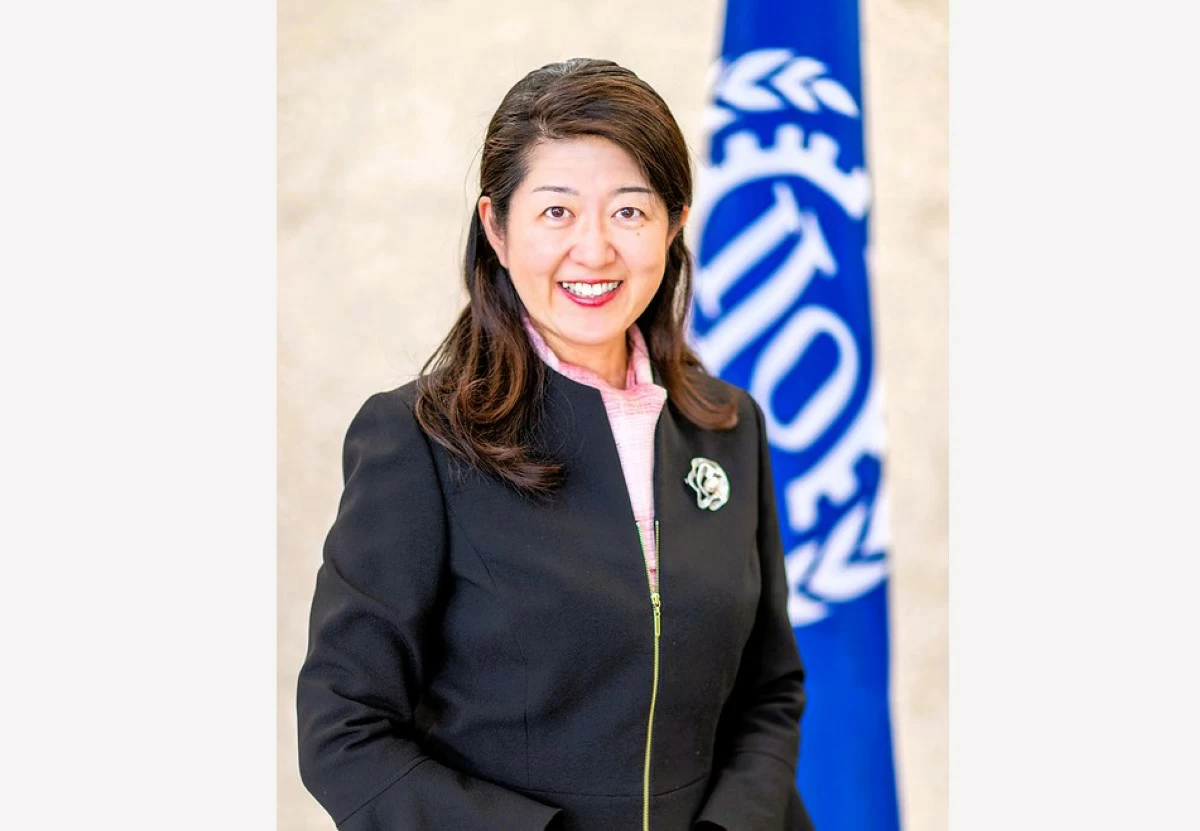
Kaori Nakamura-Osaka
By Kaori Nakamura-Osaka
International Labour Organization 
Assistant Director-General and Regional Director for Asia and the Pacific
When we buy a shirt, use a mobile phone, or sip a cup of coffee, how often do we think about the people who made it possible?
In Asia and the Pacific, close to half a billion workers, whether in factories, on farms, at sea, or at home, form the backbone of local, regional and global supply chains. From electronics in Viet Nam and garments in Bangladesh to seafood in Thailand and automobiles in India, the region powers much of the world’s production, an economic engine worth trillions of dollars.
Yet this economic strength hides challenges. Too many jobs are informal or precarious, with work outsourced through opaque subcontracting chains beyond effective oversight. Weak national capacity and inadequate enforcement mechanisms deepen these vulnerabilities, leaving space for exploitation, from unsafe and unfair conditions to child and forced labor. At the same time, only a limited number of workers have adequate social protection and persistent gender pay gaps remain across sectors.
These challenges are not inevitable. With the right policies, stronger institutions and empowered workers, supply chains in Asia and the Pacific can be engines for inclusive growth. Strengthening public policy, building the capacity of regulators, employers’ and workers’ organizations as well as ensuring workers’ voices are heard are all essential steps.
When workers are treated fairly, they are more engaged and productive. Evidence demonstrates that promoting decent work reduces risk, enhances business competitiveness and boosts export performance. Decent work is not just the right thing to do, it’s good for business too.
Supply chains in Asia and the Pacific are also deeply linked to micro, small and medium-sized enterprises, the backbone of local economies. Supporting these businesses to formalize jobs, improve skills and adopt technology can unlock better opportunities for millions, especially in lower tiers of production where the most vulnerable workers are found.
Change is certainly underway. We have seen promising initiatives in the region, ethical recruitment practices that protect migrant workers, digital monitoring tools that increase transparency in factories and sector-wide agreements that raise standards across entire industries.
But progress is uneven and the region needs a coordinated, locally grounded approach.
Meanwhile, recent shifts in global trade dynamics create both risk and opportunity. There is a risk of losing momentum, but also an opportunity for Asia and the Pacific to take the lead in shaping a regionally-grounded model for labor governance in supply chains. With much of today’s trade occurring among countries of the global South, especially within Asia itself, the region is no longer simply responding to rules set elsewhere. The region can and should forge its own path as a trusted destination for resilient and equitable sourcing that drives decent work, value addition and sustainable growth across supply chains whether they are local, regional or global.
This requires aligning trade, investment, governance, and responsible business conduct policies to reinforce decent work while boosting social protection coverage, addressing gender pay disparities, reducing informality, and investing in workplace safety.
That is why the International Labor Organization convened governments, employers, workers’ organizations, and other subject matter experts in Bangkok on Sept. 15–16 for the regional policy forum Resilient Supply Chains and Equitable Growth in a Changing World of Work. This was not just another meeting. It was a launchpad for action, a space to move beyond talk and to forge coordinated strategies that can reshape the way supply chains operate in Asia and the Pacific.
The choices we make today will shape the future of work in our region for generations. We can cling to models that chase the lowest cost at the expense of human dignity, or we can build a path where growth is shared and rights are respected.
Now is the time to act, to create a just, sustainable and resilient world of work across Asia and the Pacific.
ADVERTISEMENT
.most-popular .layout-ratio{ padding-bottom: 79.13%; } @media (min-width: 768px) and (max-width: 1024px) { .widget-title { font-size: 15px !important; } }

{{ articles_filter_1561_widget.title }}

.most-popular .layout-ratio{ padding-bottom: 79.13%; } @media (min-width: 768px) and (max-width: 1024px) { .widget-title { font-size: 15px !important; } }

{{ articles_filter_1562_widget.title }}

.most-popular .layout-ratio{ padding-bottom: 79.13%; } @media (min-width: 768px) and (max-width: 1024px) { .widget-title { font-size: 15px !important; } }

{{ articles_filter_1563_widget.title }}

{{ articles_filter_1564_widget.title }}

.mb-article-details { position: relative; } .mb-article-details .article-body-preview, .mb-article-details .article-body-summary{ font-size: 17px; line-height: 30px; font-family: "Libre Caslon Text", serif; color: #000; } .mb-article-details .article-body-preview iframe , .mb-article-details .article-body-summary iframe{ width: 100%; margin: auto; } .read-more-background { background: linear-gradient(180deg, color(display-p3 1.000 1.000 1.000 / 0) 13.75%, color(display-p3 1.000 1.000 1.000 / 0.8) 30.79%, color(display-p3 1.000 1.000 1.000) 72.5%); position: absolute; height: 200px; width: 100%; bottom: 0; display: flex; justify-content: center; align-items: center; padding: 0; } .read-more-background a{ color: #000; } .read-more-btn { padding: 17px 45px; font-family: Inter; font-weight: 700; font-size: 18px; line-height: 16px; text-align: center; vertical-align: middle; border: 1px solid black; background-color: white; } .hidden { display: none; }
function initializeAllSwipers() { // Get all hidden inputs with cms_article_id document.querySelectorAll('[id^="cms_article_id_"]').forEach(function (input) { const cmsArticleId = input.value; const articleSelector = '#article-' + cmsArticleId + ' .body_images'; const swiperElement = document.querySelector(articleSelector); if (swiperElement && !swiperElement.classList.contains('swiper-initialized')) { new Swiper(articleSelector, { loop: true, pagination: false, navigation: { nextEl: '#article-' + cmsArticleId + ' .swiper-button-next', prevEl: '#article-' + cmsArticleId + ' .swiper-button-prev', }, }); } }); } setTimeout(initializeAllSwipers, 3000); const intersectionObserver = new IntersectionObserver( (entries) => { entries.forEach((entry) => { if (entry.isIntersecting) { const newUrl = entry.target.getAttribute("data-url"); if (newUrl) { history.pushState(null, null, newUrl); let article = entry.target; // Extract metadata const author = article.querySelector('.author-section').textContent.replace('By', '').trim(); const section = article.querySelector('.section-info ').textContent.replace(' ', ' '); const title = article.querySelector('.article-title h1').textContent; // Parse URL for Chartbeat path format const parsedUrl = new URL(newUrl, window.location.origin); const cleanUrl = parsedUrl.host + parsedUrl.pathname; // Update Chartbeat configuration if (typeof window._sf_async_config !== 'undefined') { window._sf_async_config.path = cleanUrl; window._sf_async_config.sections = section; window._sf_async_config.authors = author; } // Track virtual page view with Chartbeat if (typeof pSUPERFLY !== 'undefined' && typeof pSUPERFLY.virtualPage === 'function') { try { pSUPERFLY.virtualPage({ path: cleanUrl, title: title, sections: section, authors: author }); } catch (error) { console.error('ping error', error); } } // Optional: Update document title if (title && title !== document.title) { document.title = title; } } } }); }, { threshold: 0.1 } ); function showArticleBody(button) { const article = button.closest("article"); const summary = article.querySelector(".article-body-summary"); const body = article.querySelector(".article-body-preview"); const readMoreSection = article.querySelector(".read-more-background"); // Hide summary and read-more section summary.style.display = "none"; readMoreSection.style.display = "none"; // Show the full article body body.classList.remove("hidden"); } document.addEventListener("DOMContentLoaded", () => { let loadCount = 0; // Track how many times articles are loaded const offset = [1, 2, 3, 4, 5, 6, 7, 8, 9, 10]; // Offset values const currentUrl = window.location.pathname.substring(1); let isLoading = false; // Prevent multiple calls if (!currentUrl) { console.log("Current URL is invalid."); return; } const sentinel = document.getElementById("load-more-sentinel"); if (!sentinel) { console.log("Sentinel element not found."); return; } function isSentinelVisible() { const rect = sentinel.getBoundingClientRect(); return ( rect.top < window.innerHeight && rect.bottom >= 0 ); } function onScroll() { if (isLoading) return; if (isSentinelVisible()) { if (loadCount >= offset.length) { console.log("Maximum load attempts reached."); window.removeEventListener("scroll", onScroll); return; } isLoading = true; const currentOffset = offset[loadCount]; window.loadMoreItems().then(() => { let article = document.querySelector('#widget_1690 > div:nth-last-of-type(2) article'); intersectionObserver.observe(article) loadCount++; }).catch(error => { console.error("Error loading more items:", error); }).finally(() => { isLoading = false; }); } } window.addEventListener("scroll", onScroll); });

Sign up by email to receive news.