






Manila Bulletin
 Business
Trade & Industry
Philippine pharmaceutical industry eyes $2-billion revenue this year
Business
Trade & Industry
Philippine pharmaceutical industry eyes $2-billion revenue this year
Business
Trade & Industry
Philippine pharmaceutical industry eyes $2-billion revenue this year
Philippine pharmaceutical industry eyes $2-billion revenue this year
Published Sep 22, 2025 12:42 pm
|
Updated Sep 22, 2025 01:15 pm


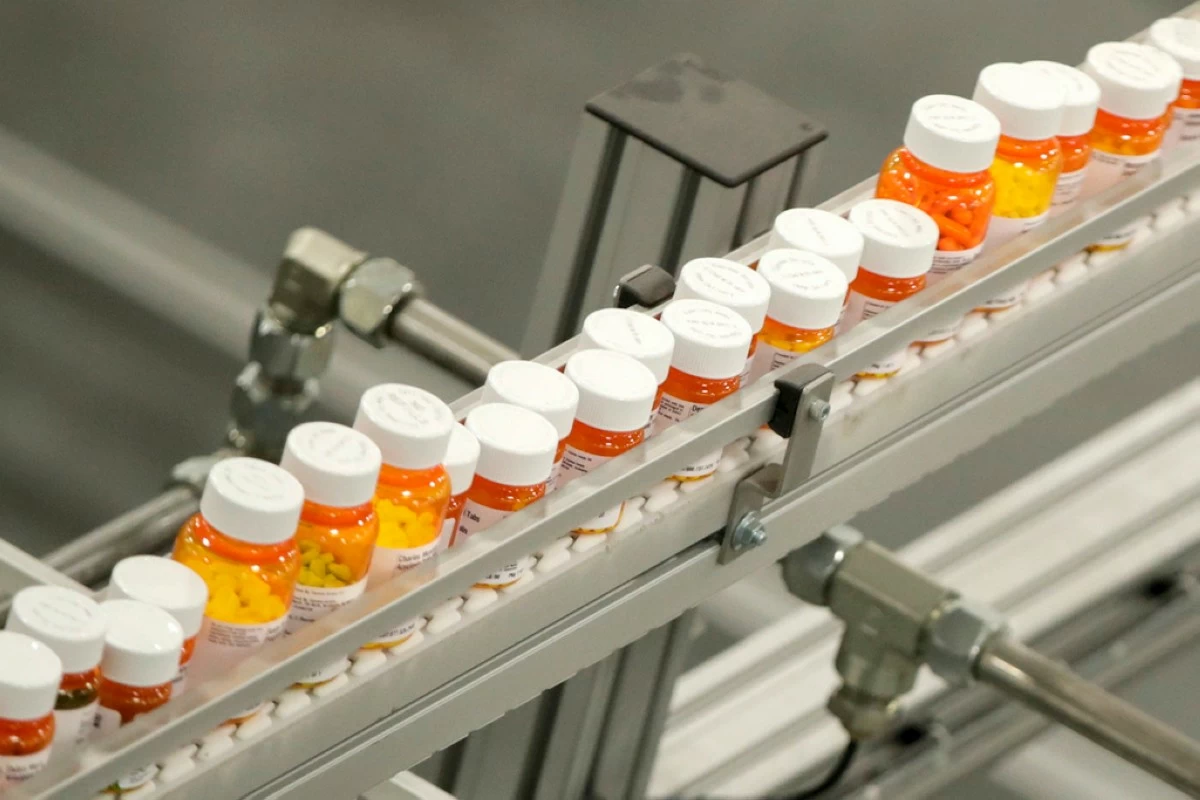
Bottles of medicine ride on a belt at a mail-in pharmacy warehouse in Florence, N.J., July 10, 2018. . (AP Photo/Julio Cortez, File)
The local pharmaceutical industry is expected to generate nearly $2 billion in revenues this year, with more potential for growth as the government eyes stronger support for domestic manufacturing, according to the Board of Investments (BOI).
The BOI, the country’s lead investment promotion agency (IPA), stated that the expected revenues for the year are just a glimpse of what the pharmaceutical industry can deliver in terms of economic growth.
In a statement, the agency said it estimates the sector will post an annual growth rate of 4.1 percent through 2029
“This upward trend is expected to be largely driven by the increasing demand for generic drugs due to the government’s efforts to make healthcare more affordable and accessible to all Filipinos,” the BOI said.
The BOI is banking on the government’s Integrated Roadmap for the Philippine Pharmaceutical Industry (IRPPI) to help drive the sector’s growth.
BOI Executive Director Ma. Corazon Halili-Dichosa said the IRPPI seeks to improve the market share of locally produced medicines.
“The local pharmaceutical market is huge but sadly, the country is very much import dependent,” she said.
BOI data showed that the arrival of foreign pharmaceuticals increased by five percent while the country’s exports fell by 25 percent.
Under the IRPPI, the government aims to increase the capacity of local manufacturers to produce 60 percent of the country’s registered medicines, thereby reducing reliance on imports.
The sectoral roadmap seeks to strengthen the domestic industry to become a global player in innovation, with a vision to establish a robust pharmaceutical value chain by 2030.
Halili-Dichosa said the IRPPI, which took effect in 2023, has seen key updates to make it more in tune with the government’s ongoing investment efforts.
In particular, the Philippine Economic Zone Authority (PEZA) earlier issued guidelines on the establishment of pharmazones, which will serve as industrial hubs for companies involved in medical and drug manufacturing activities.
Last month, the PEZA signed an agreement with biopharmaceutical giant AstraZeneca to kickstart a ₱7-billion investment commitment to build the country's first health innovation hub.
The IRPPI is also awaiting the finalization of the Tatak Pinoy Strategy that labels pharmaceuticals as among the focus industries, the issuance of a Food and Drug Administration (FDA) order that would streamline the process for pharmaceutical exports, and the planned establishment of the Virology Institute of the Philippines.
“As the market expands, opportunities for innovation, investment, and broader access to essential medicines likewise expand—signaling a promising future for both public health and the pharma industry,” the BOI said.
As part of efforts to boost the domestic industry, Halili-Dichosa recently spoke before members of the Pharmaceutical and Healthcare Association of the Philippines (PCPI) to affirm the agency’s vow to strengthen local manufacturing.
PCPI called for continued collaboration with the government to establish an innovation-driven pharmaceutical industry that provides accessible, high-quality healthcare for all Filipinos.