







DBM: Unprogrammed appropriations not 'pork barrel'
Published Sep 22, 2025 12:01 am
|
Updated Sep 20, 2025 12:35 pm


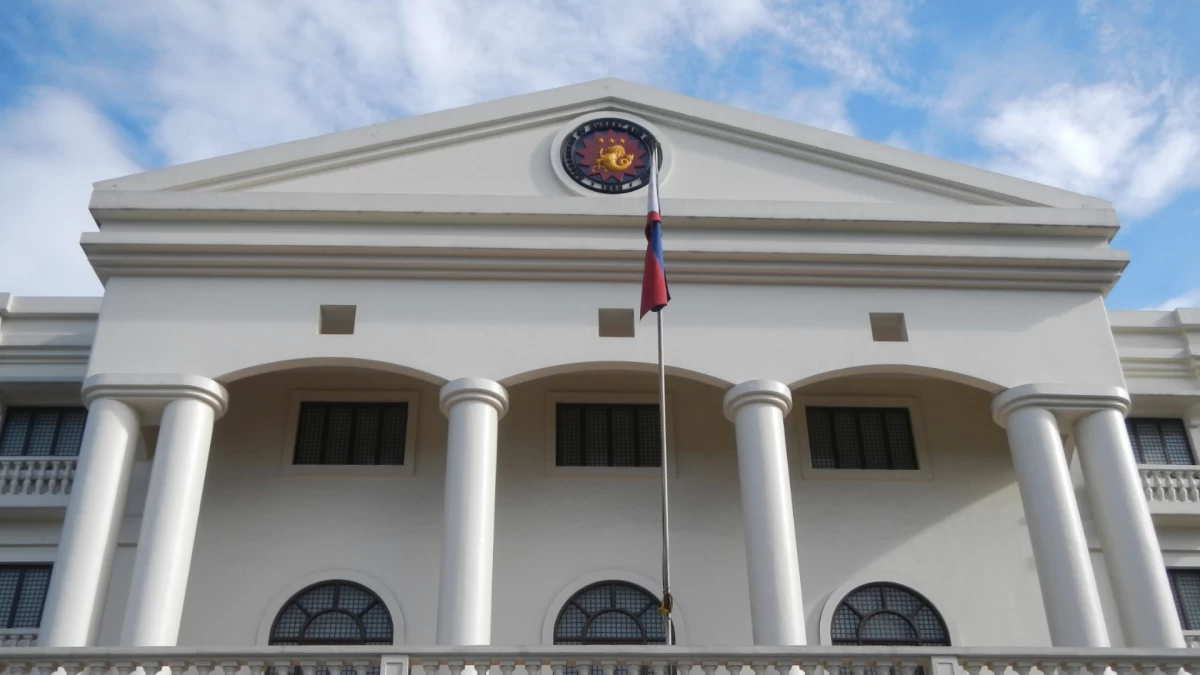
The Department of Budget and Management (BDM) has clarified that the government’s unprogrammed appropriations (UA) are not a discretionary “pork barrel” or a “magic fund.”
In a statement, Budget Undersecretary Goddes Hope Libiran said the UA funds are a congressionally authorized standby appropriation with a specific purpose, released only when strict conditions are met.
Libiran directly addressed common misconceptions about the UA, noting that the fund is not a secret pot of money the Department of Budget and Management (DBM) can use at will.
Instead, she said it serves as a standby appropriation outlined and authorized by Congress in the General Appropriations Act (GAA).
She also noted that the funds can only be accessed against excess or windfall revenues or through approved loans for foreign-assisted projects.
The DBM’s role is to ensure these funds are used responsibly, but it doesn't have unilateral authority to release them, Libiran said. Agencies must also formally request the funds with complete documentation.
Morever, Libiran said the release of UA funds is subject to a rigorous evaluation process as requests must be aligned with the Philippine Development Plan, and projects must be “shovel-ready” with agencies demonstrating the capacity to absorb the funds.
Most critically, the DBM official said the release is contingent on the Bureau of the Treasury certifying the availability of actual excess revenues.
Libiran also cited that the Supreme Court affirmed the constitutionality of the UA in the 2019 case of Greco Belgica v. Executive Secretary.
The court ruled that the fund is not a prohibited lump-sum fund because its amounts and purposes are specified in the GAA’s Annex “A.” This legal precedent further solidifies its legitimate role in government finance.
Libiran gave several examples from the 2024 budget to show how the fund is used for specific and urgent needs. The releases included: Social Services: $15 billion for Assistance to Individuals in Crisis Situations and $1.89 billion for the Food Stamp Program, managed by the Department of Social Welfare and Development (DSWD).
Healthcare: $27.45 billion for Health Emergency Allowance for healthcare workers and $9.174 billion for hospital upgrades, under the Department of Health (DOH).
Agriculture: $17.6 billion for Rice Farmers Financial Assistance.
Government Operations: $56.9 billion for salary increases and benefits for government employees.
Foreign-Assisted Projects: $129.86 billion in loan proceeds and $41.04 billion in counterpart funding for various infrastructure and development projects.
Libiran also clarified that the DBM is not responsible for the “ballooning” of the UA in recent years.
She noted that the increases originate from Congress, which exercises its “power of the purse” during budget deliberations.
For example, in 2024, she said Congress raised the DBM’s proposed ₱281.9 billion for UA to ₱731.4 billion.
Similarly, for the 2025 budget, Congress adjusted the proposed ₱158.7 billion to ₱531.7 billion. The DBM’s function is to implement the final authorized law, not to determine the final amount.