






Manila Bulletin
 Philippines
National
Gene therapy brings new hope for those suffering from heart failure, Parkinson's
Philippines
National
Gene therapy brings new hope for those suffering from heart failure, Parkinson's
Philippines
National
Gene therapy brings new hope for those suffering from heart failure, Parkinson's
Gene therapy brings new hope for those suffering from heart failure, Parkinson's
Published Sep 21, 2025 01:24 pm


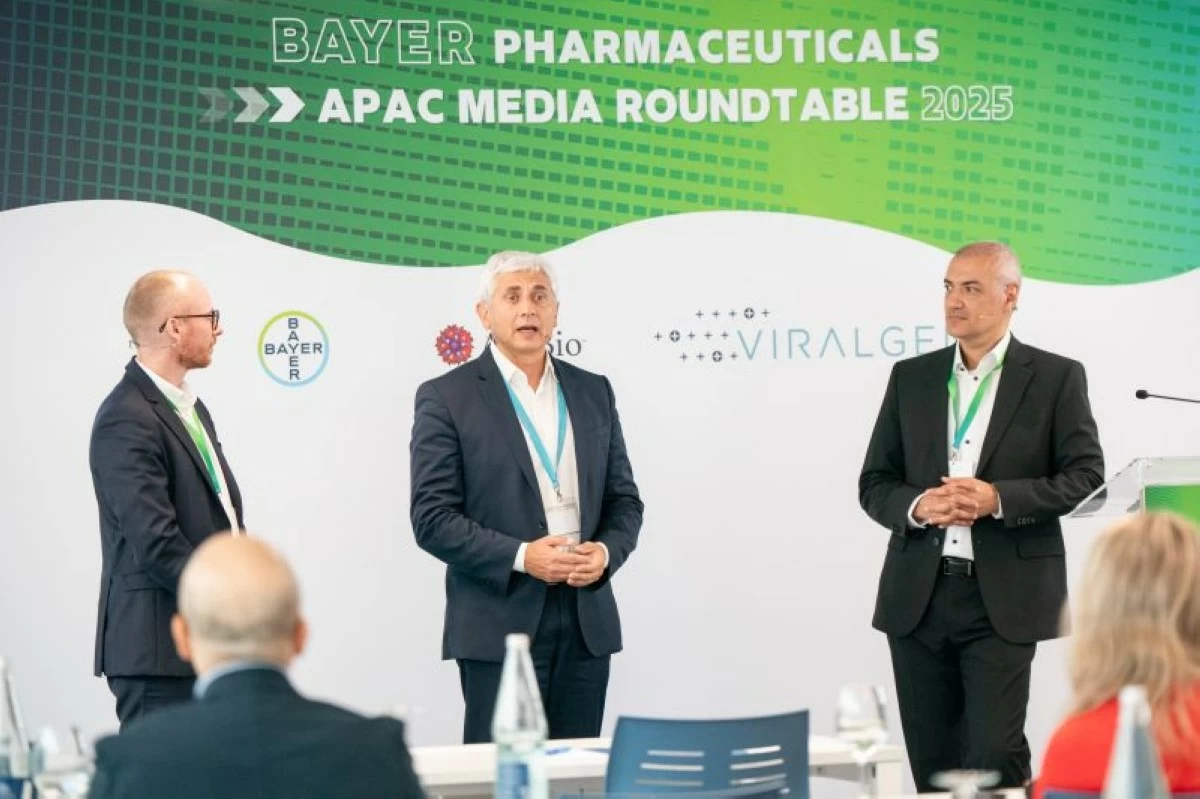
AskBio CEO Gustavo Pesquin (center) discusses gene therapy at the Bayer Pharmaceuticals Asia-Pacific Media Roundtable in San Sebastian, Spain last Sept. 15–16, 2025, as Viralgen CEO Jimmy Vanhove (left) and Bayer APAC Pharmaceutical Commercial Operations Head Ashraf Al-Ouf (right) look on. (Bayer)
SPAIN—For many Filipinos, diseases like heart failure and Parkinson’s disease remain life-changing diagnoses with few lasting solutions.
Current treatments can ease discomfort and slow progression, but they often fall short of addressing the root cause of illness.
In the Philippines, heart disease remained the leading cause of death in 2024, claiming more than 85,000 lives, while Parkinson’s disease already affects around 120,000 Filipinos, government data show.
These figures highlight the urgent need for new approaches.
Gene therapy is emerging as one of the most promising frontiers, offering the possibility of correcting the root of disease instead of simply managing symptoms.
At the heart of this effort is Bayer, the multinational pharmaceutical and biotechnology company investing heavily in emerging science through its subsidiaries AskBio and Viralgen, both based in San Sebastian, Spain.
Together, they are working to transform gene therapy from theory into treatment.
Redefining viruses as medicine
AskBio Chief Executive Officer (CEO) Gustavo Pesquin said the concept of gene therapy came from looking at viruses in a different way.
Instead of seeing them solely as agents of illness, scientists realized the same ability that allows a virus to enter human cells and reach the nucleus could be used to deliver something beneficial.
“They started with this virus that is highly prevalent in society called AAV (adeno-associated virus). It is very innocuous. It does not cause any particular disease. Basically, they clean all the genetic material inside, and that was the ship used to get inside the cell and the nucleus and try to create the medicine,” Pesquin explained.
Inside this carrier is what he described as a cassette, made up of three essential parts: the transgene, which carries the instructions to repair what is broken; the promoter, which directs the therapy to the right part of the body, whether it is the brain, the heart, or another organ; and the capsid, the protective shell that allows the therapy to travel safely into the cells.
“This combination allows us to target the cause of the disease. Instead of taking medicine every day for life, the goal is to intervene once and have a lasting effect,” he added.
Scaling innovation
While AskBio focuses on research and clinical development, Viralgen provides the large-scale manufacturing needed to bring gene therapies to patients.
“Viralgen itself is a very young company. We started in 2017 with about eight people. Today we are 450 people here in San Sebastian. In 2020 Bayer acquired AskBio, and with it Viralgen, and we grew exponentially,” Viralgen CEO Jimmy Vanhove said.
The company now operates three facilities, including one of the world’s largest gene therapy manufacturing sites.
“One is dedicated to clinical supply and process research. Another is the commercial facility, which has three modules and still room to expand. About 20 percent of our colleagues are dedicated to research and development on our manufacturing process. On top of our work for AskBio, we have around 60 clients globally,” Vanhove said.
The combination of scientific innovation and manufacturing strength is what Bayer believes can help transform gene therapy from a promising concept into real treatments.
New hope for incurable diseases
Vanhove said the potential impact of gene therapy is significant. Of the 7,000 known genetic disorders, about 95 percent still have no treatment.
“Rare diseases individually are rare, but collectively we are talking about 400 million people. The unmet medical need is really high,” he said.
In the Philippines, the Department of Health has identified 159 rare diseases, affecting an estimated one in every 20,000 Filipinos.
The urgency is just as clear in more common illnesses. AskBio Senior Vice President for Clinical Development Lothar Roessig explained that heart failure remains both widespread and deadly.
Within five years of diagnosis, about half of patients die, a prognosis he compared to some cancers.
“Heart failure is not just frequent. It is also a deadly disease,” Roessig said.
Existing drugs can ease symptoms and slow progression, but they cannot restore the heart’s weakened pumping ability. Patients with advanced disease are often left with limited options such as devices or transplants.
Roessig said gene therapy is designed as a brief, outpatient procedure.
The infusion itself would take only about 10 minutes, with patients potentially going home the same day.
Current studies require an overnight stay for observation, but future trials aim for immediate discharge.
He added that gene therapies using AAV have already shown durable effects lasting up to 10 years in other conditions, which gives researchers confidence that a single administration could provide lasting benefit without the need for repeat treatments.
Pesquin acknowledged that the field is still in its early stages. “The hits are limited, and you can count them. But they are meaningful. I would not say that gene therapy remains just a promise… It is true that the hits are limited and you can count them, but… there is a learning curve that keeps going on.”
In the Philippines, heart failure affects about 1.6 percent of adults, or roughly 16 in every 1,000 people, according to health data.
The same principle, Pesquin said, applies to neurodegenerative disorders like Parkinson’s, where new treatment options are urgently needed.
“Current medicines only address symptoms and require patients to take them every day, often in increasing doses as the disease progresses,” Pesquin said.
“What excites us about gene therapy is the potential to intervene at the root cause, with a single administration that could provide long-lasting benefit. That would fundamentally change the way Parkinson’s is treated,” he added.
Expanding the pipeline
Pesquin added that the promise of cell and gene therapy lies in their potential to reshape medicine itself.
“I would say that still cell and gene therapy remains the promise of early therapies that really deliver transformational approaches, rather than interventions that have therapeutic value but are far from solving the problem.”
Carolyn Sperl, Bayer’s senior research and development strategy and portfolio lead, added that the company’s pipeline now spans neurology, rare diseases, immunology, and oncology.
“What is really exciting about this space is it allows us to expand how we can address diseases. We can move from treating diseases with small molecules, large molecules, and targeted therapies to really modifying disease with cell and gene therapy,” she said.
She described Bayer’s growing work in neurology, rare diseases, and immunology but emphasized that oncology also remains a major focus.
Oncology, in particular, remains a major focus. Cancer is the world’s second-leading cause of death, with 30 million new cases expected annually by 2040.
“Advancements in oncology have the potential to transform cancer care in areas of high unmet medical need,” Sperl said.
In the Philippines, more than 150,000 new cases are diagnosed each year, with the disease responsible for nearly 49,000 deaths in 2024.
“With new biomarker approaches and diagnostic tools, we now have opportunities for precision oncology that we did not have before,” Bayer’s Head of Oncology Eduard Gasal said.
“We are committed to building a pipeline that addresses high unmet needs while advancing first-in-class or best-in-class medicines,” he said.
“The goal is not just to extend survival but to change the way cancer is treated,” he added.
Meeting Asia-Pacific needs
While Bayer’s hubs are global, the company said its goal is to deliver innovations across Asia-Pacific, including the Philippines.
Ashraf Al-Ouf, Head of Pharmaceutical Commercial Operations for Bayer in Asia Pacific, said the region’s fast-aging population makes the need especially urgent.
By 2040, one in four people in the region will be over 60, fueling rising rates of cardiovascular disease, diabetes, and cancer.
“These are issues we cannot neglect. Asia-Pacific is diverse and growing, and that means both challenges and opportunities. We need to make sure innovation reaches patients here,” he said.
Still, Al-Ouf said access will take time.
“What is the timeline? It's very difficult [to say], but things are moving fast. It will be fast. Once the first, second, third steps, big steps are done, then we can start running.”
Bayer said part of this effort involves expanding access.
In the Philippines, where households still shoulder nearly 44 percent of health costs out-of-pocket, Bayer has rolled out patient support programs to improve affordability and access.
The company also partners with local groups on health awareness campaigns, such as contraception and eye disease.
“Our motto is health for all, and that means finding ways to reach every patient,” Al-Ouf said. “The goal is always the same, to make innovation available as widely as possible.”
He added that Asia-Pacific is also becoming an important contributor to global research, with more patients joining clinical trials and more sites capable of supporting cutting-edge studies.
“This is why we see the region not only as a place of need but also a place of opportunity for science and innovation,” he said.
For Al-Ouf, the promise of gene therapy and other new technologies lies in their potential to change the future of care.
“We continue to treat symptoms today, but what we are working toward is a future where we can offer cures. That would be truly impactful for patients and families everywhere,” he said.
Pesquin shares that view. Looking ahead, he expects breakthroughs to accelerate.
“The only thing that I have learned is that when we reviewed also with Viralgen what is happening in the field, we believe that in the beginning of the next decade there is going to be like a tsunami of innovation,” he said.