ADVERTISEMENT

World Cleanup Day 2025: Humanity's mounting waste crisis

Published Sep 20, 2025 12:01 am  |  Updated Sep 19, 2025 04:42 pm
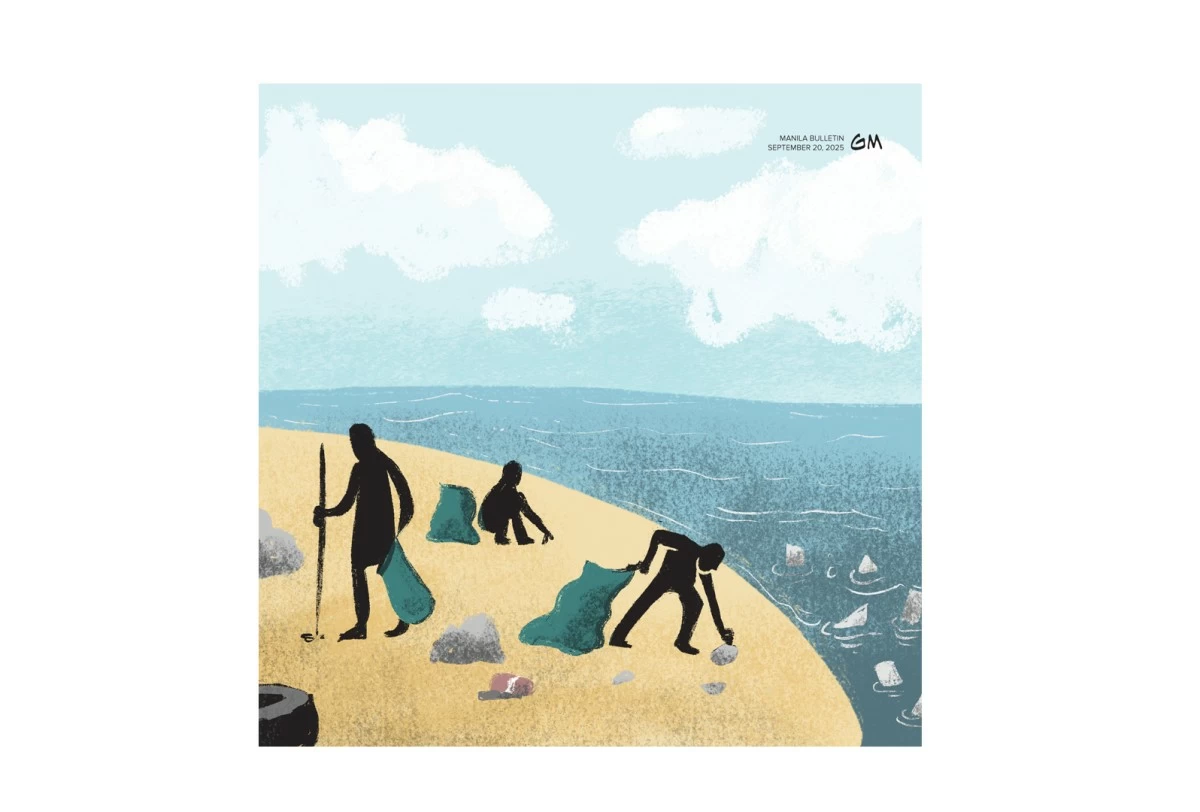
Today, Sept. 20, the world observes World Cleanup Day, a global movement that goes beyond simple clean-up efforts to spotlight humanity’s mounting waste crisis. Officially recognized by the United Nations General Assembly in 2023, this day reminds us of our collective responsibility to care for the Earth—not just with brooms and trash bags, but with bold decisions and lasting solutions.
In the Philippines, Presidential Proclamation 470 signed in 2003, declares every third Saturday of September as the International Coastal Cleanup Day. Activities focus on the cleanup of the coast, rivers and waterways led by the Department of Environment and Natural Resources (DENR) and the International Coastal Cleanup (ICC) Philippines, with the theme “Fight for plastic free seas, Pilipinas: Ending the flow of trash at the source.” The cleanup activities will be conducted around the country with thousands of volunteers expected to join the annual program. In Metro Manila, cleanup activities of rivers and waterways will start at the Pasig River. This year, the ICC guides volunteers not only to collect garbage but also to identify and record collected trash on data cards which will encoded in a database for analysis by pollution specialists.
In an era where urbanization is rapidly outpacing municipal waste management systems, waste – especially discarded clothing – piles up not just in landfills but in our streets, rivers, and oceans. Cities in the Global South—where much of the world’s used clothing ends up—suffer the most, lacking the infrastructure to manage these overwhelming volumes, a key message of the UN-Habitat website said.
The environmental impact of textile waste runs deep. Less than 15 percent of global textiles are recycled, while over 73 percent are either landfilled or incinerated. What’s more, textile dyeing and finishing account for 20 percent of global clean water pollution, while washing synthetic fabrics releases up to 700,000 microfibers per load—tiny pollutants that poison our rivers and marine life.
To make matters worse, textile and other forms of waste isn’t just staying put. Wealthy countries are exporting millions of tons of used clothing to poorer nations, where they often end up burned or dumped—offloading environmental and social costs onto communities already grappling with inadequate waste systems.
Last year, the International Coastal Cleanup Day collected 350,000 kilograms of trash. Most of it was plastic, reflecting our throwaway culture. Many government and private sector efforts have been implemented to address this persistent issue. Last week, the Metro Manila Council announced a standard ₱5,000 fine for littering, a big increase from present ordinances on anti-littering. But fines alone won’t fix broken systems or change habits – especially the throwaway culture.
What can be done?
For fashion waste, the UN urges cities to adopt integrated textile waste action plans, including permanent drop-off points, formal recognition of waste workers, and circular design incentives for fashion brands. “Closet cleanups,” textile recycling hubs, and community-led sew-and-swap events have also shown promise.
We are running out of room for waste. Worse, we are running out of time.
World Cleanup Day is more than a date on the calendar. It is a call to action—a reminder that prevention is more powerful than cleanup. That systems, not just citizens, must change. And that textile waste is not just a fabric problem—it is woven into the very future of our planet.
On this World Cleanup Day and International Coastal Cleanup Day, let us not only pick up the trash. Let us pick up the pace.

Related Tags

WORLD CLEANUP DAY 2025
ADVERTISEMENT
.most-popular .layout-ratio{ padding-bottom: 79.13%; } @media (min-width: 768px) and (max-width: 1024px) { .widget-title { font-size: 15px !important; } }

{{ articles_filter_1561_widget.title }}

.most-popular .layout-ratio{ padding-bottom: 79.13%; } @media (min-width: 768px) and (max-width: 1024px) { .widget-title { font-size: 15px !important; } }

{{ articles_filter_1562_widget.title }}

.most-popular .layout-ratio{ padding-bottom: 79.13%; } @media (min-width: 768px) and (max-width: 1024px) { .widget-title { font-size: 15px !important; } }

{{ articles_filter_1563_widget.title }}

{{ articles_filter_1564_widget.title }}

.mb-article-details { position: relative; } .mb-article-details .article-body-preview, .mb-article-details .article-body-summary{ font-size: 17px; line-height: 30px; font-family: "Libre Caslon Text", serif; color: #000; } .mb-article-details .article-body-preview iframe , .mb-article-details .article-body-summary iframe{ width: 100%; margin: auto; } .read-more-background { background: linear-gradient(180deg, color(display-p3 1.000 1.000 1.000 / 0) 13.75%, color(display-p3 1.000 1.000 1.000 / 0.8) 30.79%, color(display-p3 1.000 1.000 1.000) 72.5%); position: absolute; height: 200px; width: 100%; bottom: 0; display: flex; justify-content: center; align-items: center; padding: 0; } .read-more-background a{ color: #000; } .read-more-btn { padding: 17px 45px; font-family: Inter; font-weight: 700; font-size: 18px; line-height: 16px; text-align: center; vertical-align: middle; border: 1px solid black; background-color: white; } .hidden { display: none; }
function initializeAllSwipers() { // Get all hidden inputs with cms_article_id document.querySelectorAll('[id^="cms_article_id_"]').forEach(function (input) { const cmsArticleId = input.value; const articleSelector = '#article-' + cmsArticleId + ' .body_images'; const swiperElement = document.querySelector(articleSelector); if (swiperElement && !swiperElement.classList.contains('swiper-initialized')) { new Swiper(articleSelector, { loop: true, pagination: false, navigation: { nextEl: '#article-' + cmsArticleId + ' .swiper-button-next', prevEl: '#article-' + cmsArticleId + ' .swiper-button-prev', }, }); } }); } setTimeout(initializeAllSwipers, 3000); const intersectionObserver = new IntersectionObserver( (entries) => { entries.forEach((entry) => { if (entry.isIntersecting) { const newUrl = entry.target.getAttribute("data-url"); if (newUrl) { history.pushState(null, null, newUrl); let article = entry.target; // Extract metadata const author = article.querySelector('.author-section').textContent.replace('By', '').trim(); const section = article.querySelector('.section-info ').textContent.replace(' ', ' '); const title = article.querySelector('.article-title h1').textContent; // Parse URL for Chartbeat path format const parsedUrl = new URL(newUrl, window.location.origin); const cleanUrl = parsedUrl.host + parsedUrl.pathname; // Update Chartbeat configuration if (typeof window._sf_async_config !== 'undefined') { window._sf_async_config.path = cleanUrl; window._sf_async_config.sections = section; window._sf_async_config.authors = author; } // Track virtual page view with Chartbeat if (typeof pSUPERFLY !== 'undefined' && typeof pSUPERFLY.virtualPage === 'function') { try { pSUPERFLY.virtualPage({ path: cleanUrl, title: title, sections: section, authors: author }); } catch (error) { console.error('ping error', error); } } // Optional: Update document title if (title && title !== document.title) { document.title = title; } } } }); }, { threshold: 0.1 } ); function showArticleBody(button) { const article = button.closest("article"); const summary = article.querySelector(".article-body-summary"); const body = article.querySelector(".article-body-preview"); const readMoreSection = article.querySelector(".read-more-background"); // Hide summary and read-more section summary.style.display = "none"; readMoreSection.style.display = "none"; // Show the full article body body.classList.remove("hidden"); } document.addEventListener("DOMContentLoaded", () => { let loadCount = 0; // Track how many times articles are loaded const offset = [1, 2, 3, 4, 5, 6, 7, 8, 9, 10]; // Offset values const currentUrl = window.location.pathname.substring(1); let isLoading = false; // Prevent multiple calls if (!currentUrl) { console.log("Current URL is invalid."); return; } const sentinel = document.getElementById("load-more-sentinel"); if (!sentinel) { console.log("Sentinel element not found."); return; } function isSentinelVisible() { const rect = sentinel.getBoundingClientRect(); return ( rect.top < window.innerHeight && rect.bottom >= 0 ); } function onScroll() { if (isLoading) return; if (isSentinelVisible()) { if (loadCount >= offset.length) { console.log("Maximum load attempts reached."); window.removeEventListener("scroll", onScroll); return; } isLoading = true; const currentOffset = offset[loadCount]; window.loadMoreItems().then(() => { let article = document.querySelector('#widget_1690 > div:nth-last-of-type(2) article'); intersectionObserver.observe(article) loadCount++; }).catch(error => { console.error("Error loading more items:", error); }).finally(() => { isLoading = false; }); } } window.addEventListener("scroll", onScroll); });

Sign up by email to receive news.