






Manila Bulletin
 Philippines
National
PCG ship faces daunting task of guarding WPS shoal from Chinese attempt at building 'nature reserve'
Philippines
National
PCG ship faces daunting task of guarding WPS shoal from Chinese attempt at building 'nature reserve'
Philippines
National
PCG ship faces daunting task of guarding WPS shoal from Chinese attempt at building 'nature reserve'
PCG ship faces daunting task of guarding WPS shoal from Chinese attempt at building 'nature reserve'
Published Sep 20, 2025 12:38 pm
|
Updated Sep 20, 2025 01:23 pm


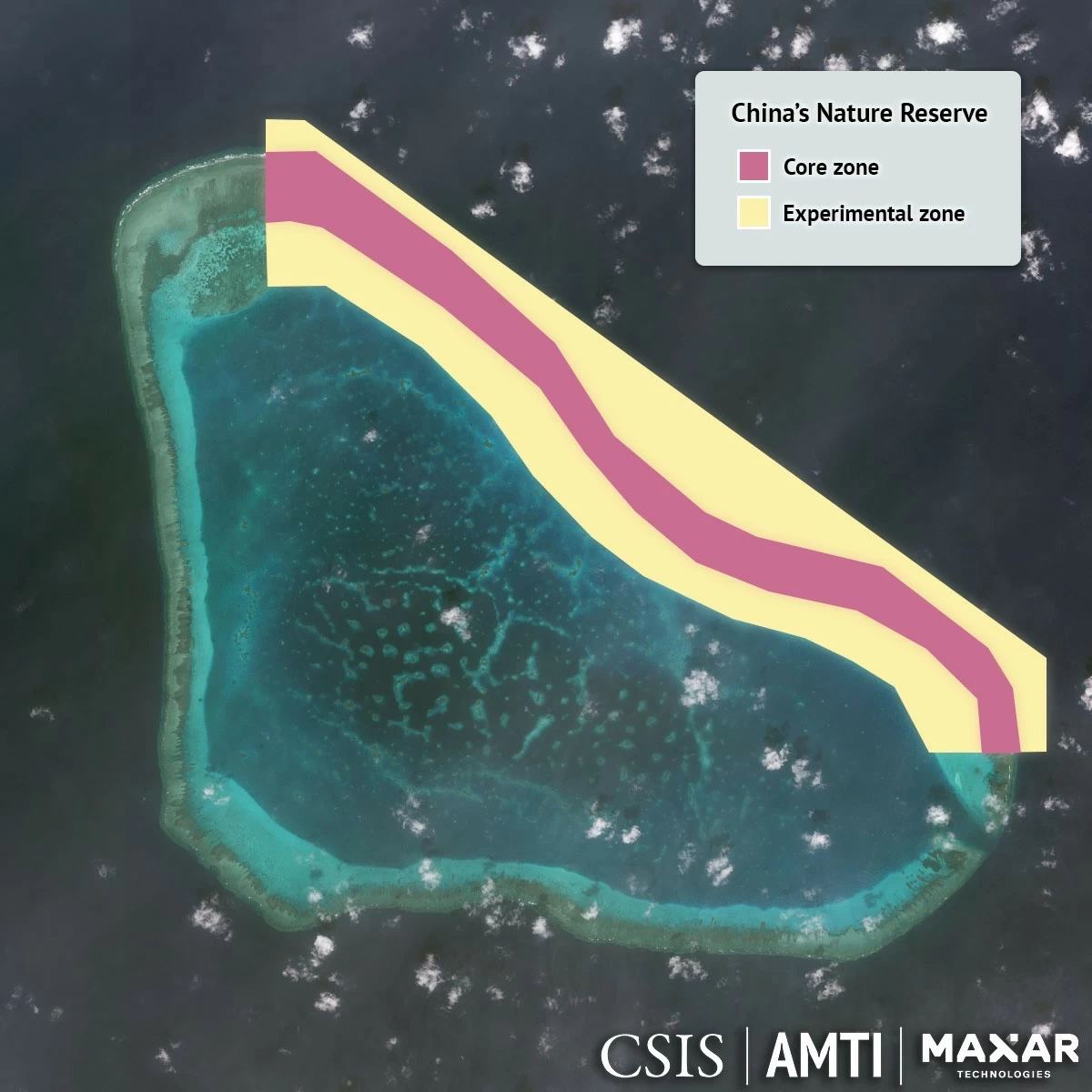
China plans to build a national nature reserve at Scarborough Shoal (Bajo de Masinloc or Panatag Shoal), a disputed shoal located 105 nautical miles west of Palawan, well within the 200-nautical mile exclusive economic zone of the Philippines. (Image ourtesy of Asia Maritime Transparency Initiative)
A single Philippine Coast Guard (PCG) ship faced 22 Chinese vessels in Bajo de Masinloc (Scarborough or Panatag Shoal) in the West Philippine Sea (WPS) on Friday, Sept. 19, where Beijing plans to establish a nature reserve.
According to a WPS monitor, BRP Cabra patrolled the shoal located 105 nautical miles west of Palawan but it was met by an “armada” of Chinese vessels.
“[T]he Philippines Coast Guard's 44-meter patrol vessel BRP Cabra faces off alone against an armada of at least eight China Coast Guard [ships] and 14 maritime militia sent out to guard China's newly designated ‘nature preserve’ at Scarborough Shoal,” said Ray Powell, founder and director of SeaLight, a maritime transparency project under the Stanford University’s Gordian Knot Center for National Security Innovation.
The PCG has yet to issue further details about the patrol.
Defense and security officials have previously rejected China’s plan to establish a national nature reserve at Bajo de Masinloc, first announced by Beijing on Sept. 10.
National Security Adviser (NSA) Eduardo Año said the planned “Huangyan Island National Nature Reserve” by China is “patently illegal” as it runs counter to international law by disregarding the Philippines’ sovereign rights under the United Nations Convention on the Law of the Sea (UNCLOS).
“This move by the PRC is less about protecting the environment and more about justifying its control over a maritime feature that is part of the territory of the Philippines and its waters lie within the exclusive economic zone of the Philippines,” he said on Sept. 11.
The Department of National Defense (DND) and Armed Forces of the Philippines (AFP) echoed the NSA’s disapproval.
Several members of the diplomatic community such as Denmark, Japan, Canada, and the European Union among others also supported the Department of Foreign Affairs (DFA) when it filed a diplomatic protest against the plan.
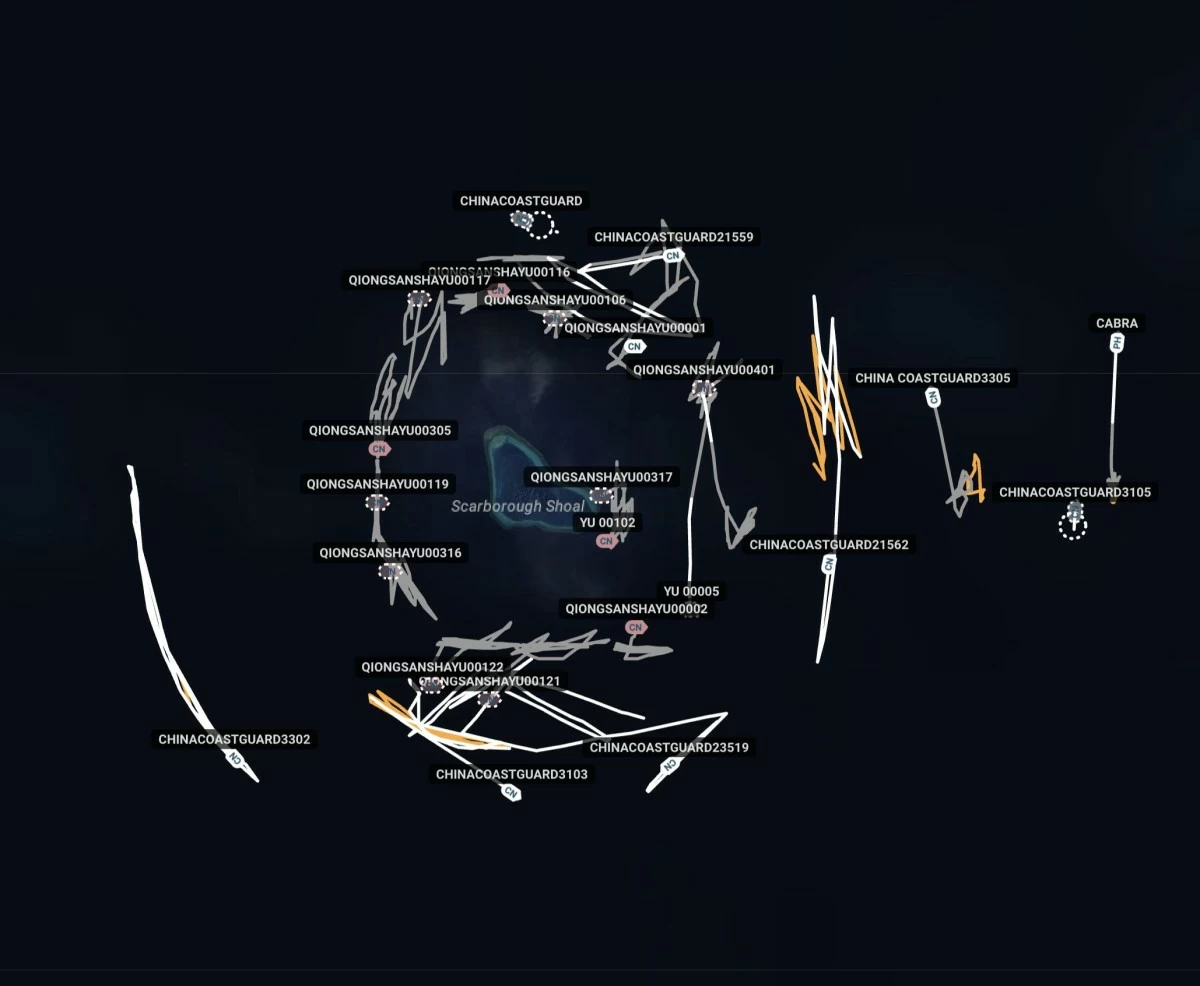
Satellite image shows Philippine Coast Guard (PCG) ship BRP Cabra on the far right faces an armada of Chinese vessels in Bajo de Maisnloc, West Philippine Sea, on Sept. 19, 2025. (Courtesy of Ray Powell/X)
International think tank Asia Maritime Transparency Initiative (AMTI) said the area where China plans to put up its natural reserve “conspicuously overlaps with an area that has sustained major damage from Chinese clam harvesting.”
In an analysis published last Sept. 18, the AMTI said the reserve covers an area of about 8,700 acres along the northeastern side of Scarborough Shoal.
“It consists of two parts: a ‘core zone’ covering the fringing reef itself, and what China calls an ‘experimental zone’ around it extending 400-800 yards into the waters on either side. Notably, the reserve does not cover the entrance to the lagoon,” it said.
AMTI said the site of the nature reserve “is precisely the area of the South China Sea that has suffered the most from destructive Chinese clam harvesting practices.”
The think tank said it measured about 16,350 acres of clam harvesting damage visible in satellite imagery across 39 shallow reefs in the South China Sea in 2023. “Damage at Scarborough Shoal amounted to about 1,900 acres—more than any other reef,” it noted.
It said clam harvesting leaves arc-shaped scars on the reefs, caused when fishers drag brass propellers in semicircles around their anchor chains. This destroys coral directly and suffocates nearby areas with sediment. The method, used by Chinese fishers, targets giant clam shells for China’s jewelry and statuary trade, the AMTI explained.
“Chinese clam harvesting surged from 2012 to 2015, but satellite imagery showed active harvesting at Scarborough as late as 2019. And any clam harvesting at Scarborough took place under the eye of the China Coast Guard, which has maintained a permanent presence at the shoal since seizing control of it from the Philippines in 2012,” the think tank added.