ADVERTISEMENT

From bean counter to CEO: A real possibility?

Published Sep 20, 2025 12:01 am  |  Updated Sep 19, 2025 02:36 pm
The “bean counter” stereotype—that notorious and unfair label for accountants—is a thing of the past. Once seen as fastidious number-crunchers focused on cost-cutting at the expense of everything else, accountants are now emerging as visionary leaders who propel corporate growth. This new reality is as palpable as it is real.
In fact, a significant number of CEOs have backgrounds in accounting. A third of the FTSE 100 CEOs were previously CFOs, and accountants lead six out of the top ten companies in this index of the United Kingdom's 100 largest publicly traded companies.
Unfortunately, in the Philippines, there's no data available on this trend, despite the robust size of the accounting profession. This could be an interesting inquiry for an academic research project, especially with over 200,000 registered CPAs working across various sectors—from industry and public practice to government and academia. It's safe to infer that a significant number of CEOs likely have accounting backgrounds, particularly those from public accounting firms. However, within commerce and industry, many accountants tend to hold roles like CFO, Controller, or Chief Accountant, with fewer making the leap to CEO.
Accountants possess a unique combination of financial expertise and a meticulous, data-driven approach that makes them well-suited for leadership roles. Their knowledge enhances business confidence and transparency, a major boon for a growing economy. Industries that deal with financial products and services are particularly inclined to attract CPAs as CEOs, who can leverage their keen eye for detail and forecasting abilities to drive growth.
My own journey to becoming a CEO was filled with both planned and unplanned twists over four decades. As a young man, unsure of my career path, I took the advice of my elder brother to pursue accounting. It wasn't my choice, but I embraced the challenge with determination and passion, becoming a registered accountant five years later.
I took many calculated risks, venturing into uncharted territories and taking on different roles in public accounting, industry, management consulting, and academia. These experiences paid off handsomely, sharpening my knowledge not only in finance and accounting but also in organization development, strategic management, and leadership across diverse corporate structures—from publicly-listed entities to family corporations. My long-standing role as a graduate school professor at Ateneo and other universities also proved that combining academic theory with real-world practice creates powerful learning synergies. It also debunks the old adage, "those who can, do; those who can't, teach," which unfairly suggests that teaching is a fallback for those who fail in the corporate world.
Reflecting on my career, I've identified several valuable lessons for aspiring leaders. To transition from a "bean counter" to a corporate strategist, you must be ahead of the curve and commit yourself to constant improvement. Many new professionals, especially accountants, have a narrow, binary view, focusing only on their specific job tasks. Developing a "big picture" perspective allows you to see the interconnectedness of a business, which is strategically enlightening. After mastering the day-to-day transactional work, an accountant must develop strategic and integrated analysis skills. Go beyond simply accumulating data; analyze it to identify problems, offer solutions, evaluate performance, and predict outcomes. The real challenge for a budding CEO is to transform a traditional, compliance-focused culture into an innovative and strategic one, especially in today’s VUCA (volatile, uncertain, complex, ambiguous) world. This requires creative leadership and a clear vision that inspires all team members to work together. Finally, CPAs must continually equip themselves with new knowledge and skills. Be agile and resilient. There's no single path to success; it's all up to you.
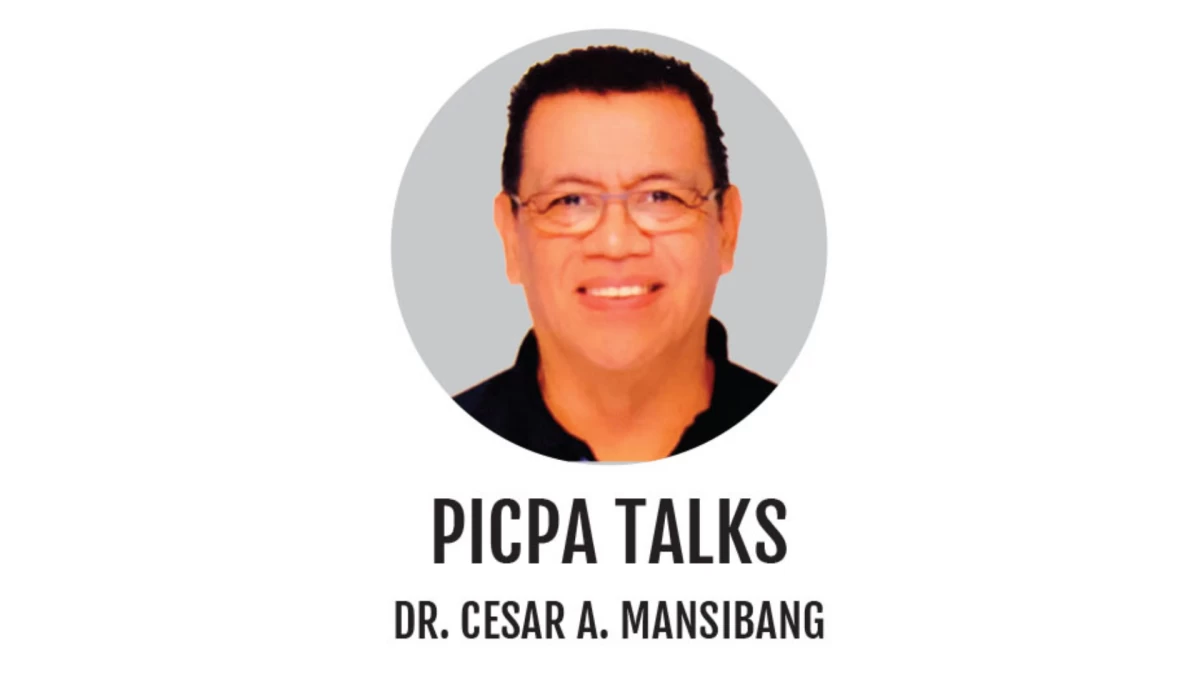
Dr. Cesar Azurin Mansibang is the President and CEO of a large corporation, a professional management consultant, and a graduate school professor. He is a former Senior Director for Operations and Education of PICPA and a member of its National Board of Directors.
ADVERTISEMENT
.most-popular .layout-ratio{ padding-bottom: 79.13%; } @media (min-width: 768px) and (max-width: 1024px) { .widget-title { font-size: 15px !important; } }

{{ articles_filter_1561_widget.title }}

.most-popular .layout-ratio{ padding-bottom: 79.13%; } @media (min-width: 768px) and (max-width: 1024px) { .widget-title { font-size: 15px !important; } }

{{ articles_filter_1562_widget.title }}

.most-popular .layout-ratio{ padding-bottom: 79.13%; } @media (min-width: 768px) and (max-width: 1024px) { .widget-title { font-size: 15px !important; } }

{{ articles_filter_1563_widget.title }}

{{ articles_filter_1564_widget.title }}

.mb-article-details { position: relative; } .mb-article-details .article-body-preview, .mb-article-details .article-body-summary{ font-size: 17px; line-height: 30px; font-family: "Libre Caslon Text", serif; color: #000; } .mb-article-details .article-body-preview iframe , .mb-article-details .article-body-summary iframe{ width: 100%; margin: auto; } .read-more-background { background: linear-gradient(180deg, color(display-p3 1.000 1.000 1.000 / 0) 13.75%, color(display-p3 1.000 1.000 1.000 / 0.8) 30.79%, color(display-p3 1.000 1.000 1.000) 72.5%); position: absolute; height: 200px; width: 100%; bottom: 0; display: flex; justify-content: center; align-items: center; padding: 0; } .read-more-background a{ color: #000; } .read-more-btn { padding: 17px 45px; font-family: Inter; font-weight: 700; font-size: 18px; line-height: 16px; text-align: center; vertical-align: middle; border: 1px solid black; background-color: white; } .hidden { display: none; }
function initializeAllSwipers() { // Get all hidden inputs with cms_article_id document.querySelectorAll('[id^="cms_article_id_"]').forEach(function (input) { const cmsArticleId = input.value; const articleSelector = '#article-' + cmsArticleId + ' .body_images'; const swiperElement = document.querySelector(articleSelector); if (swiperElement && !swiperElement.classList.contains('swiper-initialized')) { new Swiper(articleSelector, { loop: true, pagination: false, navigation: { nextEl: '#article-' + cmsArticleId + ' .swiper-button-next', prevEl: '#article-' + cmsArticleId + ' .swiper-button-prev', }, }); } }); } setTimeout(initializeAllSwipers, 3000); const intersectionObserver = new IntersectionObserver( (entries) => { entries.forEach((entry) => { if (entry.isIntersecting) { const newUrl = entry.target.getAttribute("data-url"); if (newUrl) { history.pushState(null, null, newUrl); let article = entry.target; // Extract metadata const author = article.querySelector('.author-section').textContent.replace('By', '').trim(); const section = article.querySelector('.section-info ').textContent.replace(' ', ' '); const title = article.querySelector('.article-title h1').textContent; // Parse URL for Chartbeat path format const parsedUrl = new URL(newUrl, window.location.origin); const cleanUrl = parsedUrl.host + parsedUrl.pathname; // Update Chartbeat configuration if (typeof window._sf_async_config !== 'undefined') { window._sf_async_config.path = cleanUrl; window._sf_async_config.sections = section; window._sf_async_config.authors = author; } // Track virtual page view with Chartbeat if (typeof pSUPERFLY !== 'undefined' && typeof pSUPERFLY.virtualPage === 'function') { try { pSUPERFLY.virtualPage({ path: cleanUrl, title: title, sections: section, authors: author }); } catch (error) { console.error('ping error', error); } } // Optional: Update document title if (title && title !== document.title) { document.title = title; } } } }); }, { threshold: 0.1 } ); function showArticleBody(button) { const article = button.closest("article"); const summary = article.querySelector(".article-body-summary"); const body = article.querySelector(".article-body-preview"); const readMoreSection = article.querySelector(".read-more-background"); // Hide summary and read-more section summary.style.display = "none"; readMoreSection.style.display = "none"; // Show the full article body body.classList.remove("hidden"); } document.addEventListener("DOMContentLoaded", () => { let loadCount = 0; // Track how many times articles are loaded const offset = [1, 2, 3, 4, 5, 6, 7, 8, 9, 10]; // Offset values const currentUrl = window.location.pathname.substring(1); let isLoading = false; // Prevent multiple calls if (!currentUrl) { console.log("Current URL is invalid."); return; } const sentinel = document.getElementById("load-more-sentinel"); if (!sentinel) { console.log("Sentinel element not found."); return; } function isSentinelVisible() { const rect = sentinel.getBoundingClientRect(); return ( rect.top < window.innerHeight && rect.bottom >= 0 ); } function onScroll() { if (isLoading) return; if (isSentinelVisible()) { if (loadCount >= offset.length) { console.log("Maximum load attempts reached."); window.removeEventListener("scroll", onScroll); return; } isLoading = true; const currentOffset = offset[loadCount]; window.loadMoreItems().then(() => { let article = document.querySelector('#widget_1690 > div:nth-last-of-type(2) article'); intersectionObserver.observe(article) loadCount++; }).catch(error => { console.error("Error loading more items:", error); }).finally(() => { isLoading = false; }); } } window.addEventListener("scroll", onScroll); });

Sign up by email to receive news.