






Manila Bulletin
 Environment and Sustainability
Why corruption deepens the Philippines' environmental crisis
Environment and Sustainability
Why corruption deepens the Philippines' environmental crisis
Environment and Sustainability
Why corruption deepens the Philippines' environmental crisis
Why corruption deepens the Philippines' environmental crisis
By Mat Richter
Published Sep 19, 2025 10:41 am


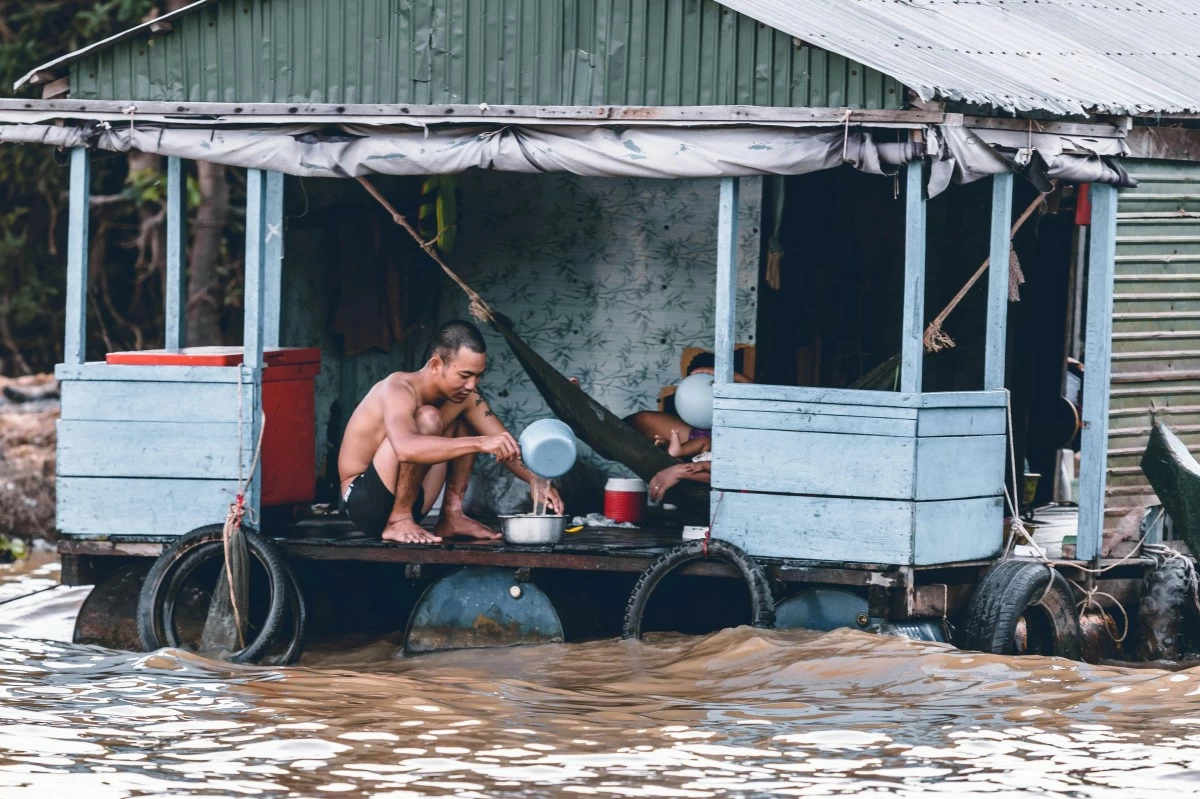
A family is stranded at home after a downpour resulted in heavy flooding.
True enough, it takes two to tango, but greed remains a powerful fuel for the climate crisis. The cost is devastating. Typhoons barrel through neighborhoods sweeping away infrastructure, claiming lives, and costing the country billions. They leave behind contaminated soils, stripping ecosystems of their ability to shield us from future disasters. And, as always, it is the vulnerable communities, those who contribute least to global warming, that bear the heaviest blows.
Flood control mechanisms must be implemented. Mature forests must be protected. Yes, those are urgent tasks. But there is even greater necessity to confront insatiable greed. In the Philippines, flood mitigation projects too often exist only on paper. The elephants in the room hide behind power poles; left unaccountable, they morph into crocodiles, feeding in plain sight and darkening what hope remains. Corruption, whether it thrives under the table or before the public eye, continues to soothe its unquenchable thirst while communities drown.
All talk no action
Take the example of Tropical Storm Ondoy (2009). Many meteorologists have argued that the amount of rain it dumped in Metro Manila was far from normal. This devastation was made worse by inadequate flood control structures in rivers and drainage systems, the absence of accurate flood forecasting mechanisms, and the lack of proper maintenance of flood warning systems.
Years have passed, yet this still angers millions of Filipinos who dutifully pay their taxes but get nothing but talk, and no real action, on flood management, again and again.
“Billions of pesos supposedly spent on flood control projects have done nothing to protect communities. These projects have become nothing more than illicit revenue streams for corrupt politicians and billionaire contractors, while ordinary people pay the price in lost income, lost homes, and even lost lives,” said Greenpeace campaigner Jefferson Chua.
What is more frustrating, he added, is that these actors continue to escape accountability while the country faces escalating climate consequences. And with the looming threat of La Niña, there is little to no time left to repair or redo flood-control systems.
Filipinos suffer flooding born of greed; the government from self-interest. Amid revelations of flood control anomalies, the Department of Public Works and Highways continues to rear its head, refusing to be dismantled despite data suggesting what appears to be outright misuse of funds.
In Quezon City, for example, a contractor has recently admitted that he had paid “standard operating procedure” kickbacks of 10 to 25 percent to DWPH officials in exchange for flood control contracts. The payments were reportedly made in cash once projects were awarded.
Environmental effects of floods and what to do
Flooding from heavy downpours has a severe impact on soil ecology. It reduces oxygen levels and depletes microorganisms that maintain soil nutrients, improve soil structure, and enable decomposition. It also limits the ability of plants to absorb nutrients, according to a study by the Multidisciplinary Digital Publishing Institute in Switzerland.
Climate change is making matters worse. Its effects increase the likelihood of storms with the same, or even greater, intensity than Ondoy, research by the International Association of Hydrological Sciences in the United Kingdom showed.
To address the flood crisis, the paper emphasized the need to expand distributed and enhanced flood mitigation programs, pursue the planned construction of flood control structures, and establish effective flood forecasting and early-warning systems. Existing flood management strategies should also be reviewed and updated to reflect current safety standards for prevention and control.
A study by Southeast Asia Development Solutions highlighted that nature-based solutions, such as planting mangroves, restoring wetlands, and building bioswales, can help reduce flooding. The Asian Development Bank estimated that these measures could prevent more than $60 million in damages annually.
“The proposed solutions aim to reduce the incidence of waterborne diseases caused by floods, encourage recreational activities, create spawning grounds for fish, and increase biodiversity in river basins,” the study noted.
If we are to build lasting resilience, Dr. Dixon Gevaña, director of the Forestry Development Center at UP Los Baños, told Manila Bulletin, we must restore the ecosystems that sustain us, including mangroves, while empowering communities that depend on them.
Projects should also be supported by clear standards, regular monitoring, independent assessments, and the active involvement of civil society and local communities to help hold leaders accountable, Dr. Gevaña told MB.
Demanding humanness from huge polluters
Chua urged President Marcos Jr. to hold corrupt officials and contractors accountable for mishandling flood control projects. He noted that the state can impose regulations, demand loss and damage payments, and seek reparations from the world’s biggest climate polluters.
“Filipinos cannot keep suffering the double burden of corruption and corporate impunity. Apart from setting up independent commissions to investigate these scandalous anomalies, President Marcos should take a step further and pursue the obligations of states to protect citizens from human rights harms due to climate impacts, as stated in the International Court of Justice’s advisory opinion,” he said.
Taxpayers, he warned, will continue to bear the brunt of climate damages if such duties aren’t carried out with urgency. Chua stressed that the president must expedite the passage of the Climate Accountability Bill, and require climate loss and damage fees from fossil fuel companies and wealthy nations.
“The president must protect natural ecosystems and help businesses move away from extractive and environmentally destructive business models, toward models that uphold the balance of nature and the well-being of people and communities,” he added.
Such flood control projects reveal an environmental crisis, one that drowns the masses not only in floodwaters, but in a perpetual cycle of impunity. Money-hungry leaders bathe in wads of cash to soothe their addiction; poor communities wade through murky waters to salvage what little they have left. Without accountability from the inhumane, we are doomed to replay history like a broken record that deafens our war cry.