







DOTr officials commute: Experience is the best teacher


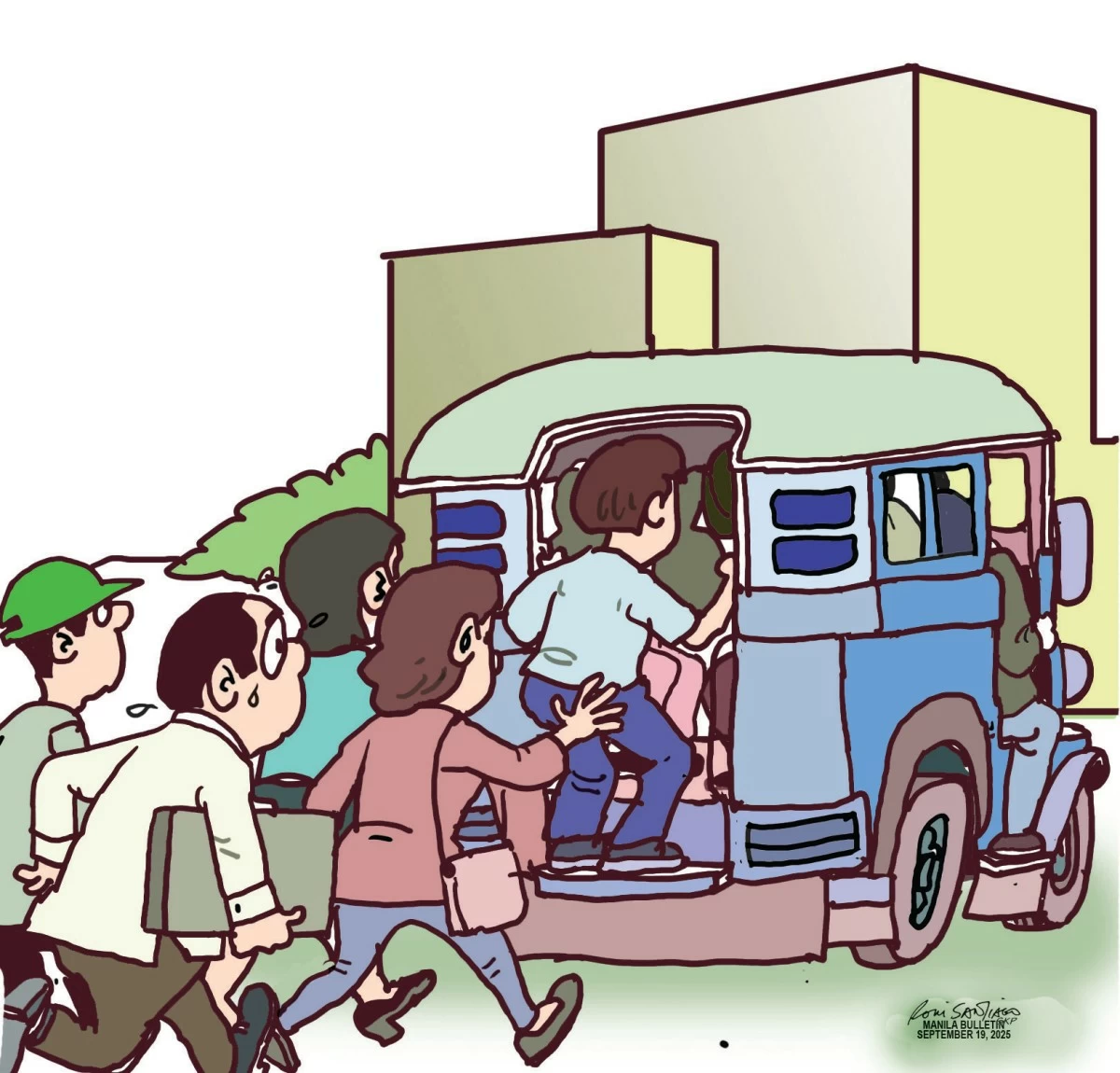
“Experience is the best teacher” is a timeless adage that has found a timely application in the latest directive from the Department of Transportation (DOTr).
Acting Transportation Secretary Giovanni Lopez has ordered all undersecretaries and assistant secretaries—along with top officials from attached agencies such as the LTO, LTFRB, LRTA, PNR, and MRT-3—to take public transportation at least once a week. The goal is to gather insights from the experiences of commuters and use those to propose improvements to our long-troubled transportation system.
The directive, which took effect on Sept. 17, came after Secretary Lopez’s own harrowing three-hour commute to his office—a trip he described as “like a war zone,” with passengers scrambling for a ride, and no system in sight. That day on the ground may have convinced him that too many transportation policies are made far from the realities they’re supposed to fix.
This is a well-intentioned and even commendable new policy, but it raises a troubling question: Why did it need to be a policy in the first place?
If one holds the reins of public transportation in this country, understanding the daily ordeal of commuters should be part of the job description. It is only through experiencing the clogged terminals, long lines, broken trains, unpredictable schedules, and the sheer physical and mental toll of commuting that our officials can truly grasp the gravity of the situation.
Every day, millions of Filipinos endure the exhausting, and often dangerous reality of commuting—waking at dawn, and lining up for hours. Many commuters spend two to three hours each way just to get to work or school. This isn't just inconvenient; it’s a productivity problem, a health concern, and a matter of human dignity.
Many of our transportation problems are not new. They persist not for lack of knowledge, but often for lack of urgency and political will. The disconnect between officials in air-conditioned offices and the riding public has led to piecemeal solutions and short-term fixes.
President Marcos has expressed no objection to the DOTr directive, describing it as “reasonable.” Reasonable, yes—but basic should be the more appropriate word. This kind of ground-level exposure should not be exceptional. It should be standard for anyone shaping public transport policy. Leadership by immersion is not a novel idea; it is simply good governance.
Of course, the true test lies not in whether these officials commute once a week, but in whether they listen—and more importantly act—on what they see, hear, and experience. Will they ride incognito or be flanked by aides and cameras? Will their recommendations lead to real reforms or just quarterly reports? The new directive requires the officials to submit proof of compliance, such as photos or tickets – which the public will likely see in social media. They will also be required to give recommendations on how to improve public transportation.
The Filipino commuting public doesn't need sympathy. They need systems that work. And they deserve leaders who know what it feels like when those systems fail.
Because in transportation—as in public service—experience isn’t just the best teacher. Sometimes, it’s the only one worth listening to.