






Manila Bulletin
 Business
Banking & Finance
AMLC hits again: Second freeze order targets more corrupt officials
Business
Banking & Finance
AMLC hits again: Second freeze order targets more corrupt officials
Business
Banking & Finance
AMLC hits again: Second freeze order targets more corrupt officials
AMLC hits again: Second freeze order targets more corrupt officials
Published Sep 19, 2025 07:50 pm


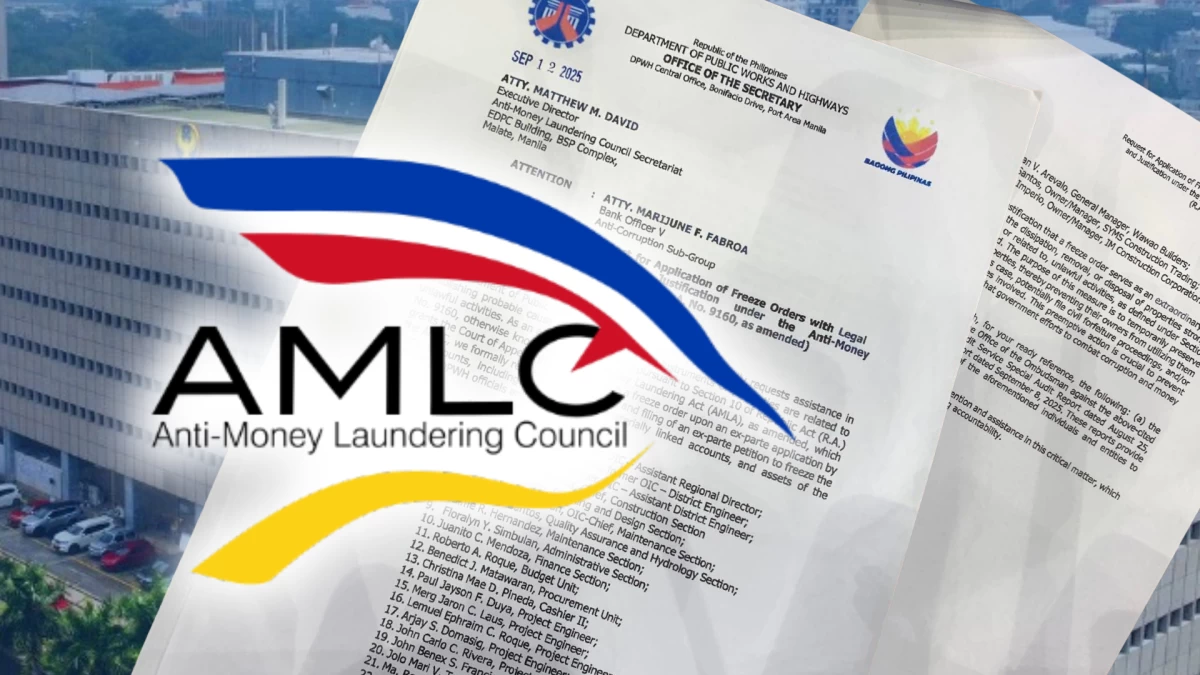
The Anti-Money Laundering Council (AMLC) has taken another step in its fight against corruption, securing a fresh freeze order to seize assets connected to the government’s flood control scandal.
In a statement, AMLC Executive Director Matthew M. David said that the order, issued Friday, Sept. 19, covers 592 bank accounts, 73 motor vehicles, 18 real properties, and three insurance policies.
The identities of the individuals were not disclosed by the AMLC. However, David said the assets belong to individuals and contractors suspected of involvement in irregular public works initiatives.
The scope of the freeze order follows an earlier, smaller directive issued days prior that froze 135 bank accounts and 27 insurance policies, underscoring the widening reach of the investigation.
According to David, the latest freeze order is a critical step toward the filing of criminal and civil forfeiture cases against those who have laundered public funds. The AMLC’s mandate is to trace, preserve, and recover assets derived from unlawful activities.
The freeze order is the latest development in a nationwide corruption controversy that has prompted separate investigations by the Senate and the administration of President Ferdinand Marcos Jr.
The scandal centers on allegations that billions of pesos allocated for flood mitigation projects were lost to “ghost” projects and substandard construction.
A Senate Blue Ribbon Committee probe has heard testimony from contractors who admitted to paying kickbacks to officials from the Department of Public Works and Highways (DPWH).
President Marcos has vowed to hold those responsible accountable, forming an independent commission to investigate and recover stolen funds.
The ongoing investigation comes at a crucial time for the Philippines, a country highly vulnerable to tropical storms and flooding. The public outcry over the misuse of funds intended for flood control has intensified as communities continue to suffer from the impacts of natural disasters.