






Manila Bulletin
 Business
Trade & Industry
Philippine exporters cut full-year sales outlook anew as tariff impact worsens
Business
Trade & Industry
Philippine exporters cut full-year sales outlook anew as tariff impact worsens
Business
Trade & Industry
Philippine exporters cut full-year sales outlook anew as tariff impact worsens
Philippine exporters cut full-year sales outlook anew as tariff impact worsens
Published Sep 18, 2025 10:38 am
|
Updated Sep 18, 2025 04:29 pm


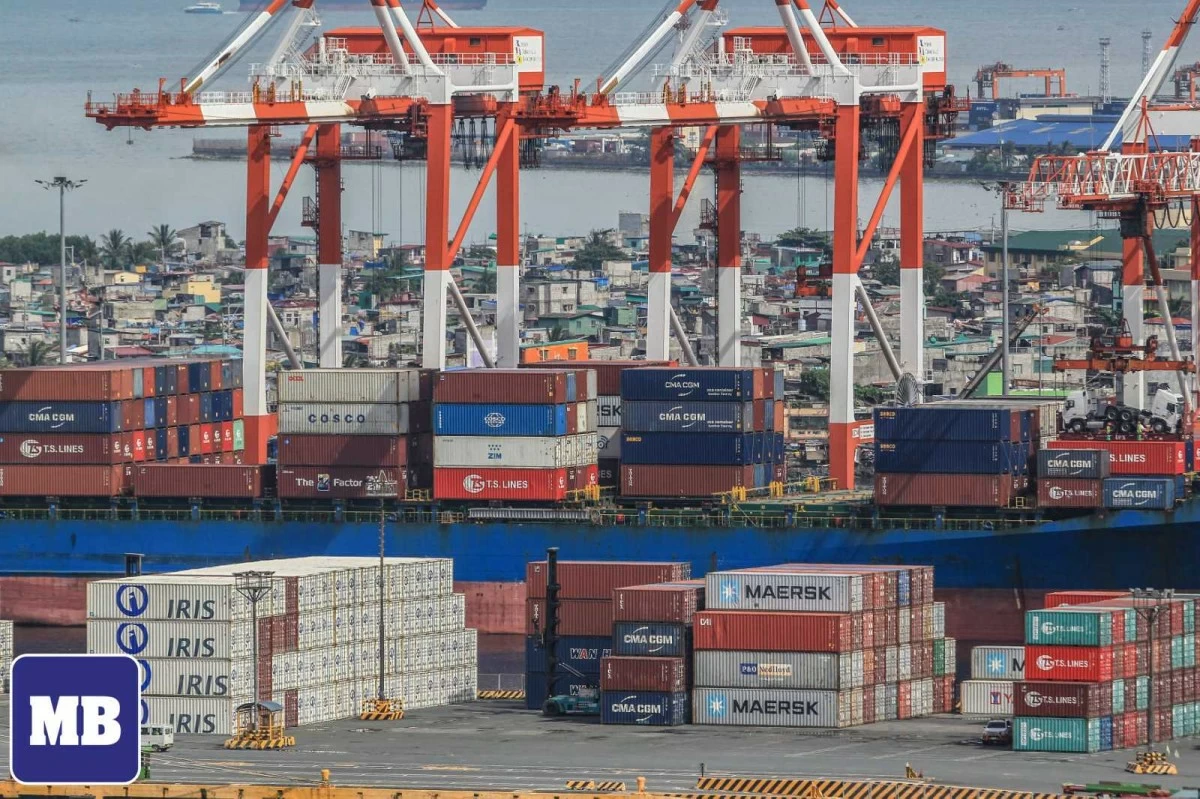
(Manila Bulletin file photo)
The country’s leading group of exporters is reducing its forecast for exports of goods and services this year to a new low, driven by the escalating impact of United States (US) tariffs and exacerbated by government intervention that continues to lag behind the industry’s most urgent needs.
Philippine Exporters Confederation Inc. (Philexport) president Sergio Ortiz-Luis Jr. said the new target for the country’s exports is now between $105 billion and $110 billion.
Ortiz-Luis said last month that the industry is targeting overseas sales to reach $110 billion this year, although he had admitted that it could be out of reach.
The revised 2025 target is significantly lower than the government’s $163.6-billion projection under the Philippine Export Development Plan (PEDP), which was the export sector’s original target.
Philexport later shifted to the full-year estimate under the Philippine Development Plan (PDP) 2023-2028 of $113.42 billion, but this is now also out of reach.
The group’s adjustment comes as the impact of the 19-percent tariff rate on goods coming to the US, imposed last Aug. 7, continues to reverberate across the industry.
Ortiz-Luis said some exporters in the micro, small, and medium enterprise (MSME) sector have decided to stop sending their goods to the US altogether due to higher costs from the tariffs.
Meanwhile, other exporters are temporarily suspending shipments to the US until uncertainties surrounding US President Donald Trump’s policies are resolved.
Citing a study from the University of the Philippines’ Center for Integrative and Development Studies (UP CIDS), Ortiz-Luis said the country could lose $2.2 billion in export revenues in the second half of the year due to US tariffs.
He said the most vulnerable to US tariffs are labor-intensive exports such as garments, leather goods, wearables, furniture, and coconut-based products.
As it stands, electronics such as semiconductors—which account for half of the Philippines’ goods exports to the US—are exempted from the new tariff policy.
The latest data from the Philippine Statistics Authority (PSA) showed that merchandise exports from January to July grew by nearly 14 percent to $48.62 billion from $42.69 billion during the same period last year.
In July, exports posted a 17-percent growth to $7.34 billion from $6.25 billion in the same month in 2024. The electronics sector was the primary growth engine, contributing $3.92 billion that month.
The surge in exports was largely attributed to front-loading as US importers accelerated purchases of goods ahead of the implementation of the 19-percent tariff rate.
Despite exports to the US accounting for only around 15 percent of the country’s total exports, Ortiz-Luis expects a substantial slowdown in the second half of the year as the full impact of higher taxes becomes apparent.
He said this dim outlook could be even worse once the tariff threat against semiconductors materializes, which could “kill” the country’s top exports.
Trump is planning to impose as much as 300-percent tariffs on semiconductor imports, with exceptions for companies that manufacture in the US or have committed to doing so.
“Unless something positive comes, the slowdown in the US will continue. Hopefully, we can find alternative markets. Unfortunately, we don’t have the momentum to find other markets since there are no funds,” Ortiz-Luis said in an interview.
Ortiz-Luis bluntly stated that the government’s supposed assistance to exporters hit by US tariffs is just “lip service.”
The Philexport chief noted that exporters are struggling to explore other markets since the government’s assistance is usually intangible, offering mere “guidance,” for instance.
He added that the limited support makes it difficult for local exporters to participate in international trade shows, hindering their ability to broaden their market access.
As such, he urged the government to increase the Department of Trade and Industry’s (DTI) funding for next year to at least ₱20 billion, from the current proposal of ₱9.9 billion, to strengthen its efforts in supporting the export sector.
The DTI’s Exports and Investments Development Program has been earmarked with ₱962 million for 2026, which will be directed toward efforts to help “strengthen Philippine exports.”
Trade Secretary Cristina Roque earlier floated the prospect of launching a loan facility to cushion the impact of reciprocal tariffs on exporters, ranging from MSMEs to big corporations.
But Ortiz-Luis noted that such a program is not sustainable given the limited lending budget of the DTI’s financing arm, Small Business (SB) Corp., which is around ₱11.5 billion.
He argued that the government often treats funds as expenses rather than investments, stressing that the true measure of success for loans should be job creation and industry growth.
He also said that the government’s limited support stands in contrast with other Southeast Asian countries, which have policies that directly support the export sector.