ADVERTISEMENT

Mayor Isko turns over Manila drainage master plan to PBBM

Published Sep 18, 2025 02:44 pm
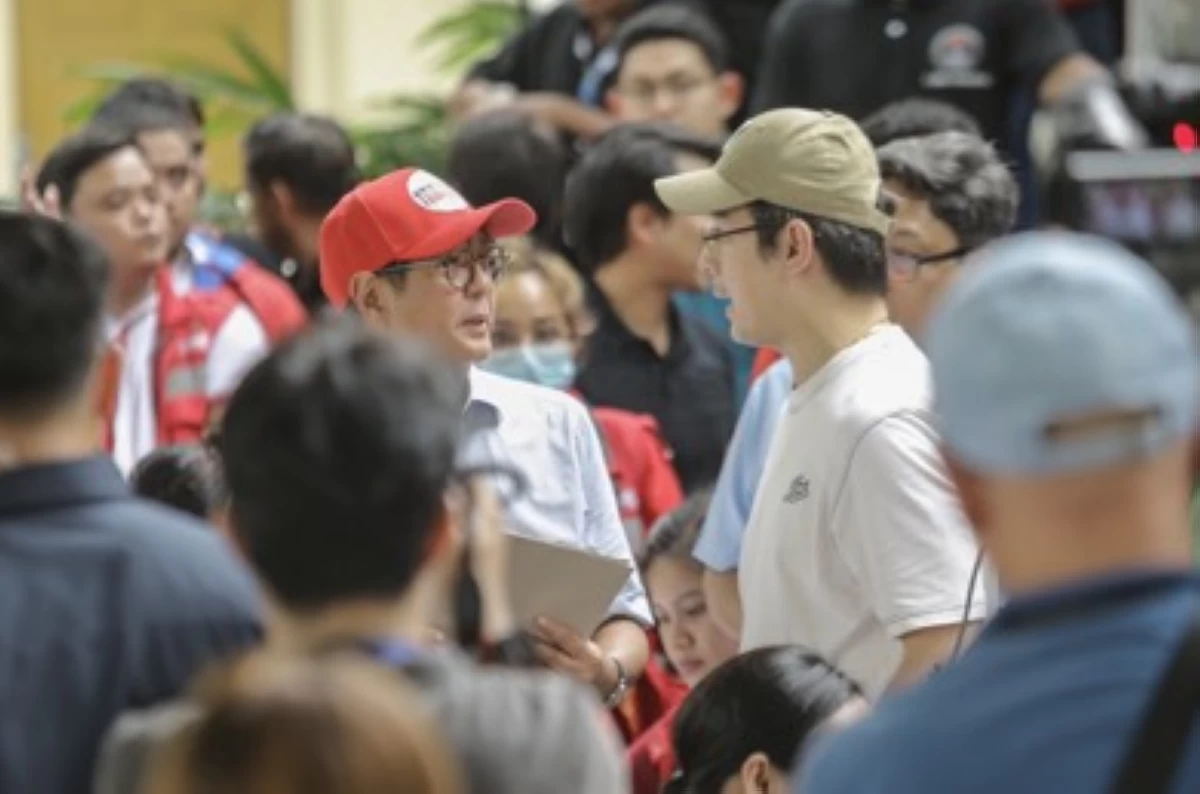
President Marcos and Mayor Domagoso (Photo courtesy of Manila PIO)
Manila City Mayor Francisco “Isko Moreno" Domagoso on Thursday, Sept. 18, formally turned over the city’s Drainage Master Plan to President Ferdinand “Bongbong” Marcos Jr., in a significant step toward addressing the capital’s long-standing flooding problem.
The handover, which took place during President Marcos’s visit to Antonio Villegas High School in Tondo, also included the city’s operational plan for the upcoming Sept. 21 mass protests. The event doubled as a relief mission for families displaced by a recent fire in Barangay 105, Happyland.
“This is not just fulfilling our duty to ensure the safety and security of the people. This is also our legacy to the next generations of Batang Manila,” Domagoso stressed, calling for quick action on the drainage plan.
The P140-billion master plan, which Domagoso initiated in 2021 during his first term and completed ahead of his return to City Hall in 2025, outlines a comprehensive, science-based strategy to resolve Manila’s chronic flooding. It integrates engineering solutions, environmental management, and infrastructure coordination to improve flood resilience in the city.
Domagoso explained that the plan offers a two-pronged approach: catchment upgrades and tunnel systems aimed at increasing capacity, speeding up stormwater flow, and reducing flood risks in critical areas.
The catchment strategy includes widening pipes, building new culverts, rehabilitating manholes, and upgrading or adding pumping stations. According to the city's Public Information Office, Manila currently operates 24 pumping stations and plans to add 15 more.
"Works will start in the worst-hit catchments and near hospitals, schools, transport hubs, and government offices. Projects will follow a downstream-first order so outlets and pumps are ready before upstream lines connect," the PIO noted.
The plan also includes constructing detention tanks and deep tunnels to direct stormwater to receiving bodies. Large tunnel segments will use boring machines, while denser areas will rely on microtunneling to minimize disruption at street level.
"Projects will be prioritized using the following criteria: how often and how badly an area suffers from flooding; how close it is to critical facilities; whether downstream capacity is ready; expected economic and social benefit; and how fast and feasible the work is," Domagoso said, noting that this approach prevents bottlenecks and ensures that early investments deliver immediate impact.
Alongside long-term solutions, short-term mitigation measures are already in place. These include repairing and re-energizing existing pumping stations, declogging drains and manholes, fixing drainage choke points, and rehabilitating catch basins.
The City Planning and Development Office (CPDO) is also preparing stormwater management plans, integrating low-impact development measures and updating zoning policies to support sustainable drainage infrastructure.
A community-based drainage risk management program will run parallel to infrastructure efforts. The Manila City Disaster Risk Reduction and Management Office (CDRRMO) will train residents to detect early signs of drainage failure and report them through streamlined channels to allow quicker maintenance and emergency readiness.
Domagoso emphasized that the plan clearly defines implementation roles across national, regional, and local levels. At the national level, the DPWH Unified Project Management Office (UPMO) will lead major infrastructure and flood control projects, while the DPWH-NCR will align regional initiatives and provide support to district offices.
The MMDA’s Flood Control and Sewerage Management Office (FCSMO) will coordinate flood control operations in Metro Manila and help enforce both structural and non-structural interventions.
Locally, Manila’s Department of Engineering and Public Works (DEPW), Department of Public Services (DPS), CPDO, and MCDRRMO will oversee engineering works, waste management, zoning, community programs, and emergency response.
On August 28, the Manila City Council officially adopted the Drainage Master Plan as a “strategic infrastructure framework for climate resilience and flood control.”
During the same event, Domagoso also presented “Oplan Pagmamahal sa Bayan,” the city’s public safety and service plan for the Sept. 21 demonstrations. The plan includes deployment of the Incident Command System and mobilization of personnel across health, disaster response, traffic, and public service sectors in coordination with the Manila Police District, to ensure safety and uphold protest rights.
President Marcos directed the city to align the drainage plan with ongoing efforts by DPWH and MMDA for a unified flood mitigation strategy.
“The City Government of Manila stands ready to work with your administration in pursuit of sustainable development and the well-being of our people,” Domagoso told the President.
Also present during the visit were Vice Mayor Chi Atienza and Congressman Ernix Dionisio, who joined in distributing aid to over 2,253 families affected by the recent fire in Happyland.

Related Tags

metronews Manila Mayor Francisco \"Isko Moreno\" Domagoso
ADVERTISEMENT
.most-popular .layout-ratio{ padding-bottom: 79.13%; } @media (min-width: 768px) and (max-width: 1024px) { .widget-title { font-size: 15px !important; } }

{{ articles_filter_1561_widget.title }}

.most-popular .layout-ratio{ padding-bottom: 79.13%; } @media (min-width: 768px) and (max-width: 1024px) { .widget-title { font-size: 15px !important; } }

{{ articles_filter_1562_widget.title }}

.most-popular .layout-ratio{ padding-bottom: 79.13%; } @media (min-width: 768px) and (max-width: 1024px) { .widget-title { font-size: 15px !important; } }

{{ articles_filter_1563_widget.title }}

{{ articles_filter_1564_widget.title }}

.mb-article-details { position: relative; } .mb-article-details .article-body-preview, .mb-article-details .article-body-summary{ font-size: 17px; line-height: 30px; font-family: "Libre Caslon Text", serif; color: #000; } .mb-article-details .article-body-preview iframe , .mb-article-details .article-body-summary iframe{ width: 100%; margin: auto; } .read-more-background { background: linear-gradient(180deg, color(display-p3 1.000 1.000 1.000 / 0) 13.75%, color(display-p3 1.000 1.000 1.000 / 0.8) 30.79%, color(display-p3 1.000 1.000 1.000) 72.5%); position: absolute; height: 200px; width: 100%; bottom: 0; display: flex; justify-content: center; align-items: center; padding: 0; } .read-more-background a{ color: #000; } .read-more-btn { padding: 17px 45px; font-family: Inter; font-weight: 700; font-size: 18px; line-height: 16px; text-align: center; vertical-align: middle; border: 1px solid black; background-color: white; } .hidden { display: none; }
function initializeAllSwipers() { // Get all hidden inputs with cms_article_id document.querySelectorAll('[id^="cms_article_id_"]').forEach(function (input) { const cmsArticleId = input.value; const articleSelector = '#article-' + cmsArticleId + ' .body_images'; const swiperElement = document.querySelector(articleSelector); if (swiperElement && !swiperElement.classList.contains('swiper-initialized')) { new Swiper(articleSelector, { loop: true, pagination: false, navigation: { nextEl: '#article-' + cmsArticleId + ' .swiper-button-next', prevEl: '#article-' + cmsArticleId + ' .swiper-button-prev', }, }); } }); } setTimeout(initializeAllSwipers, 3000); const intersectionObserver = new IntersectionObserver( (entries) => { entries.forEach((entry) => { if (entry.isIntersecting) { const newUrl = entry.target.getAttribute("data-url"); if (newUrl) { history.pushState(null, null, newUrl); let article = entry.target; // Extract metadata const author = article.querySelector('.author-section').textContent.replace('By', '').trim(); const section = article.querySelector('.section-info ').textContent.replace(' ', ' '); const title = article.querySelector('.article-title h1').textContent; // Parse URL for Chartbeat path format const parsedUrl = new URL(newUrl, window.location.origin); const cleanUrl = parsedUrl.host + parsedUrl.pathname; // Update Chartbeat configuration if (typeof window._sf_async_config !== 'undefined') { window._sf_async_config.path = cleanUrl; window._sf_async_config.sections = section; window._sf_async_config.authors = author; } // Track virtual page view with Chartbeat if (typeof pSUPERFLY !== 'undefined' && typeof pSUPERFLY.virtualPage === 'function') { try { pSUPERFLY.virtualPage({ path: cleanUrl, title: title, sections: section, authors: author }); } catch (error) { console.error('ping error', error); } } // Optional: Update document title if (title && title !== document.title) { document.title = title; } } } }); }, { threshold: 0.1 } ); function showArticleBody(button) { const article = button.closest("article"); const summary = article.querySelector(".article-body-summary"); const body = article.querySelector(".article-body-preview"); const readMoreSection = article.querySelector(".read-more-background"); // Hide summary and read-more section summary.style.display = "none"; readMoreSection.style.display = "none"; // Show the full article body body.classList.remove("hidden"); } document.addEventListener("DOMContentLoaded", () => { let loadCount = 0; // Track how many times articles are loaded const offset = [1, 2, 3, 4, 5, 6, 7, 8, 9, 10]; // Offset values const currentUrl = window.location.pathname.substring(1); let isLoading = false; // Prevent multiple calls if (!currentUrl) { console.log("Current URL is invalid."); return; } const sentinel = document.getElementById("load-more-sentinel"); if (!sentinel) { console.log("Sentinel element not found."); return; } function isSentinelVisible() { const rect = sentinel.getBoundingClientRect(); return ( rect.top < window.innerHeight && rect.bottom >= 0 ); } function onScroll() { if (isLoading) return; if (isSentinelVisible()) { if (loadCount >= offset.length) { console.log("Maximum load attempts reached."); window.removeEventListener("scroll", onScroll); return; } isLoading = true; const currentOffset = offset[loadCount]; window.loadMoreItems().then(() => { let article = document.querySelector('#widget_1690 > div:nth-last-of-type(2) article'); intersectionObserver.observe(article) loadCount++; }).catch(error => { console.error("Error loading more items:", error); }).finally(() => { isLoading = false; }); } } window.addEventListener("scroll", onScroll); });

Sign up by email to receive news.