ADVERTISEMENT

FAO supports 'Benteng Bigas' program but urges long-term solutions for farmers

Published Sep 18, 2025 03:19 pm
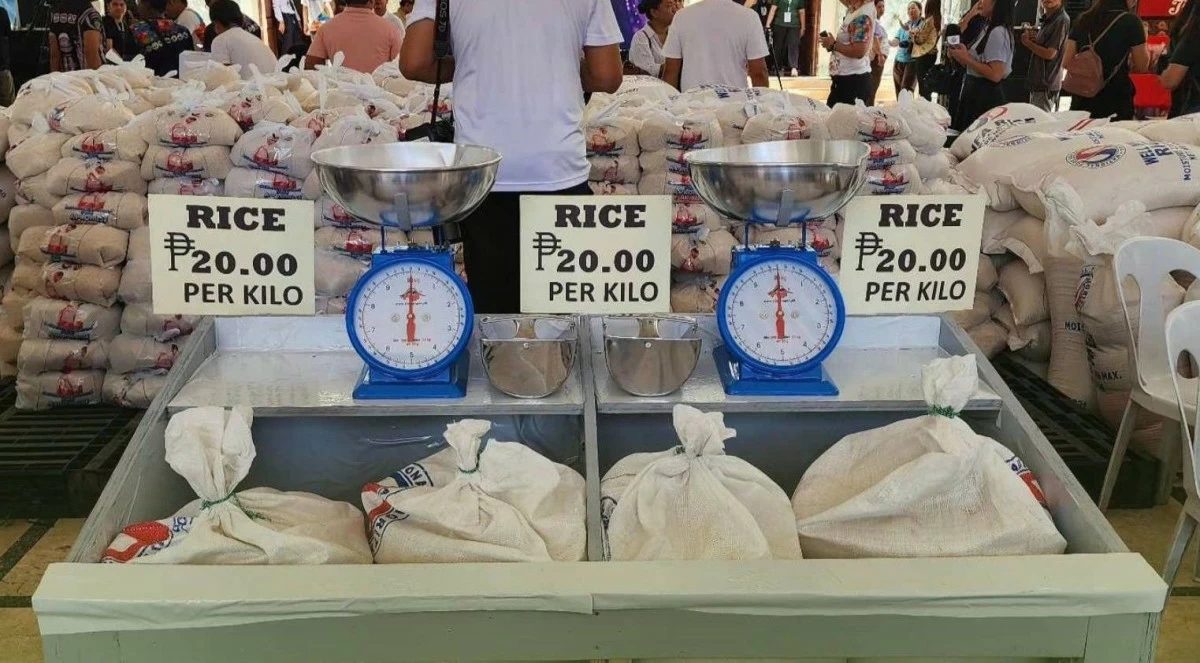
The Food and Agriculture Organization (FAO) commended the Philippine government for introducing the ₱20-per-kilo rice program, which expands access to cheaper rice for underprivileged sectors, but warned that it could threaten farmers’ livelihoods if left unchecked.
FAO representative in the Philippines Lionel Dabbadie said the global organization supports the program as it promotes both food security and poverty eradication. However, he noted that this should be only for the short term.
Launched last April, the Department of Agriculture (DA) rolled out the Benteng Bigas Meron (BBM) Na rice program in order to fulfill the campaign promise of President Ferdinand “Bongbong” Marcos Jr.
The cheaper rice is available to the countrys most vulnerable sectors such as senior citizens, persons with disabilities (PWDs), solo parents, Pantawid Pamilyang Pilipino Program (4Ps) beneficiaries, minimum wage workers, and jeepney and tricycle drivers.
“We have to be realistic. In the Philippines, you have many people who are very poor and, unfortunately, they cannot afford to buy expensive food... So everything that is being done, I think, is good. Thats at least for the short term,” Dabbadie said in an interview.
“But it is not sufficient because low price means low price paid to the farmers,” he added.
Dabbadie noted that rice farmers, who are among the programs beneficiaries, belong to the poorest sectors in the country.
“If you dont give cheap food to the people, they will be starving. But at the same time, it has a cost,” he said. “I would prefer a high price for the farmers.”
State-run Food Terminal Inc. (FTI) is tasked with procuring rice from the buffer stocks of the National Food Authority (NFA), which are sourced from local farmers.
Farmers group Samahang Industriya ng Agrikultura (SINAG) previously criticized NFA for only buying as low as two percent of the countrys total palay, or unmilled rice, production.
This reportedly influenced farmgate prices to fall to as low as ₱8 per kilo in certain areas, well below the production cost of ₱12 to ₱14 per kilo.
Dabbadie said the government should consider programs that promote the production of high-quality produce, which could help boost farmers’ incomes.
“What we are pushing for is developing higher quality because many people can afford to pay the right price for their food... provided that there is a quality. And today, the quality is not always available when you look at the products,” he said.
FAO, a specialized agency under the United Nations (UN), is the leading organization that spearheads international efforts to curb hunger and strengthen food security.
In the Philippines, FAO has been promoting rural entrepreneurship to make farmers well-grounded in vital areas beyond production.
Farmers incomes are typically limited due to difficulties in selling their products. It does not help that when buyers come to their farms, they often have no choice but to sell at whatever price is offered.
“What we want to do is to change this, and we change this by first building the skills, the financial literacy, the entrepreneurship, the management literacy, and also the marketing literacy,” said Dabbadie.
“When you train the people and we capacitate them on accessing higher-value products, then you can really transform the lives of the people,” he continued.
Further, Dabbadie said the government could look into leveraging online platforms so farmers can sell directly to consumers, bypassing the middleman to lower costs.
ADVERTISEMENT
.most-popular .layout-ratio{ padding-bottom: 79.13%; } @media (min-width: 768px) and (max-width: 1024px) { .widget-title { font-size: 15px !important; } }

{{ articles_filter_1561_widget.title }}

.most-popular .layout-ratio{ padding-bottom: 79.13%; } @media (min-width: 768px) and (max-width: 1024px) { .widget-title { font-size: 15px !important; } }

{{ articles_filter_1562_widget.title }}

.most-popular .layout-ratio{ padding-bottom: 79.13%; } @media (min-width: 768px) and (max-width: 1024px) { .widget-title { font-size: 15px !important; } }

{{ articles_filter_1563_widget.title }}

{{ articles_filter_1564_widget.title }}

.mb-article-details { position: relative; } .mb-article-details .article-body-preview, .mb-article-details .article-body-summary{ font-size: 17px; line-height: 30px; font-family: "Libre Caslon Text", serif; color: #000; } .mb-article-details .article-body-preview iframe , .mb-article-details .article-body-summary iframe{ width: 100%; margin: auto; } .read-more-background { background: linear-gradient(180deg, color(display-p3 1.000 1.000 1.000 / 0) 13.75%, color(display-p3 1.000 1.000 1.000 / 0.8) 30.79%, color(display-p3 1.000 1.000 1.000) 72.5%); position: absolute; height: 200px; width: 100%; bottom: 0; display: flex; justify-content: center; align-items: center; padding: 0; } .read-more-background a{ color: #000; } .read-more-btn { padding: 17px 45px; font-family: Inter; font-weight: 700; font-size: 18px; line-height: 16px; text-align: center; vertical-align: middle; border: 1px solid black; background-color: white; } .hidden { display: none; }
function initializeAllSwipers() { // Get all hidden inputs with cms_article_id document.querySelectorAll('[id^="cms_article_id_"]').forEach(function (input) { const cmsArticleId = input.value; const articleSelector = '#article-' + cmsArticleId + ' .body_images'; const swiperElement = document.querySelector(articleSelector); if (swiperElement && !swiperElement.classList.contains('swiper-initialized')) { new Swiper(articleSelector, { loop: true, pagination: false, navigation: { nextEl: '#article-' + cmsArticleId + ' .swiper-button-next', prevEl: '#article-' + cmsArticleId + ' .swiper-button-prev', }, }); } }); } setTimeout(initializeAllSwipers, 3000); const intersectionObserver = new IntersectionObserver( (entries) => { entries.forEach((entry) => { if (entry.isIntersecting) { const newUrl = entry.target.getAttribute("data-url"); if (newUrl) { history.pushState(null, null, newUrl); let article = entry.target; // Extract metadata const author = article.querySelector('.author-section').textContent.replace('By', '').trim(); const section = article.querySelector('.section-info ').textContent.replace(' ', ' '); const title = article.querySelector('.article-title h1').textContent; // Parse URL for Chartbeat path format const parsedUrl = new URL(newUrl, window.location.origin); const cleanUrl = parsedUrl.host + parsedUrl.pathname; // Update Chartbeat configuration if (typeof window._sf_async_config !== 'undefined') { window._sf_async_config.path = cleanUrl; window._sf_async_config.sections = section; window._sf_async_config.authors = author; } // Track virtual page view with Chartbeat if (typeof pSUPERFLY !== 'undefined' && typeof pSUPERFLY.virtualPage === 'function') { try { pSUPERFLY.virtualPage({ path: cleanUrl, title: title, sections: section, authors: author }); } catch (error) { console.error('ping error', error); } } // Optional: Update document title if (title && title !== document.title) { document.title = title; } } } }); }, { threshold: 0.1 } ); function showArticleBody(button) { const article = button.closest("article"); const summary = article.querySelector(".article-body-summary"); const body = article.querySelector(".article-body-preview"); const readMoreSection = article.querySelector(".read-more-background"); // Hide summary and read-more section summary.style.display = "none"; readMoreSection.style.display = "none"; // Show the full article body body.classList.remove("hidden"); } document.addEventListener("DOMContentLoaded", () => { let loadCount = 0; // Track how many times articles are loaded const offset = [1, 2, 3, 4, 5, 6, 7, 8, 9, 10]; // Offset values const currentUrl = window.location.pathname.substring(1); let isLoading = false; // Prevent multiple calls if (!currentUrl) { console.log("Current URL is invalid."); return; } const sentinel = document.getElementById("load-more-sentinel"); if (!sentinel) { console.log("Sentinel element not found."); return; } function isSentinelVisible() { const rect = sentinel.getBoundingClientRect(); return ( rect.top < window.innerHeight && rect.bottom >= 0 ); } function onScroll() { if (isLoading) return; if (isSentinelVisible()) { if (loadCount >= offset.length) { console.log("Maximum load attempts reached."); window.removeEventListener("scroll", onScroll); return; } isLoading = true; const currentOffset = offset[loadCount]; window.loadMoreItems().then(() => { let article = document.querySelector('#widget_1690 > div:nth-last-of-type(2) article'); intersectionObserver.observe(article) loadCount++; }).catch(error => { console.error("Error loading more items:", error); }).finally(() => { isLoading = false; }); } } window.addEventListener("scroll", onScroll); });

Sign up by email to receive news.