






Manila Bulletin
 Business
Trade & Industry
WTO's first environmental accord enters into force, banning subsidies for illegal fishing
Business
Trade & Industry
WTO's first environmental accord enters into force, banning subsidies for illegal fishing
Business
Trade & Industry
WTO's first environmental accord enters into force, banning subsidies for illegal fishing
WTO's first environmental accord enters into force, banning subsidies for illegal fishing
Published Sep 17, 2025 12:45 pm
|
Updated Sep 17, 2025 03:47 pm


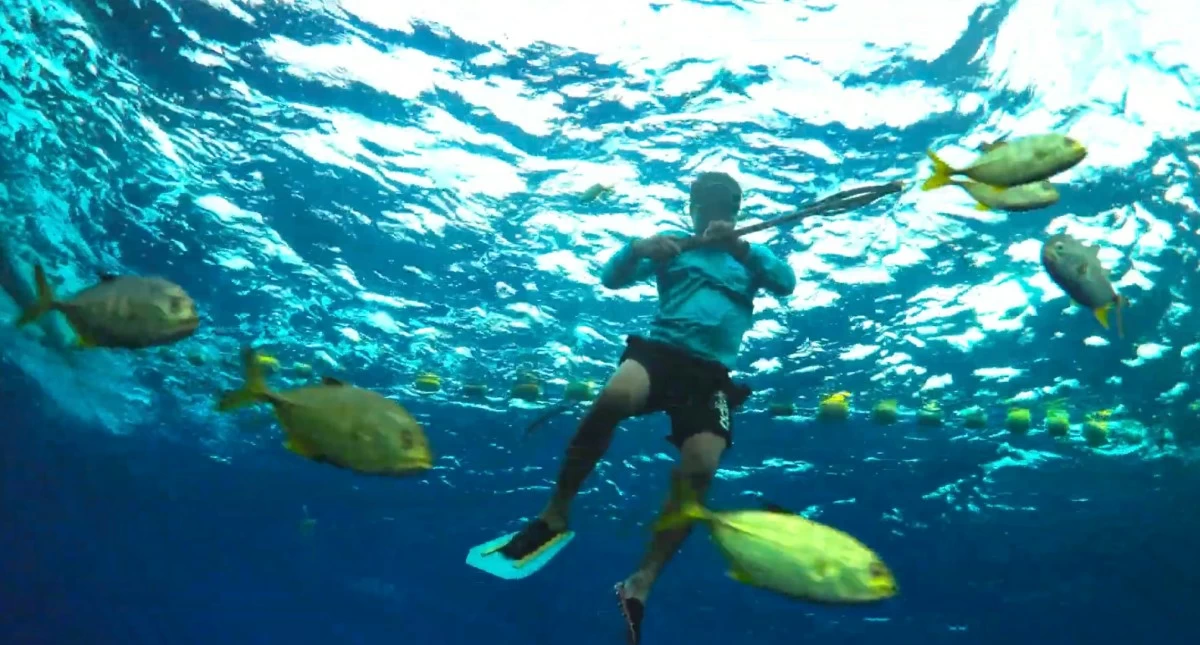
AN HONEST LIVING Fishing is the main source of livelihood in 'Food Delivery'
The Philippines welcomed the entry into force of a landmark agreement that aims to curb harmful subsidies contributing to illegal, unreported, and unregulated (IUU) fishing—a measure expected to reverse the widespread depletion of marine resources.
The Agreement on Fisheries Subsidies, embodied under the World Trade Organization (WTO), was officially in effect on Monday, Sept. 15, after 112 WTO members deposited their instruments of acceptance.
The agreement is the first WTO agreement focusing on environmental sustainability, becoming only the second multilateral agreement reached at the international trade body since its inception in 1995.
The Philippines ratified the fisheries subsidy agreement in February of last year, becoming the 70th country to do so, as part of its commitment to help address concerns over IUU fishing.
Trade Secretary Cristina Roque said the entry into force of the historic agreement underscores the importance of global collaboration in addressing the escalating challenges.
For the Philippines, where fisheries remain vital to livelihood and food security, Roque said the agreement is central to efforts in protecting marine resources and promoting fair competition for small-scale and artisanal fishers
“It also underscores the country’s strong commitment to promoting ocean sustainability and ensuring that fisheries subsidies support long-term economic growth and environmental resilience,” she said.
The Agreement on Fisheries Subsidies, at its core, prohibits governments from spending billions in subsidies that directly support IUU fishing.
It likewise bans support for fishing overfished stocks, while also ending subsidies for fishing on unregulated high seas.
According to the WTO, governments provide $35 billion annually for fishing activities. Of which, around $22 billion per year is considered to be harmful, contributing to the depletion of marine resources.
The global trade body said this led to the 35.5 percent overfishing of global fish stocks in 2021, compared to just 10 percent in 1974.
The agreement is complemented by the WTO Fish Fund, a funding mechanism that provides technical assistance and capacity-building to developing and least developed economies, helping them participate more effectively in the new obligations.
To date, 17 WTO members have pledged more than $18 million to the WTO Fish Fund.
Roque said access to these funds would help the Philippines ensure that reforms would contribute to the sustainable use of marine resources, long-term food security, and competitiveness in global seafood markets.
“These efforts further reflect the Philippines’ determination to align domestic fisheries policies with its international commitments,” she said.
The Philippines was earlier identified at the 12th Ministerial Conference in 2022, where the agreement was initially adopted, as a priority beneficiary of the WTO Fish Fund.
The country and other potential beneficiaries may apply for grants of up to $50,000 and larger project grants of up to $300,000.
Such funding can be utilized for institutional reforms, data collection, stock assessments, training and strengthened monitoring, control and surveillance systems.
The Philippines has also been appointed to the Fish Fund Steering Committee, giving it a direct role in guiding how resources are deployed to ensure effective implementation.
WTO Director-General Ngozi Okonjo-Iweala stated that the official integration of the agreement into the WTO's legal framework occurs at a critical time, when the global trading system is facing setbacks amid rising protectionism.
“The Agreement on Fisheries Subsidies sends a powerful signal that WTO members can work together in a spirit of cooperation and shared responsibility to deliver solutions to global challenges,” said Okonjo-Iweala in a statement.
From 112 countries, the official expects all 166 WTO members to complete their acceptances to the agreement by the first quarter of 2026.
UN Conference on Trade and Development (UNCTAD) Secretary-General Rebeca Grynspan added that the agreement represents the combined strength of multilateralism and political will.
“These nations have chosen cooperation over isolation, sustainability over depletion, future over present,” Grynspan said.
The fisheries subsidy agreement is seen as complementing wider efforts, such as the Agreement on the Conservation and Sustainable Use of Marine Biological Diversity of Areas Beyond National Jurisdiction (BBNJ Agreement), which is still undergoing ratification.
Last week, the Department of Agriculture (DA) urged the Senate’s concurrence on the matter to finalize the country’s instrument of ratification, which will be deposited with the UN Secretary-General.
A total of 60 states must ratify the BBNJ Agreement for the treaty to enter into force before Sept. 20.
To date, 58 states have deposited their instruments of ratification.