






Manila Bulletin
 Philippines
National
Marcos signs law allowing early disaster response under 'state of imminent disaster'
Philippines
National
Marcos signs law allowing early disaster response under 'state of imminent disaster'
Philippines
National
Marcos signs law allowing early disaster response under 'state of imminent disaster'
Marcos signs law allowing early disaster response under 'state of imminent disaster'
Published Sep 17, 2025 03:28 pm


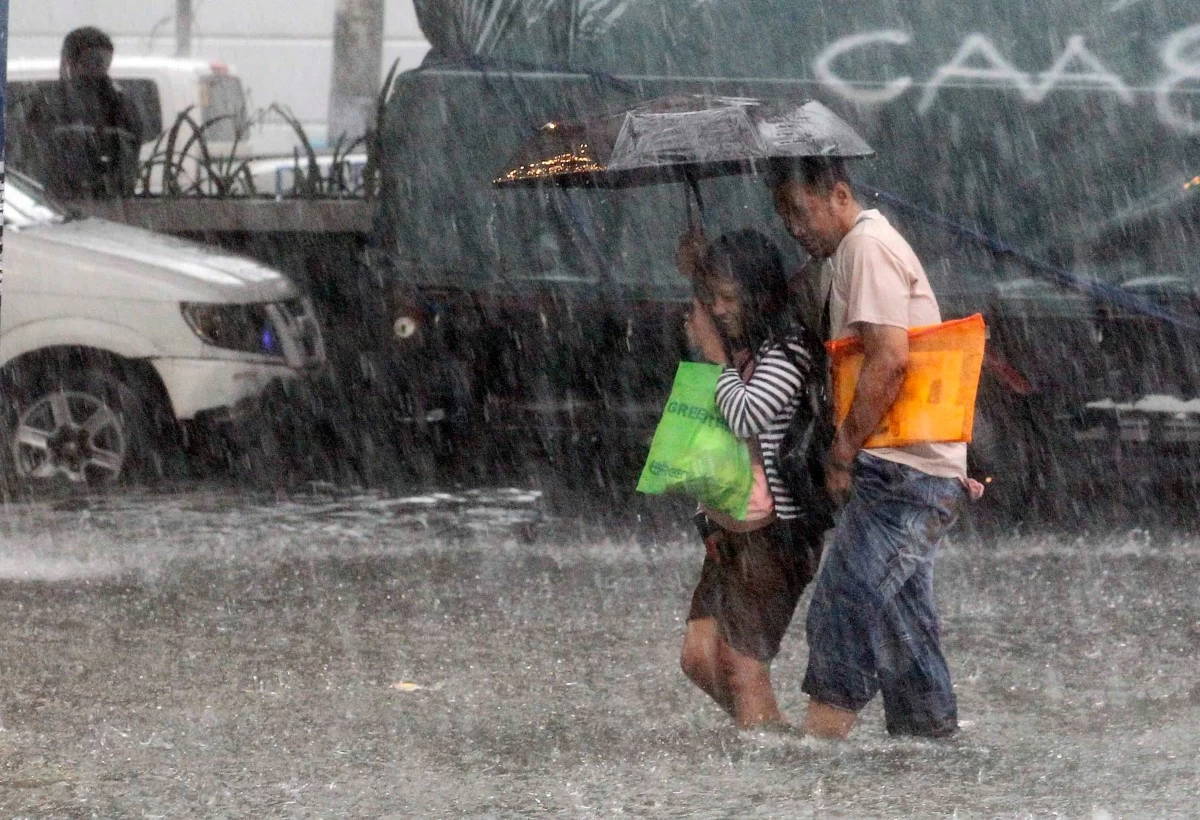
Pedestrians brave knee-deep floodwaters caused by heavy rains along Taft Avenue in Manila on Aug. 22, 2025. (Mark Balmores/MANILA BULLETIN/File)
President Marcos has signed into law Republic Act 12287, or the Declaration of State of Imminent Disaster Act, creating a mechanism that empowers the government to act before a calamity strikes.
The measure, signed by Marcos on Sept. 12, ensures that the government can act before catastrophe strikes, rather than only after damage is done.
Based on the law, the President may issue such a declaration upon recommendation of the National Disaster Risk Reduction and Management Council (NDRRMC) or by local chief executives upon advice of regional councils.
The declaration covers hazards such as floods, typhoons, droughts, heat or cold waves, and storm surges when these are projected to cause severe impacts.
A state of imminent disaster is based on a pre-disaster risk assessment, which must show highly probable catastrophic effects and at least three to five days of lead time for the government to prepare.
The declaration is lifted once the hazard occurs or when updated forecasts no longer meet the criteria.
Anticipatory measures
Upon declaration, disaster risk reduction councils at the national, regional, and local levels are authorized to carry out anticipatory actions within the lead time. These include issuing public advisories, mobilizing inter-agency response teams, and prepositioning relief goods.
Authorities may also enforce pre-emptive or forced evacuations, deploy accredited volunteers, and roll out social amelioration programs for indigent and vulnerable groups.
Contingency measures may be taken to shield agricultural production and food supply, while technical support may be extended to protect public health and safety.
The law specifies that anticipatory funds should be disbursed immediately and proportionately, based on the severity and extent of the forecasted hazard.
Funding sources
Local governments are required to integrate anticipatory action measures into their Local Disaster Risk Reduction and Management (DRRM) Plans, funded by their Local DRRM Funds and unspent Special Trust Funds.
National government agencies must also allocate portions of their budgets for anticipatory measures, while the National DRRM Fund may be tapped as well.
If the predicted hazard does not occur, unused funds will revert to the Special Trust Fund for LGUs or to the National Treasury for agencies.
Relief goods already procured must be stored by the Department of Social Welfare and Development (DSWD) or the concerned local social welfare offices.
Accountability provisions
The law penalizes the malicious spread of false disaster information and the manipulation of assessment reports to justify an improper declaration of a state of imminent disaster.
Offenders face fines ranging from P50,000 to P500,000, imprisonment of six to 12 years, and perpetual disqualification from public office if they are government officials.
Oversight
A Congressional Oversight Committee composed of members from both houses of Congress will monitor the law’s implementation.
The NDRRMC, through its chairperson, is tasked to draft implementing rules and regulations within 60 days.
The measure takes effect 15 days after publication in the Official Gazette or in a newspaper of general circulation.