






Manila Bulletin
 Lifestyle
Health and Wellness
What is the role of scientists in the health of the nation?
Lifestyle
Health and Wellness
What is the role of scientists in the health of the nation?
Lifestyle
Health and Wellness
What is the role of scientists in the health of the nation?
What is the role of scientists in the health of the nation?
How Maria Rosario Singh-Vergeire's science-based approach saved lives during the pandemic
Published Sep 15, 2025 01:02 am


At A Glance
- If there is anything I learned during the Covid-19 pandemic, it is that policymakers need guidance from technical experts to improve the chances of a successful response.
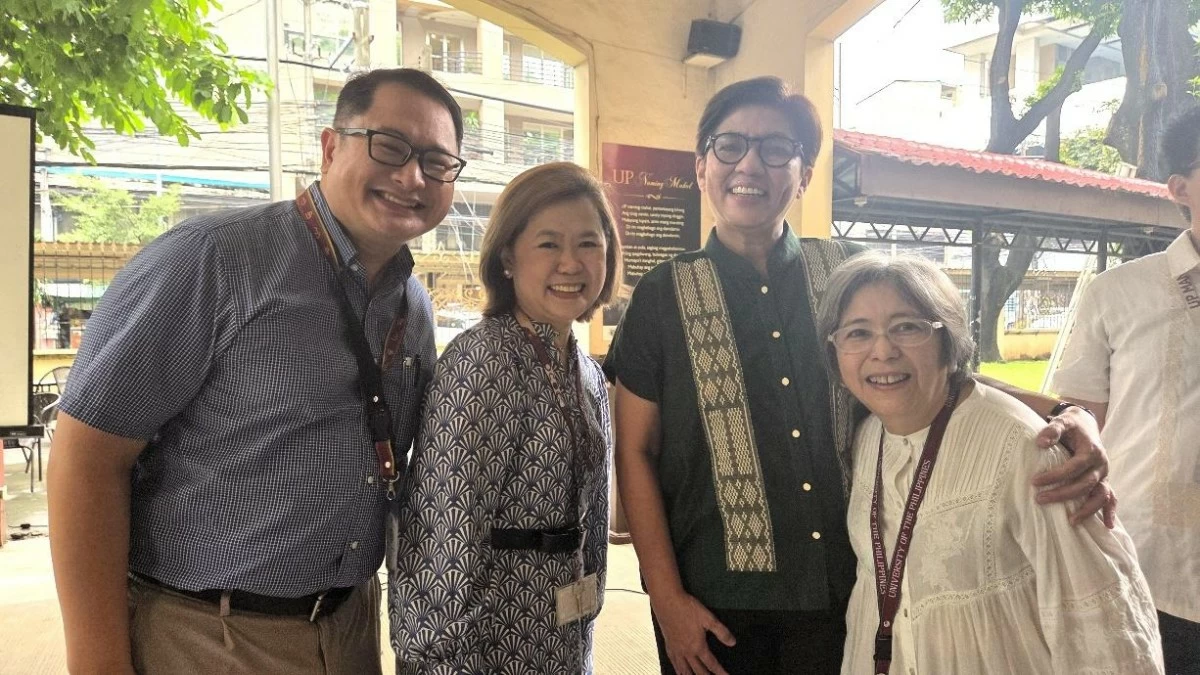
TAG TEAM From left: Dr. Edsel Salvana, Dr. Anna Ong-Lim, Dr. Singh-Vergeire and Dr. Marissa Alejandria
Last week, at our flag-raising ceremony at the National Institutes of Health (NIH), we had a distinguished guest share an important message on how NIH scientists can contribute to nation-building. Former Department of Health (DOH) Secretary Maria Rosario Singh-Vergeire, or Ma’am Rosette to those of us who have worked closely with her, gave an inspirational talk on the role of academic researchers in shaping and guiding national health policy.
Most Filipinos remember Ma’am Rosette as the face of the government response during the Covid-19 pandemic. At 4 p.m. daily, she would calmly go over the case numbers and the alert levels. Then Undersecretary Rosette projected so much reassurance despite the grim task of reporting deaths and restrictions that we were sure that even if there was an earthquake during the broadcast, her tone would probably not change. That unflappable demeanor served to keep people’s spirits up and gave them the resolve to carry on.
I first met Ma’am Rosette in early 2020 when I was appointed to the Technical Advisory Group (TAG) for what was then called nCoV (short for novel coronavirus, eventually SARS-CoV-2) of the DOH. The TAG was directly under her office. She was an assistant secretary at that time, and she was under the cluster of USec. Myrna Cabotaje, another Covid-19 pandemic hero who orchestrated the massive nationwide vaccination program that ended up inoculating 70 million Filipinos. My recollection of those earlier meetings was that she was very professional, efficient, and evidence-based. We were the first to arrive in Camp Aguinaldo on that fateful day on March 12, 2020, when we decided we had to lock down Metro Manila since Covid-19 community transmission was imminent. At every IATF meeting, the TAG was invited to give its input, and we presented the latest data and models in collaboration with numerous academic researchers and public health experts. The decisive, evidence-based government response saved more than 200,000 Filipino lives in the first year of the pandemic and led to one of the lowest death rates per million population. Compared to the US, with more than 1.2 million Covid-19 confirmed deaths, science-based government policy resulted in a relatively low death toll of 66,864 deaths.
Over the course of the pandemic, we met with USec. Rosette more than 500 times as part of the TAG and other technical working groups. The entire NIH was involved in multiple aspects of the government pandemic response, from generating a living clinical practice guidelines document, converting our laboratory into one of the first Covid-19 testing centers, and providing input to the numerous advisory bodies in DOH and the IATF. When the pandemic emergency started to wind down in 2022, Ma’am Rosette was appointed as the Secretary of the Department of Health. During her one-year tenure as secretary, we at the NIH continued to work closely with the Department of Health to provide evidence to support the different health interventions that were needed, and we started to institutionalize these relationships. Having seen how fruitful our collaboration with the government was first-hand, Ma’am Rosette wanted to ensure that the partnership would endure beyond her term as acting secretary.
Ma’am Rosette started her speech by recalling the partnerships DOH had with NIH during the Covid-19 pandemic and how grateful she was that we were willing to help. She also reminded us that collaborative work between DOH and NIH had started as early as 2012, when we trained DOH interns and fellows and embedded them in the different institutes to learn about research. She then talked about how important it was for scientists and researchers to be part of the policy conversation. Using the Covid-19 pandemic as an example, she showed how effective policy decisions were when guided by evidence. She stated how essential it was to have researchers communicate their findings beyond just publishing in scientific journals and to make sure that these are applied to real life. Finally, she challenged us scientists to do research in areas that had meaningful applications in policy, and to learn to communicate our research to policymakers so that they can use these to craft effective programs and interventions.
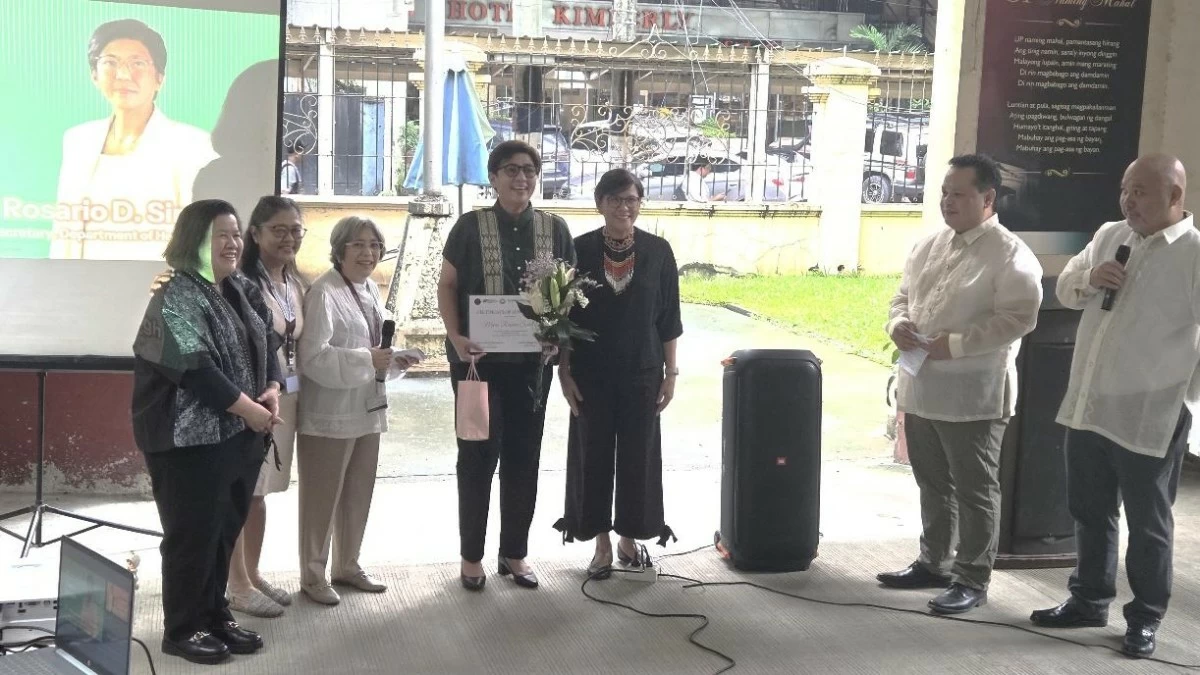
A SPECIAL GUEST Former DOH Secretary Maria Rosario Singh-Vergeire at the National Institutes of Health Flag Raising ceremony with UP Manila Officials (From left: UP College of Medicine Dean Dr. Charlotte Chiong, Institute of Clinical Epidemiology Director Dr. Carmela Lapitan, NIH Executive Director Dr. Marissa Alejandria, Former NIH Executive Director Dr. Eva Maria Cutiongco-dela Paz, NIH Research Faculty Members Dr. Emmanuel Estrella and Dr. Emmanuel Baja.)
Ma’am Rosette’s talk was deeply meaningful for those of us at NIH. It was a call to scientists to make our research matter. Too often in the academic world, the main objective is to produce novel work for promotion and to gain tenure. While there is always a place for basic science and curiosity-driven hypothesis building, our country does not have unlimited funds for research. The priority still needs to be research that has a measurable impact on real-world problems and maximizes the value of our limited resources. Alignment of research priorities is usually embodied in medium-term plans of the different government agencies. In the past, there has been limited input from scientists on these plans. Ma’am Rosette urged us to get involved in these planning exercises to understand what needs to be done. In addition, we may provide additional information that can modify the agendas and make the plans more efficient.
If there is anything I learned during the Covid-19 pandemic, it is that policymakers need guidance from technical experts to improve the chances of a successful response. Scientists have the knowledge, while politicians have the power. Even though most academics would rather avoid the rough-and-tumble world of politics, there is no better way to influence policy than getting involved. As a physician, I see one patient at a time, and I am able to treat maybe 10 to 20 patients daily. Partnering with the government during the pandemic enabled our expertise to affect the health of millions of Filipinos for the better. As Ma’am Rosette reminded us, we have to get out of our comfort zone because the knowledge we have can save many, many lives. There is a responsibility and even an obligation to ensure that scientists are part of the conversation.